
Royal Caribbean reroutes and delays ships because of blizzard

In:

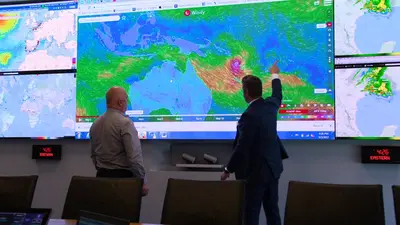
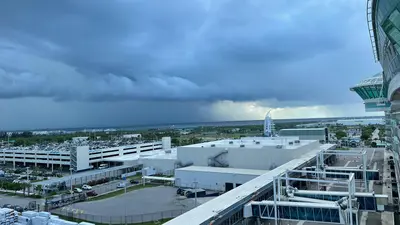
Royal Caribbean is moving ships around to avoid a blizzard and bad winter weather along the east coast of the United States.

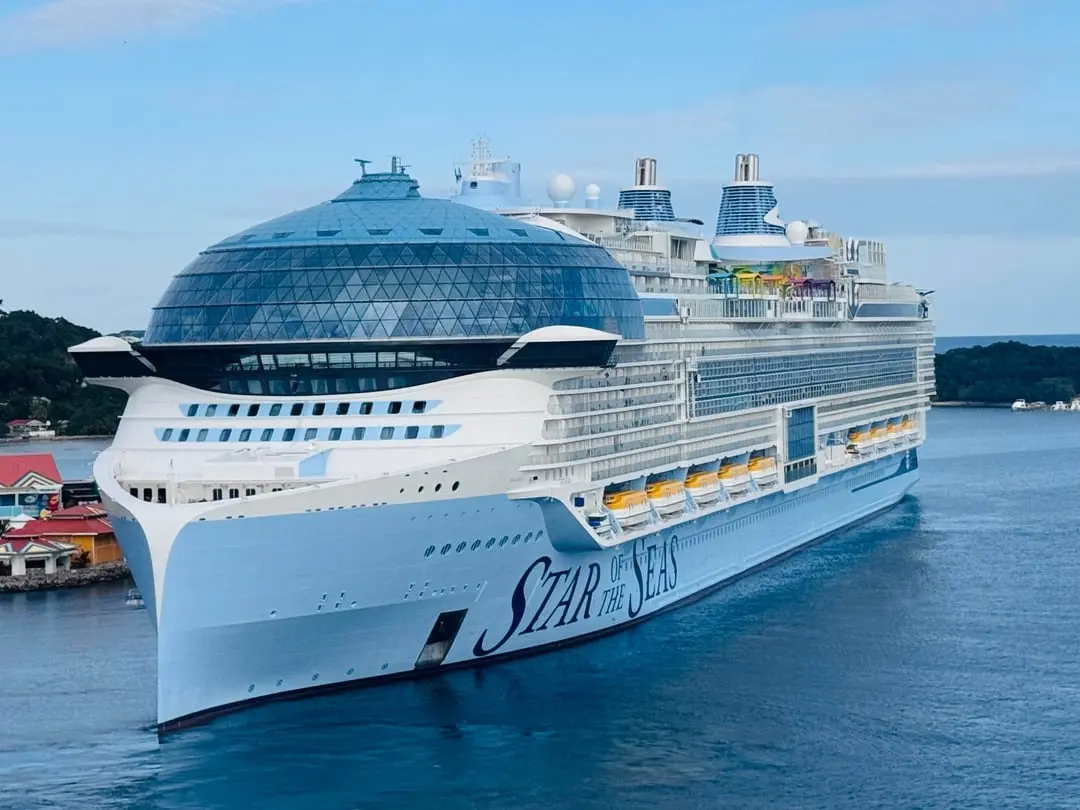
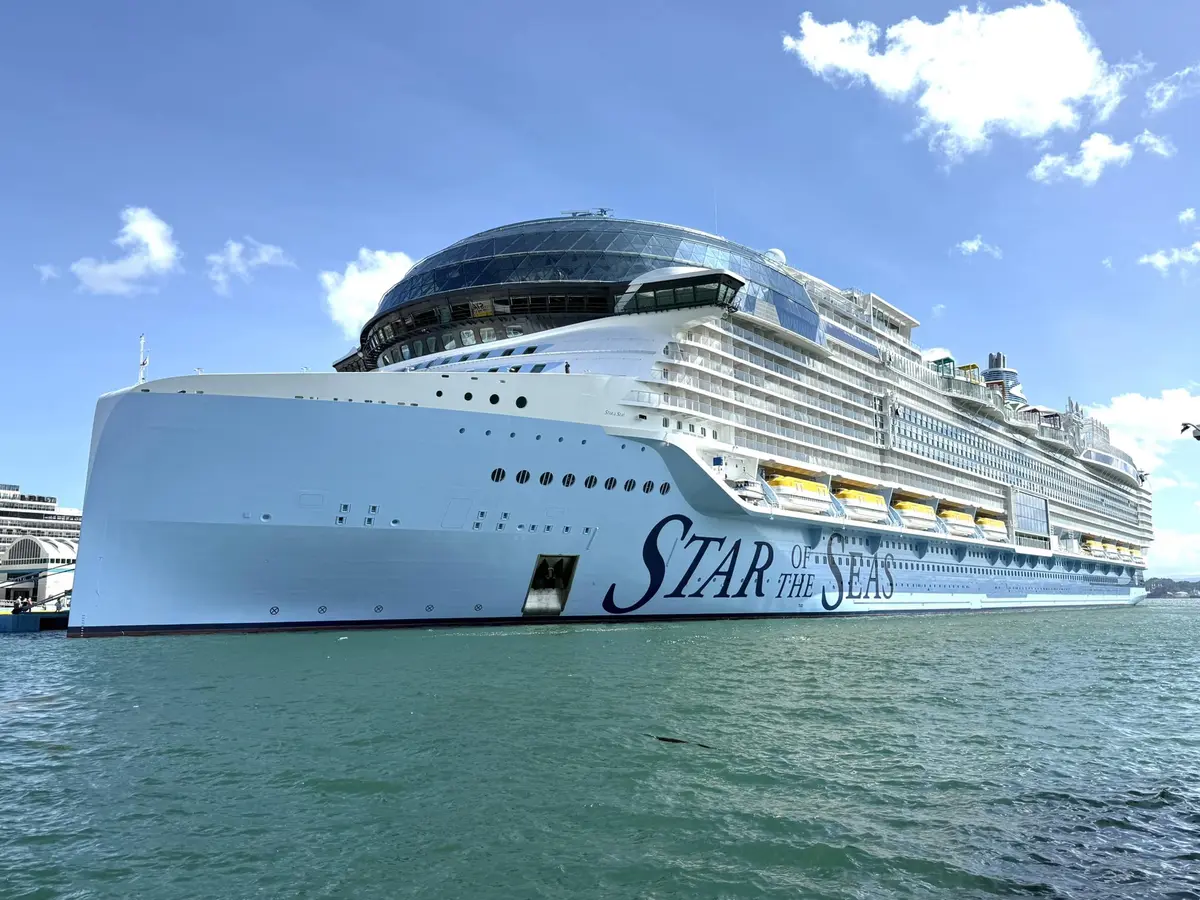
Star of the Seas

So far, three cruise ships have had their itineraries changed because of the poor weather, and additional changes could be announced.

Passengers on Star of the Seas, Independence of the Seas, and Odyssey of the Seas have been notified of changes to their cruise plans as a result of the storm.

Here's a look at what's changed so far. This article was last updated at 11:08 a.m. on Monday, Feb. 23. 

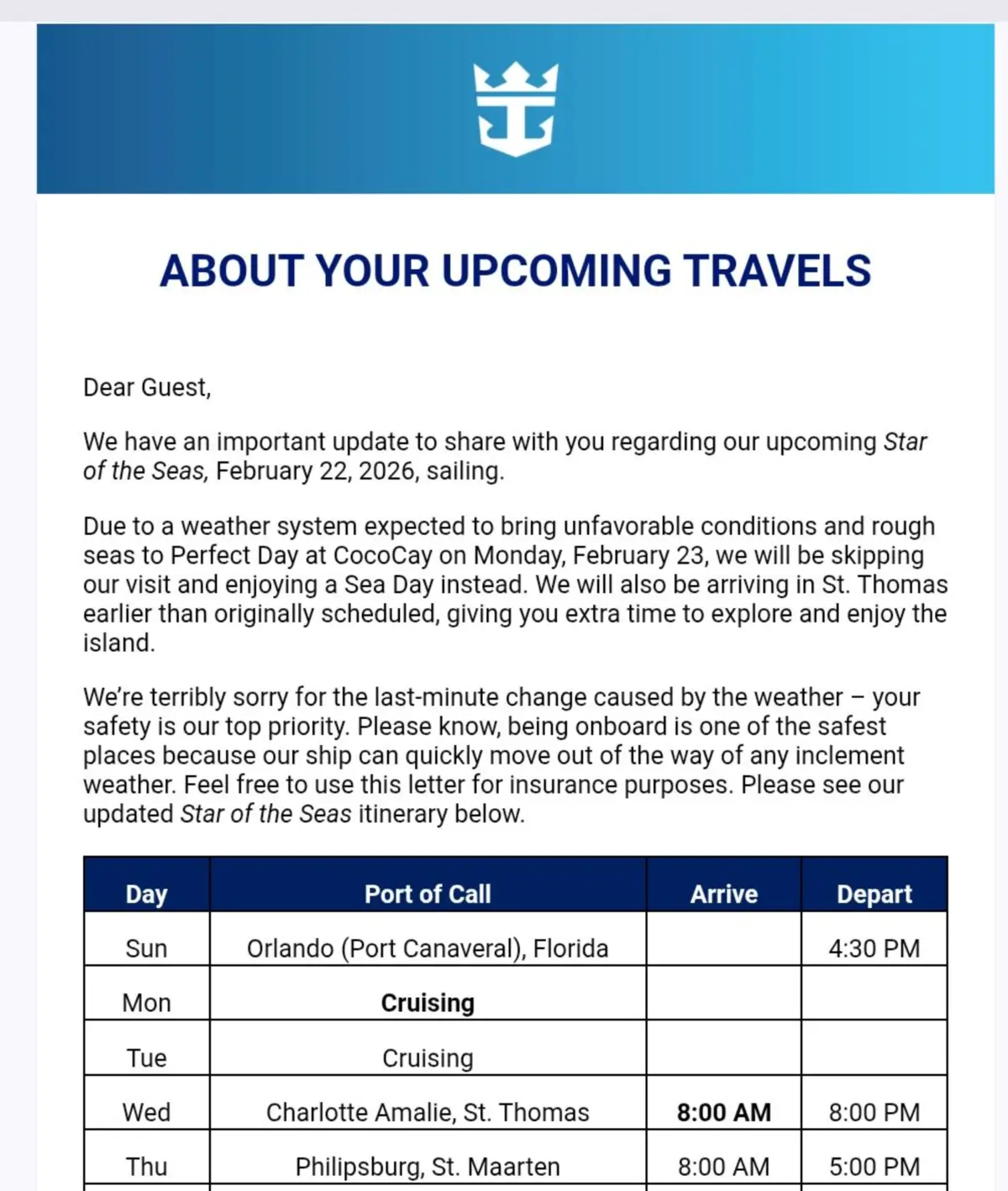
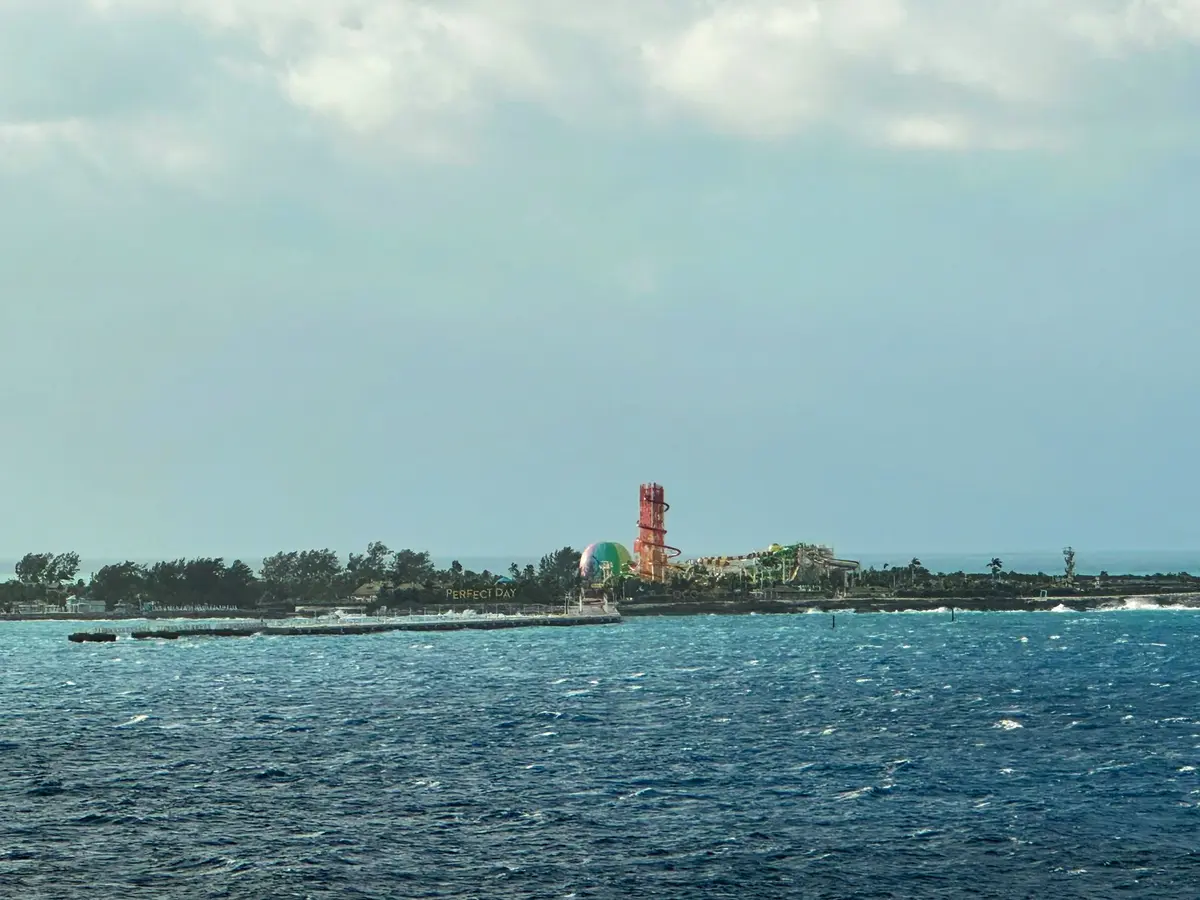
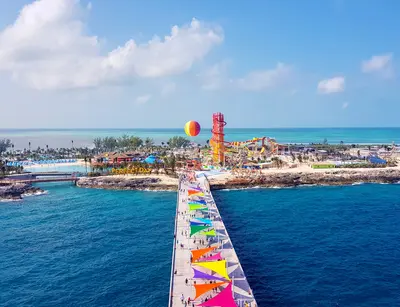
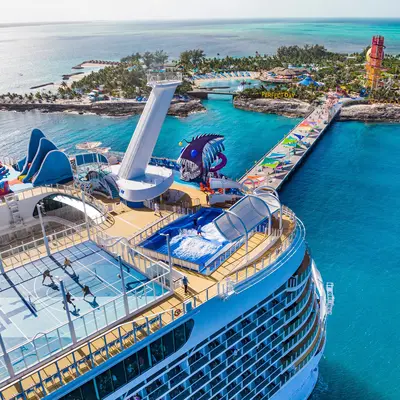
Star of the Seas will skip Perfect Day at CocoCay

Star of the Seas docked

The February 22 sailing of Star of the Seas will have to skip Royal Caribbean's private island.

"Due to a weather system expected to bring unfavorable conditions and rough seas to Perfect Day at CocoCay on Monday, February 23, we will be skipping our visit and enjoy a Sea Day instead."

Because the ship will bypass CocoCay, they will now arrive in St. Thomas earlier.

Email

"We're terribly sorry for the last-minute change caused by the weather - your safety is our top priority."

This is one of a handful of visits to CocoCay that have been scrapped this winter so far because of bad weather conditions.

Independence of the Seas will visit Nassau instead of CocoCay

Cruise Mapper

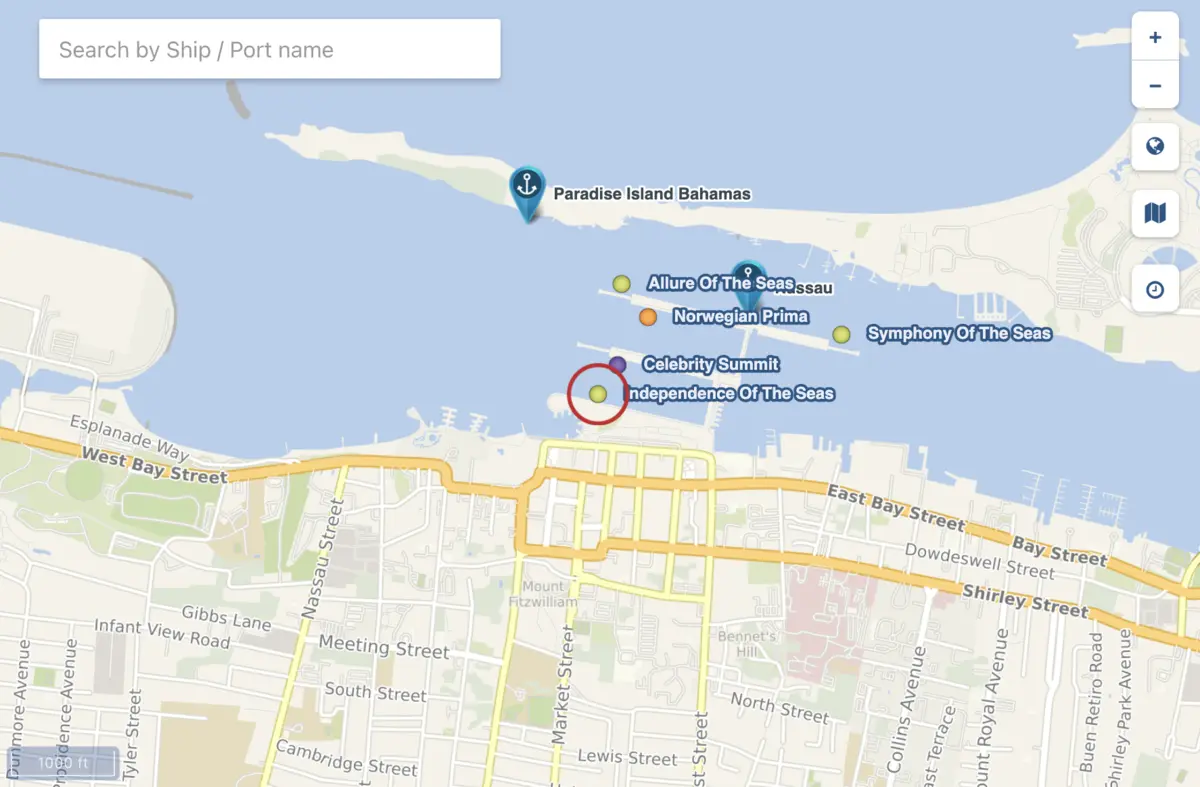
(Credit: Cruise Mapper. Screenshot taken at 11:05 a.m. EST on Feb. 23)

According to Cruise Mapper, Royal Caribbean's Independence of the Seas was unable to dock at CocoCay on Feb. 23. 

However, rather than spend another day at sea, the ship's first port of call on the 7-night cruise from Miami is now Nassau. They are the fourth Royal Caribbean Group ship in port, alongside Allure of the Seas, Symphony of the Seas, and Celebrity Summit. 

Other stops on the weeklong voyage include San Juan and St. Thomas. 

Odyssey of the Seas will stay in homeport overnight

Odyssey of the Seas

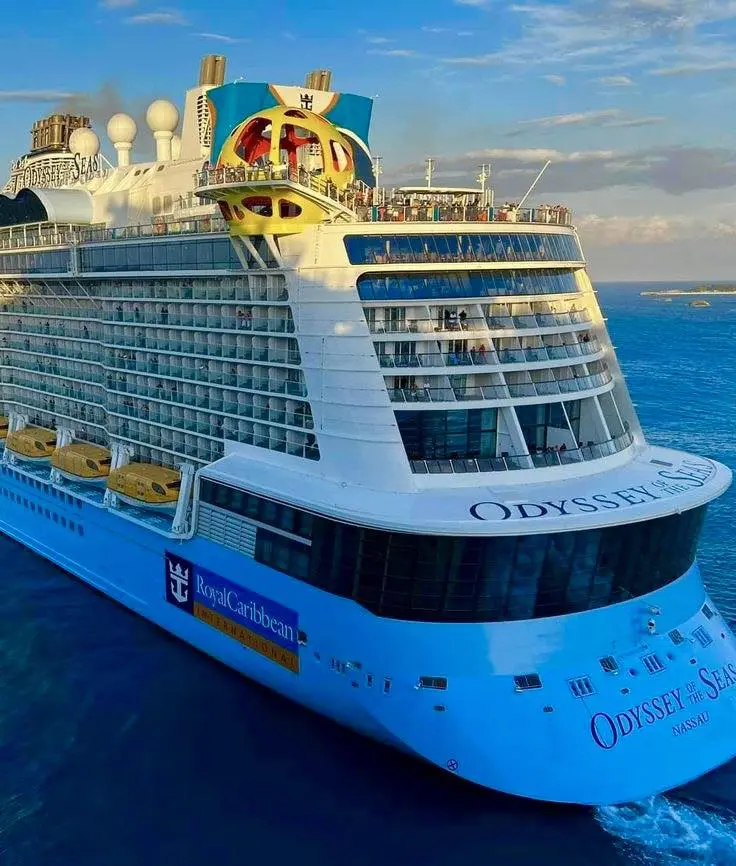
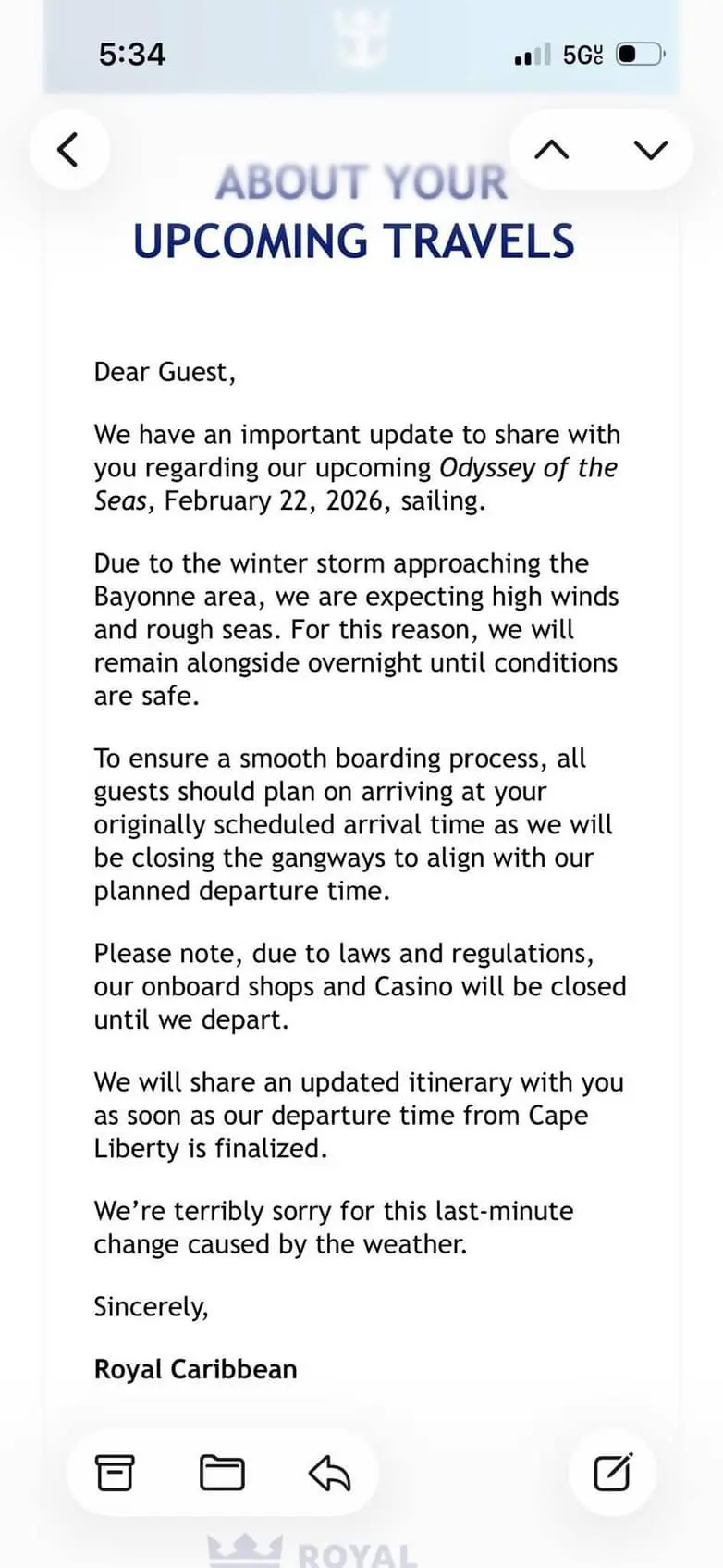
Odyssey of the Seas will return to Cape Liberty on Feb. 22, but will be delayed in leaving on her sailing because of the expected blizzard.

A letter sent to guests booked on the sailing states that they’re expecting "high winds and rough seas."

A cruiser posted on Reddit, "We’re due to sail out of NJ tomorrow on the Odyssey and just heard from RC that we won’t be leaving at the original 2pm departure time, that we’ll likely be docked overnight, meaning we wouldn’t leave til Monday morning."

The ship is scheduled to visit Port Canaveral, Florida, on Tuesday, Nassau, Bahamas, on Wednesda,y and CocoCay on Thursday. All of those plans could be changed if the ship is delayed by a day.

The issue will be when it's safe to depart and if the Port of New York will be open or not. 

Biggest winter storm in years expected

Snow plow

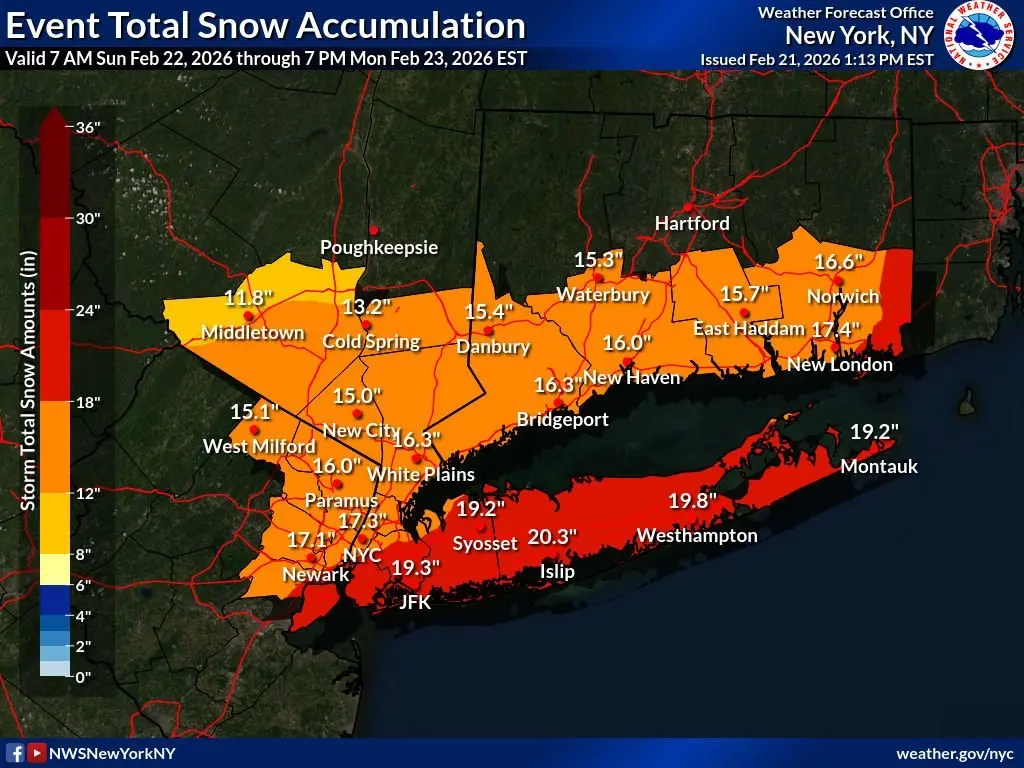
Officials along the East Coast are expecting a major winter storm that could dump up to 20 inches of snow in parts of the Northeast starting late in the weekend.

The National Weather Service said on Saturday that this winter storm is now expected to bring "significant impacts" across the Mid-Atlantic and Northeast Sunday into Monday.

Blizzard and winter storm warnings were issued for tens of millions of people across a swath of the Northeast, concentrating around New York City.

Forecast

Blizzard conditions from heavy snowfall and strong winds are expected along the East Coast from Delaware through southeastern New England.

The nor'easter comes from a storm moving from the Gulf Coast over the weekend, spreading accumulating snow from West Virginia through the mid-Atlantic and into southern New England from Saturday night through Monday.

New Jersey, where Cape Liberty is located, has already declared a state of emergency by its governor.

Why bad cruise weather isn’t just a hurricane season problem

In:

Bad weather can change cruise ship plans anytime of year, negating the myth that you should avoid hurricane season because it's when the worst weather is.

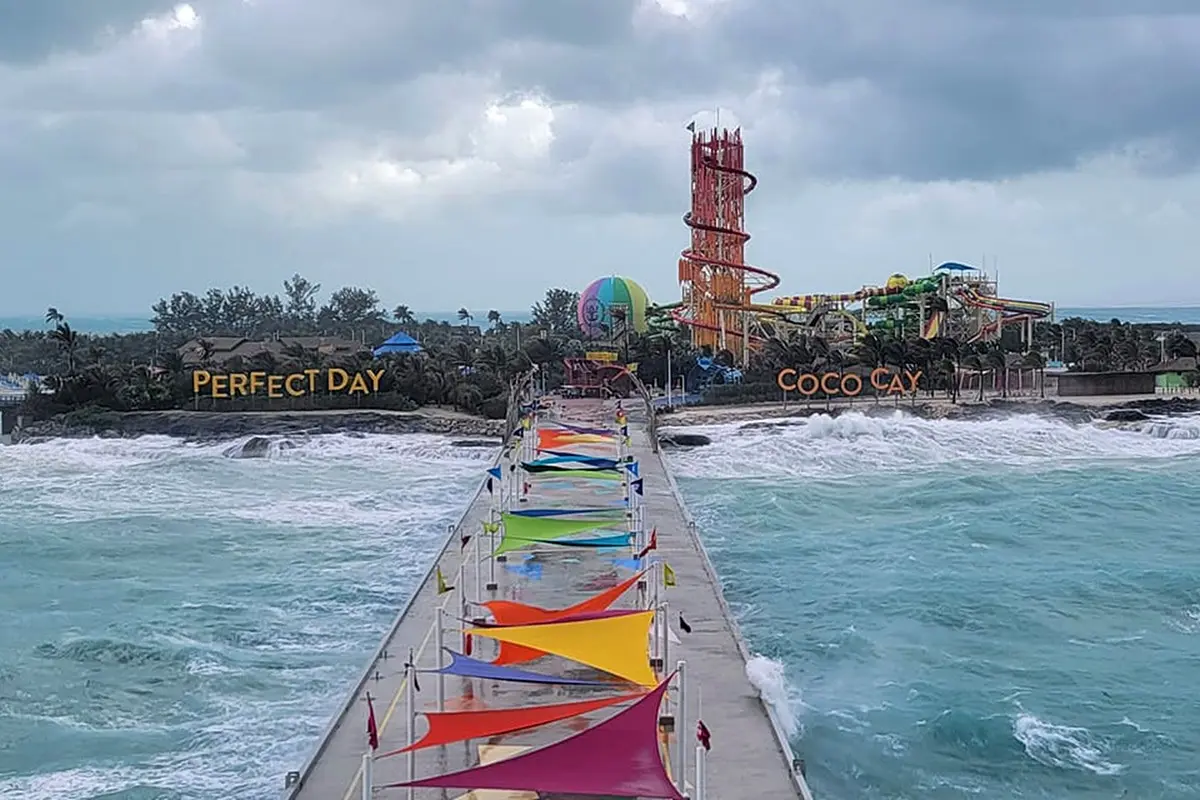
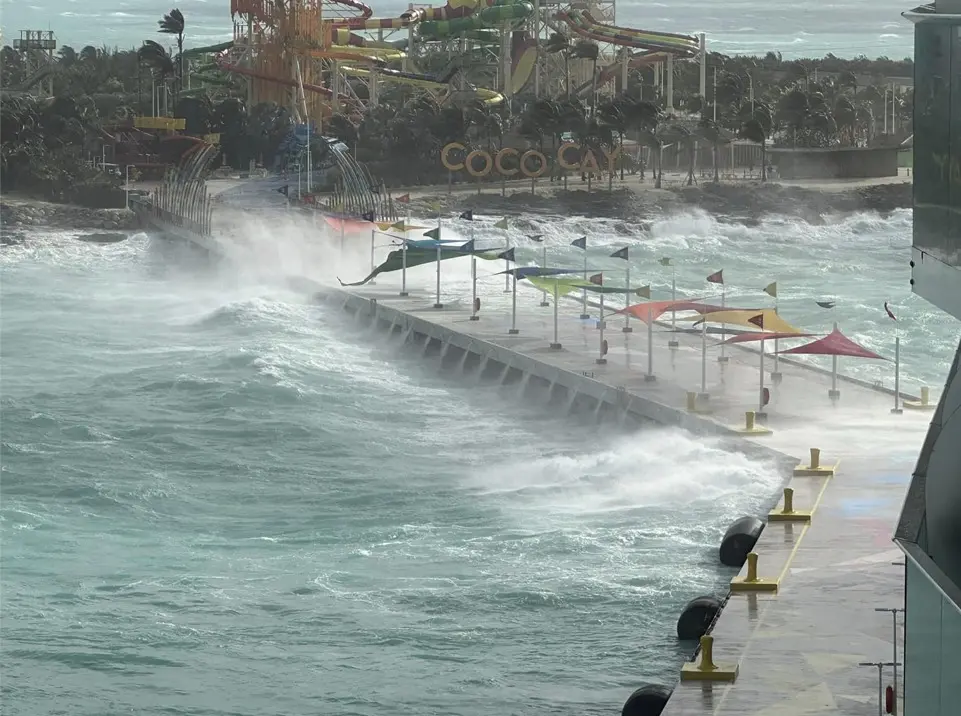
Waves at CocoCay pier

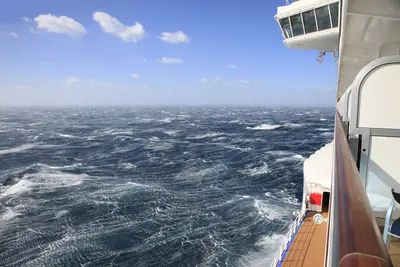
A handful of Royal Caribbean cruise ships this winter have had to divert and skip scheduled port visits because of high winds and big waves. 

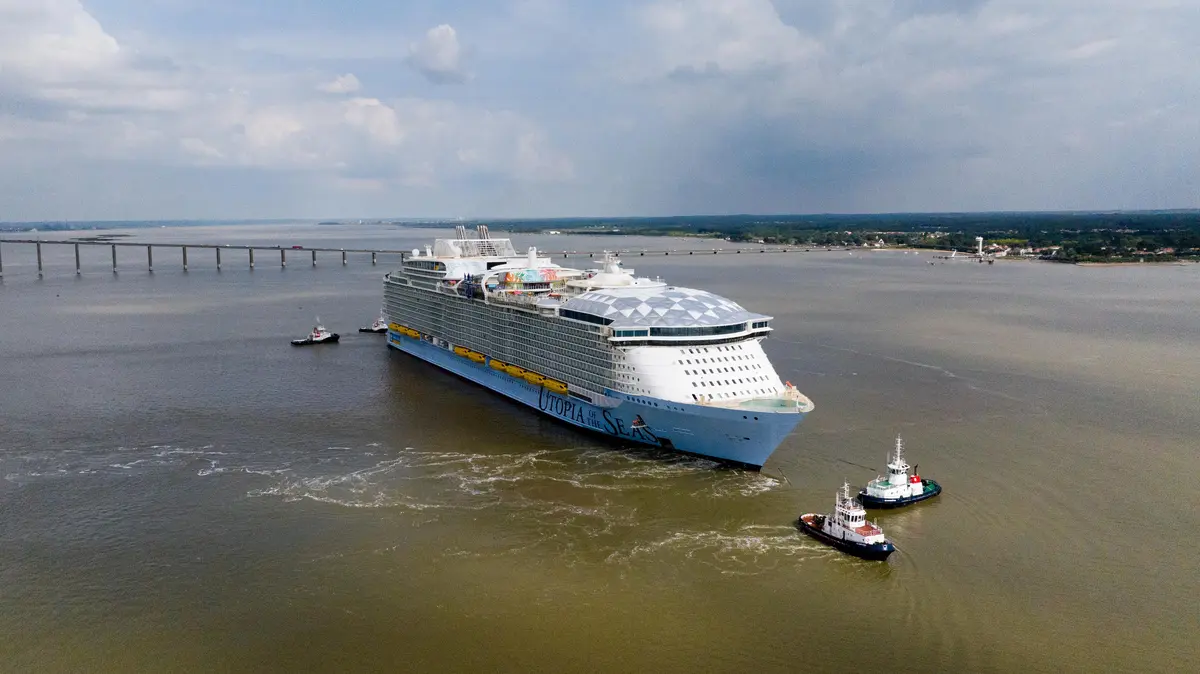
In just the past few weeks, many ships scheduled to go to Perfect Day at CocoCay or Nassau, Bahamas have ended up with sea days instead. Both Icon of the Seas and Explorer of the Seas were unable to dock at the private island. A week earlier, Utopia of the Seas and Liberty of the Seas skipped it too.
In fact, Wonder of the Seas and Celebrity Reflection had "cruises to nowhere" because of bad weather.
This year's winter weather has reinforced that there is no guaranteed time to cruise for perfect weather, so you need to be flexible.

Hurricane season isn't the only time when bad weather happens

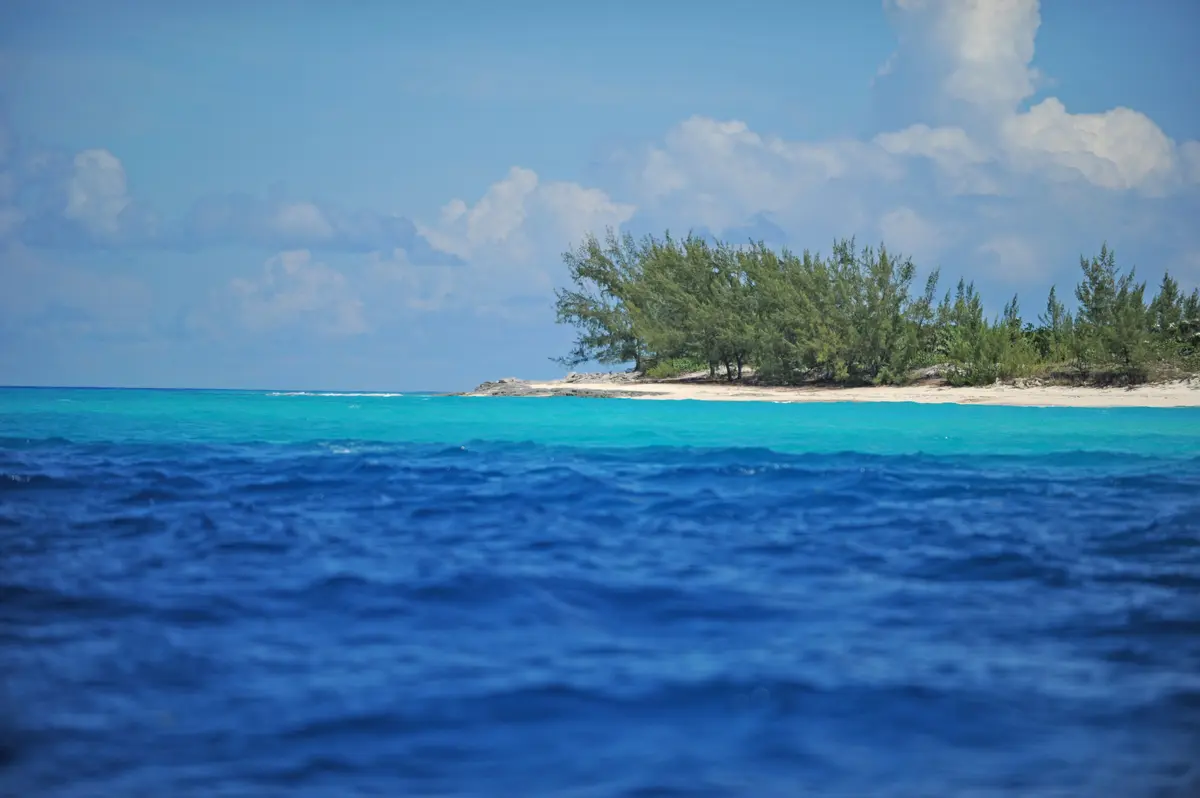
Rum Cay in The Bahamas

Every year when there's a hurricane that changes cruise ship itineraries, I'll see comments on social media along the lines of, "this is why I don't cruise during hurricane season."

The problem with this line of thinking is two fold.

As we can see in January and February, bad weather can happen anytime. When the winds kick up, waves get bigger, and you don't need a tropical system for that to occur.

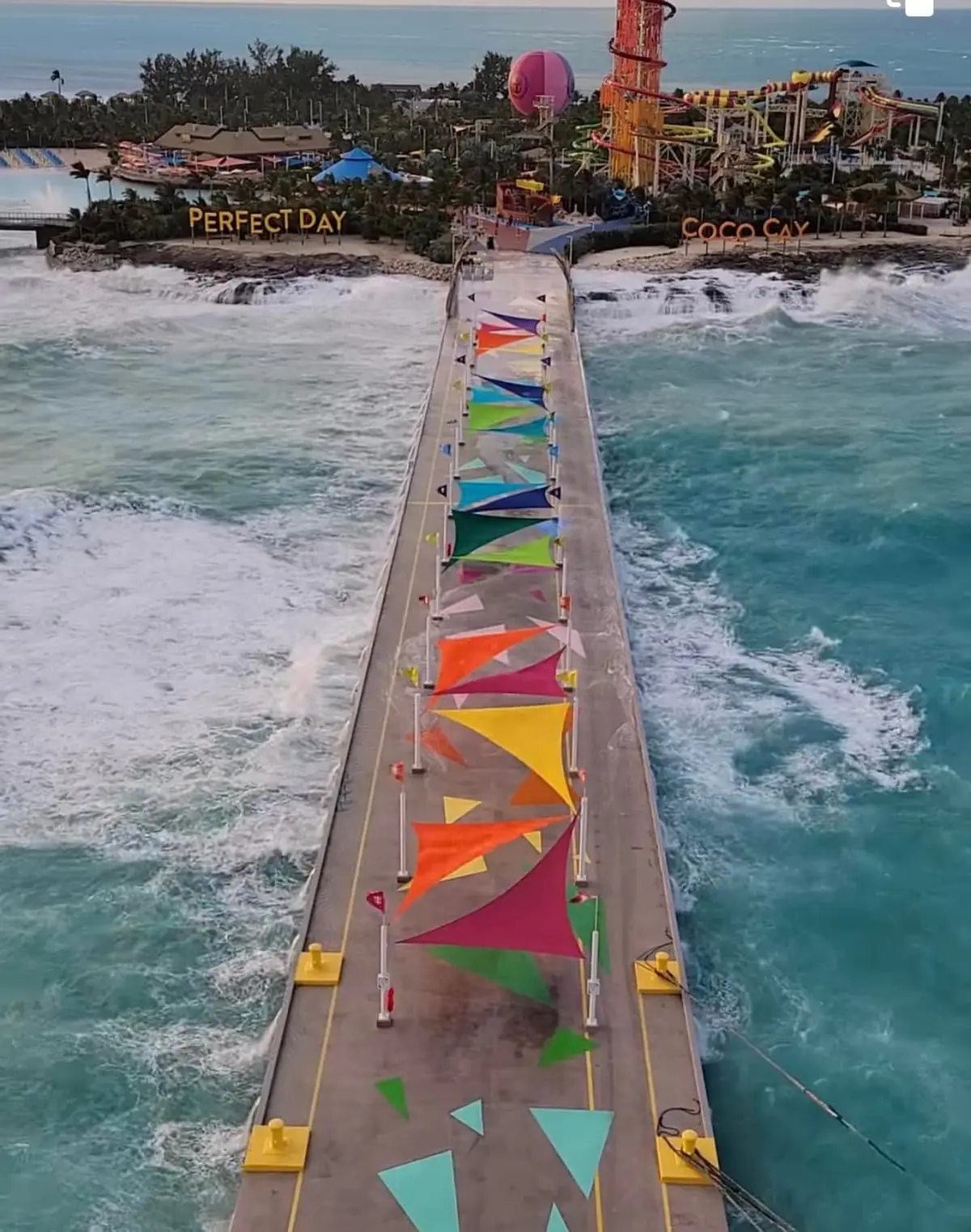
Cococay pier with waves

Plus, hurricane season technically encompasses half the year. It begins June 1st and runs through November 30th. That's a long time to sit out cruising.

In reality, the worst of hurricane season is between mid-August to mid-October, so the June, July, and November are usually tamer times of the year.

But the idea that you don't get itinerary changes or bad weather other times of the year is simply inaccurate.

Winter cold fronts can stir up trouble

Missed stop at CocoCay

This winter has seen cold fronts make their way well into Florida and The Bahamas, which has been the source of the diverted ships.

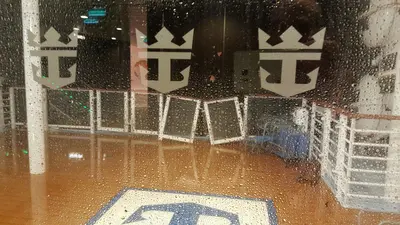
Most cruise ship piers are designed for optimal docking conditions.  While a pier will work better than attempting to tender, once the waves start to crest over the pier, it's generally unsafe to dock.

In some cases, the wind can be so troublesome that the ship cannot safely approach the pier. This is especially true at CocoCay, which has no natural barriers to protect the pier from larger waves.

Bad weather at CocoCay

In February 2024, winds got so bad that an announcement was made to evacuate the island and return to their ships.

Two ships were able to dock, but by 1pm conditions had deteriorated so badly that an early end to the day was necessary. A rapidly moving storm was approaching the island and that caused the cruise line to make the decision to cut their day short.

At 1pm, an announcement was made over the island's speaker system to return to the ship.

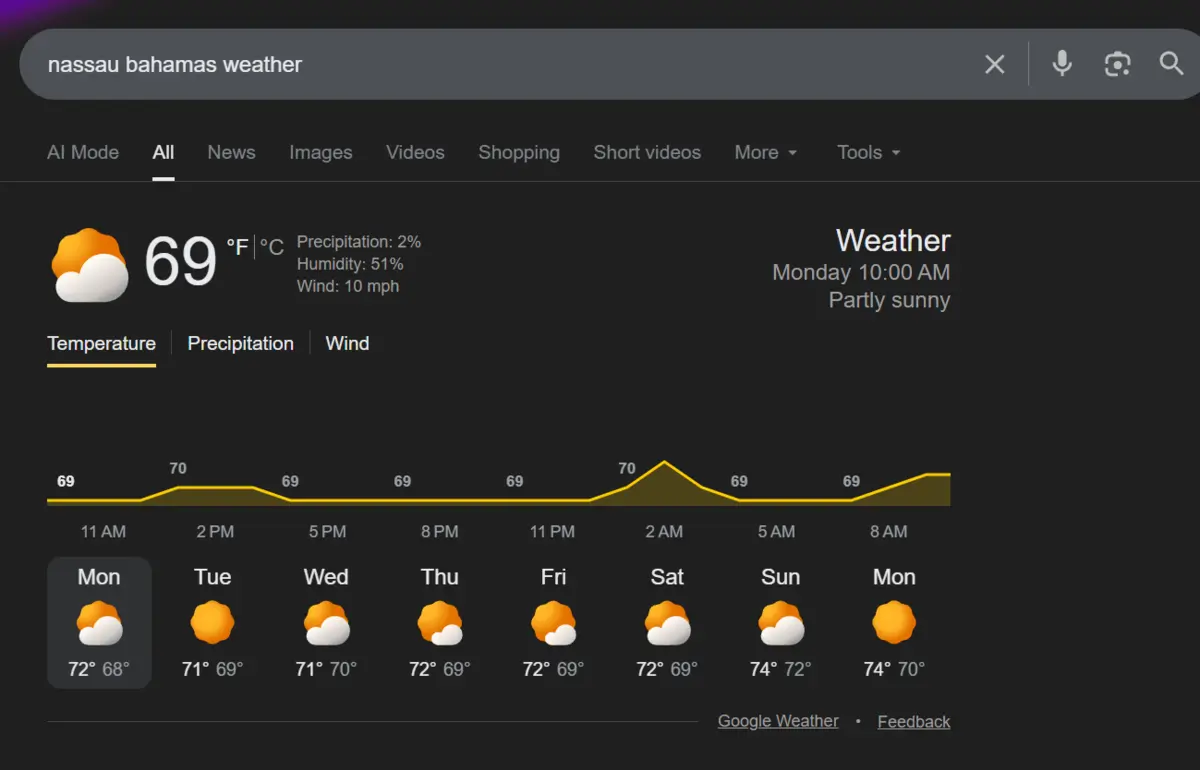
Nassau weather forecast

Even if the sea conditions aren't a problem, cruising in the winter isn't always hot.

When the high temperature is barely in the 70s or lower, it's not going to feel as tropical.

Don't try to guess the weather. Be flexible instead

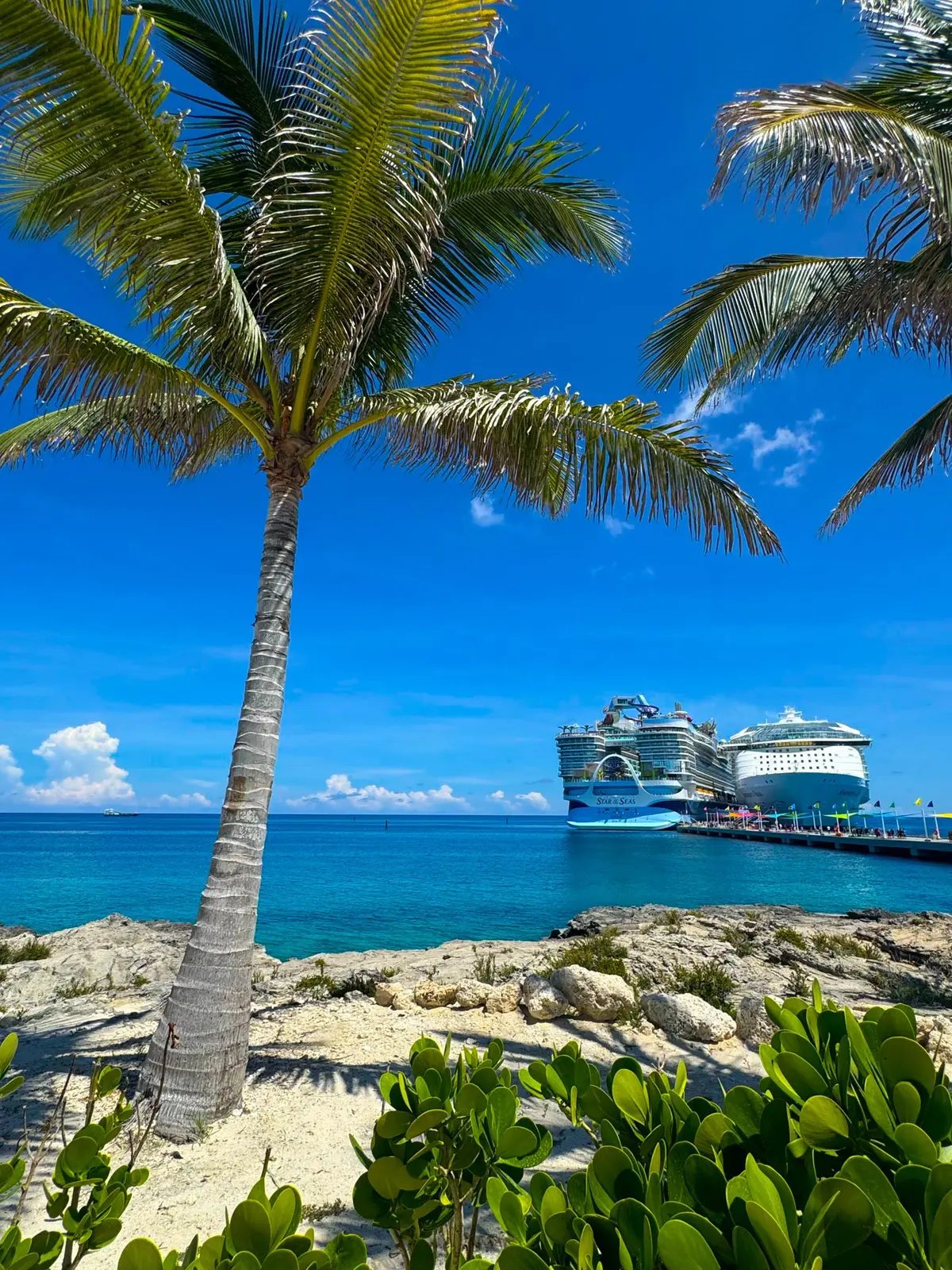
Two ships docked at CocoCay

The lesson with this year's winter weather is don't ever assume one season, month, or time is going to be automatically the best or worst weather.

In fact, don't book a cruise based on weather alone. Pick a sailing because of the ship, itinerary, and things you want to do, but you have to have a certain level of flexibility that those plans might change.

A Western Caribbean itinerary could be flipped to an Eastern Caribbean because of a hurricane just as quickly as a cold front in January prevents you from visiting The Bahamas.

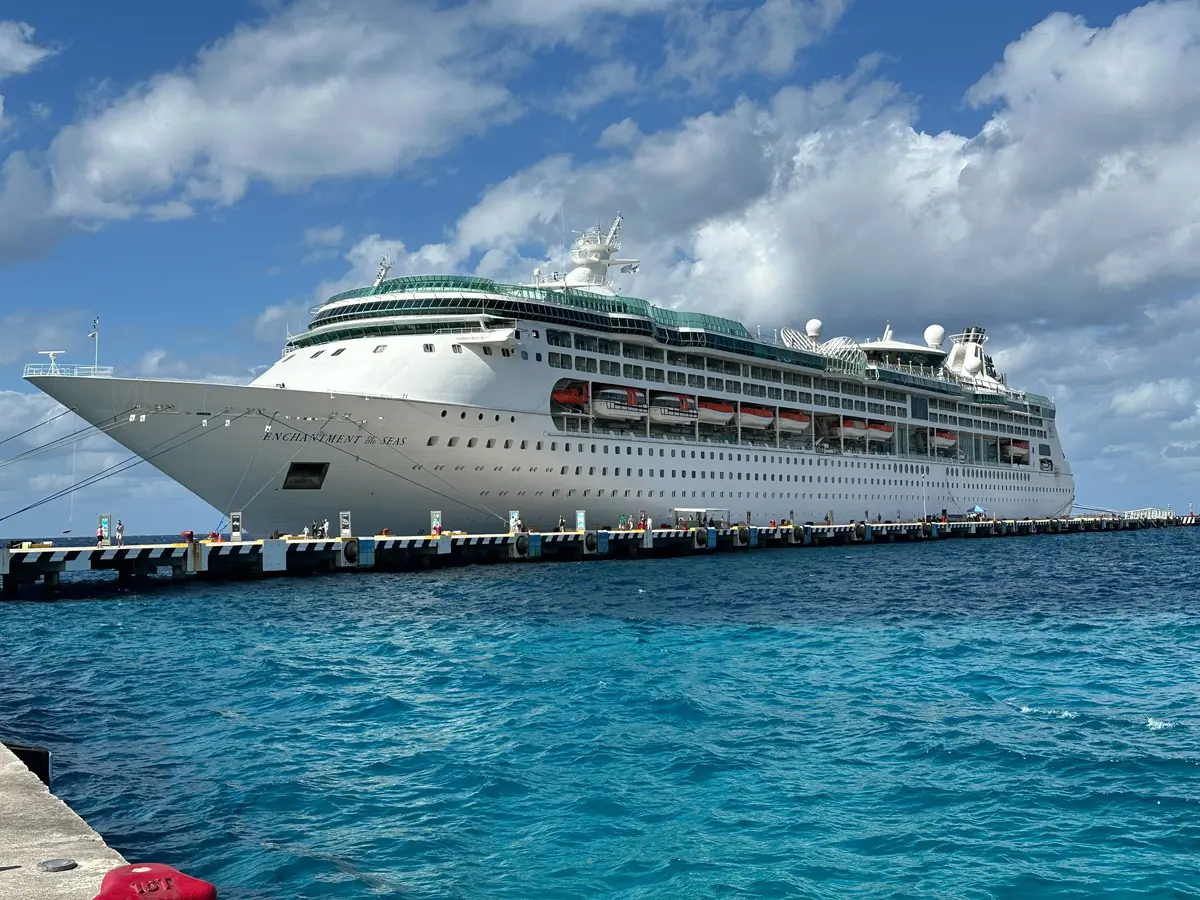
Enchantment in Cozumel

There simply isn't a time of year when there's no chance or better chances of milder conditions.

If you're logic is cruising outside of hurricane season reduces the chances of altered itineraries, you're missing the bigger picture about how the opposite of tropical energy caused quite a few changed cruises. There's simply no guarantees or promises any one cruise will have better weather, smaller waves, or less wind.

Nature is notoriously unpredictable, so you have to go into any cruise with an expectation you'll probably go to the places you booked, but not necessarily. 

Rare tropical cold front forces Royal Caribbean ships to divert away from The Bahamas

In:

Multiple Royal Caribbean cruise ships have had their itineraries altered due to a powerful cold front impacting Florida and The Bahamas. 

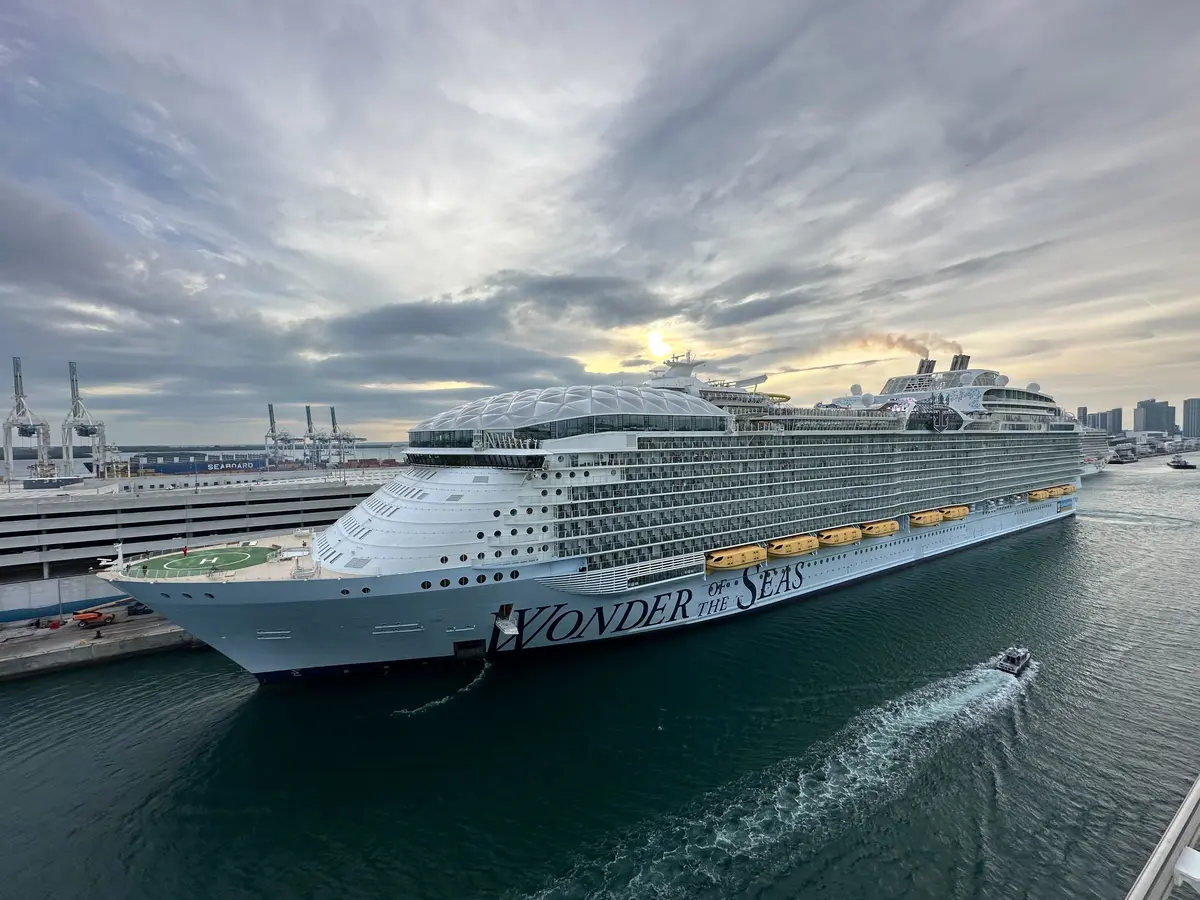
Wonder-Docked-Port-Canaveral

On Tuesday in Nassau, winds near the port will be around 22-24 knots (25-28 miles per hour). In comparison, the winds are forecasted to drop to around 12 knots, or 14 mph, by Thursday. By Monday afternoon, The Bahamas had already issued a near Gale warning (28-33 knots) for the Northern and Northwest Bahamas. 

According to forecasters, the front will continue to push through The Bahamas before stalling over the Southeast islands. This will result in elevated shower and thunderstorm chances throughout the week. 

As the cold front moves across the region, the unfavorable weather conditions forced the cruise line to make adjustments. 

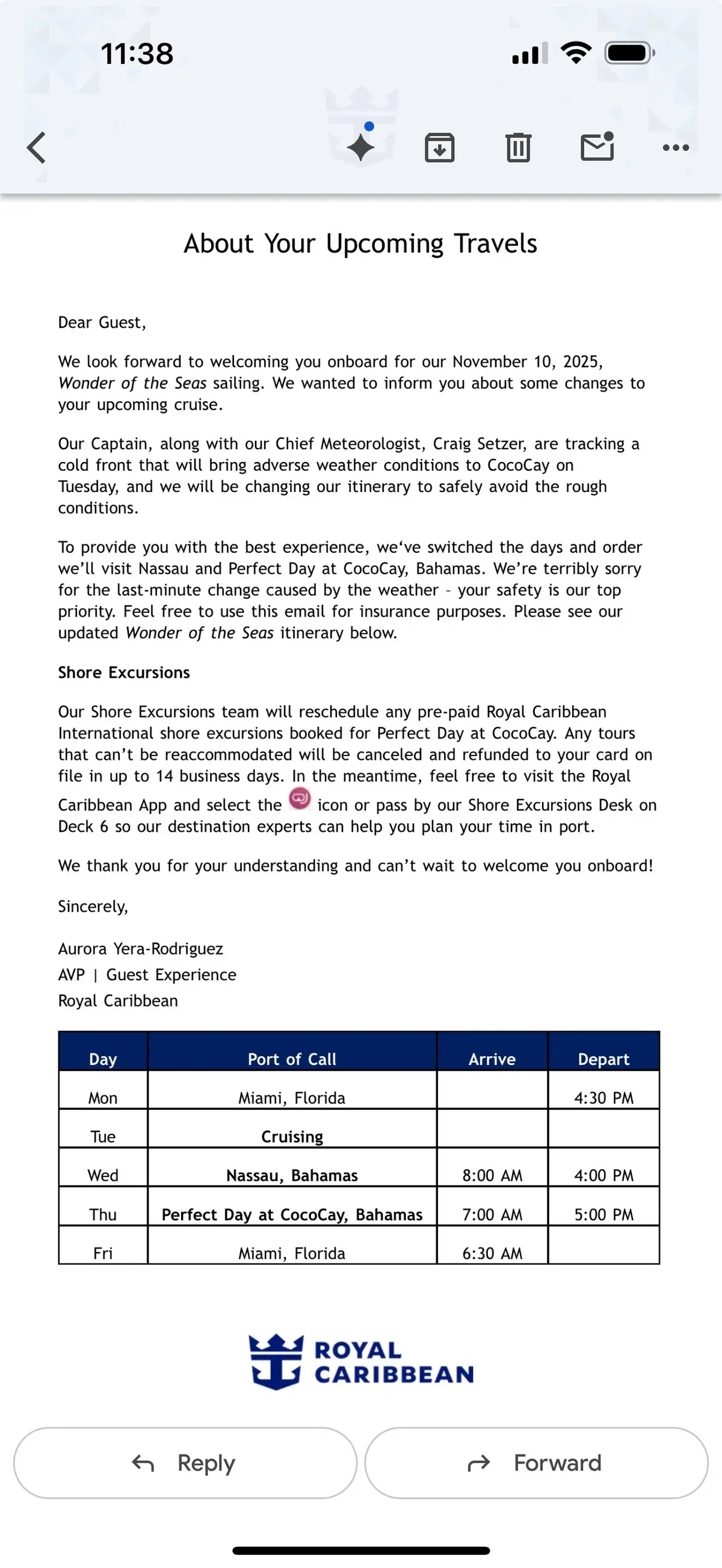
Wonder-Cold-Weather-Letter.

"Our Captain, along with our Chief Meteorologist, Craig Setzer, are tracking a cold front that will bring adverse weather conditions to CocoCay on Tuesday...To provide you with the best experience, we've switched the days and order we'll visit Nassau and Perfect Day at CocoCay, Bahamas," reads a letter given to guests sailing aboard Wonder of the Seas. 

The 4-night cruise was initially scheduled to call at CocoCay on Tuesday. Now, however, passengers will enjoy a sea day before visiting Nassau on Wednesday, followed by a visit to CocoCay on Thursday. 

Similarly, Freedom of the Seas' 5-night cruise to CocoCay and Mexico has been completely changed. 

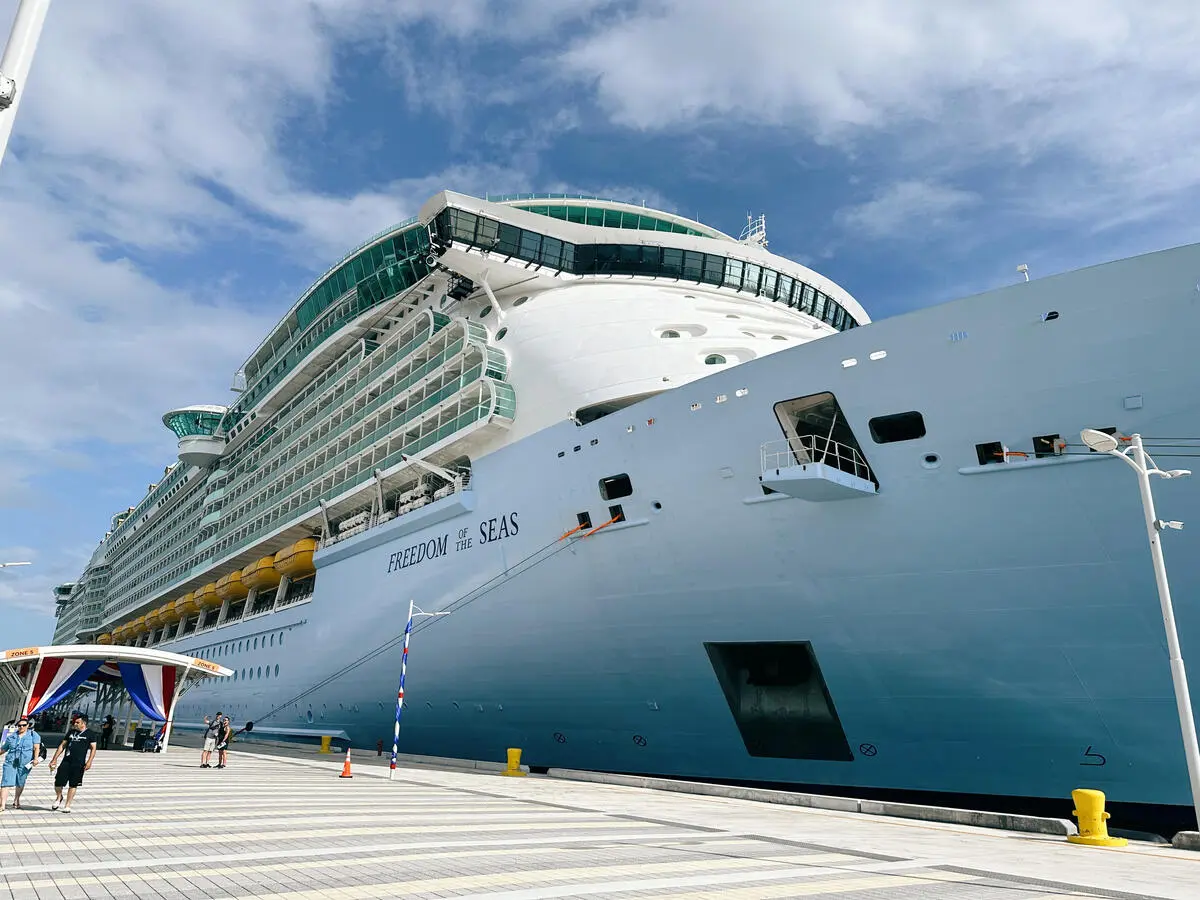
Freedom-Docked-Nassau

The November 10 sailing axed both scheduled stops and replaced them with visits to Taino Bay on Wednesday and Amber Cove on Thursday. 

This means that both port days will be spent in the Dominican Republic's Puerto Plata region, which is known for its beaches and outdoor activities. Royal Caribbean guests also have the rare opportunity to visit Carnival Corporation’s private destination, Amber Cove, which opened in 2015.

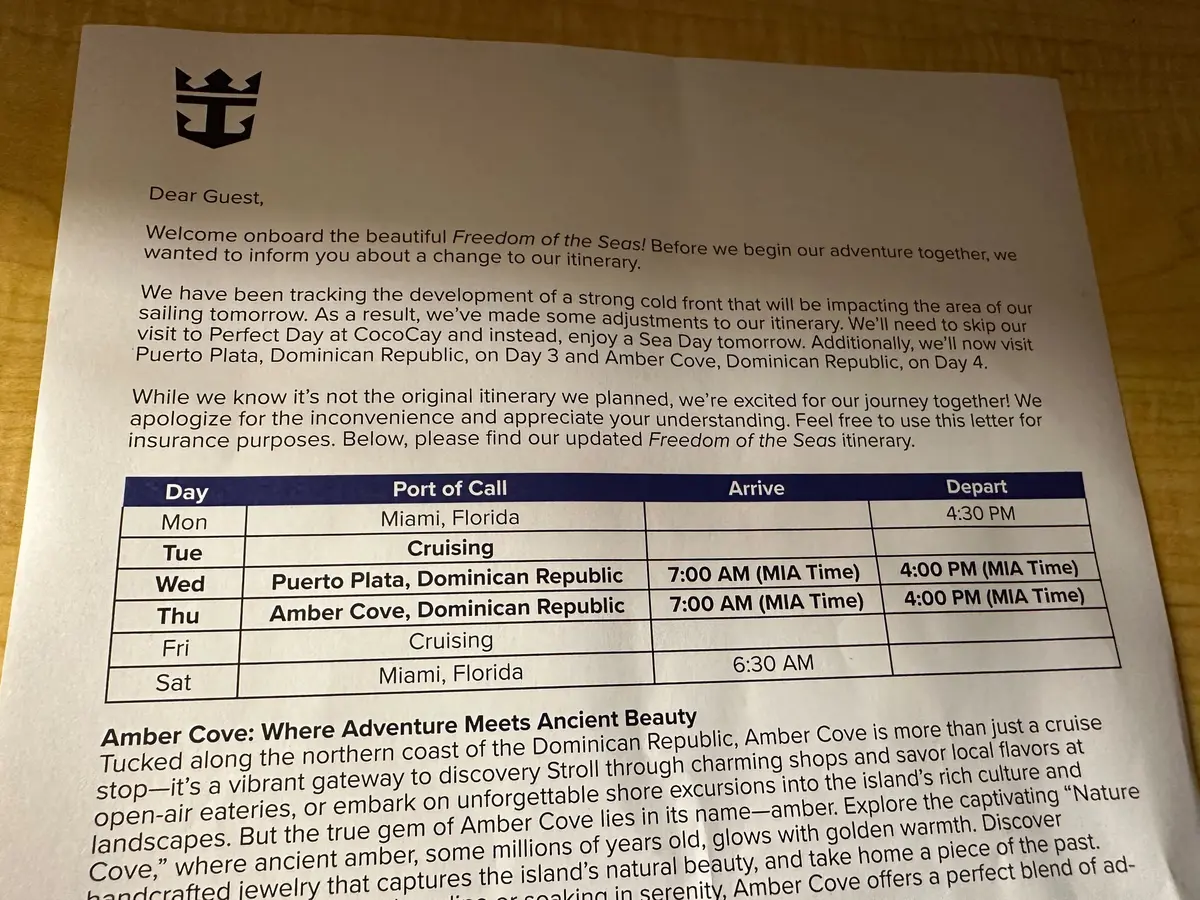
"We have been tracking the development of a strong cold front that will be impacting the area of our sailing...As a result, we've made some adjustments to our itinerary," read the notice given to Freedom passengers.

Freedom-Change-Cold-Front

"We'll need to skip our visit to Perfect Day at CocoCay, and instead, enjoy a Sea Day tomorrow. Additionally, we will now visit Puerto Plata, Dominican Republic, on Day 3 and Amber Cove, Dominican Republic on Day 4. While we know it's not the original itinerary we planned, we're excited for our journey together!"

Moving on, although no ports were cancelled on Utopia of the Seas' Nov. 10 departure, guests will visit Nassau and CocoCay in a different order. 

Utopia, like Wonder, will enjoy a day at sea on Tuesday, followed by CocoCay on Wednesday. The ship will call at Nassau on Thursday, which was formerly the cruise's day at sea, before returning to Port Canaveral on Friday. 

Read more: What to do in Nassau on a cruise? I love these 7 ideas

Radiance docked

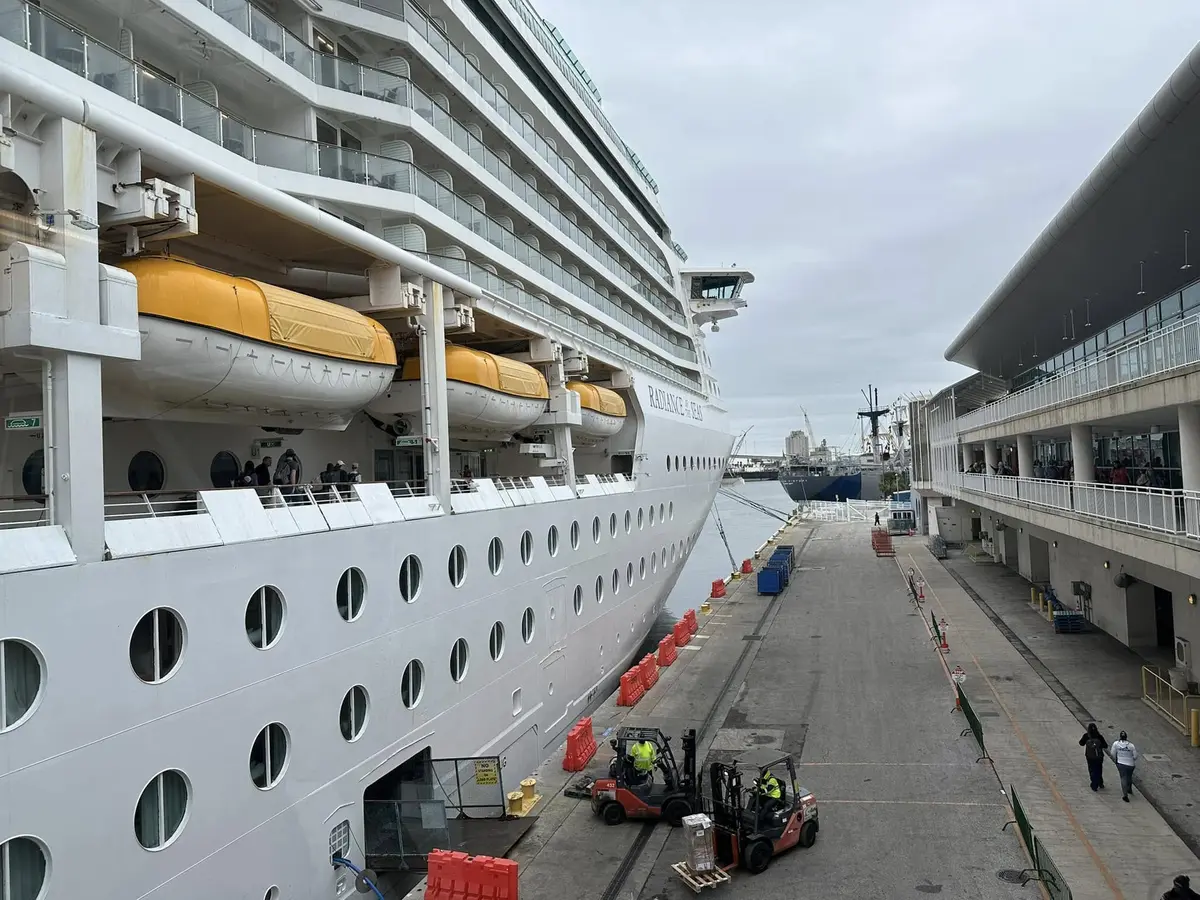
Finally, Radiance of the Seas' Nov. 10 cruise pushed its scheduled visit to the capital of The Bahamas. Rather than calling at Nassau on Tuesday, the Radiance Class ship will spend the day at sea. Radiance will now visit Nassau on Thursday, after an unchanged stop in CocoCay on Wednesday. 

"We're terribly sorry for the last-minute change caused by the weather - your safety is our top priority," concludes the letter given to guests aboard Wonder of the Seas. 

The ships' shore excursion teams will reschedule any prepaid tours booked through Royal Caribbean. If the excursion cannot be reaccommodated, it will be automatically canceled and refunded to the card on file in up to 14 business days. 

Reminder to remain flexible

rough-weather-cruise-ship

The Atlantic hurricane season is set to wrap up on Nov. 30, and as of Nov. 11, tropical cyclone activity is not expected during the next seven days. However, that does not mean that cruisers are in the clear for weather-related itinerary changes. 

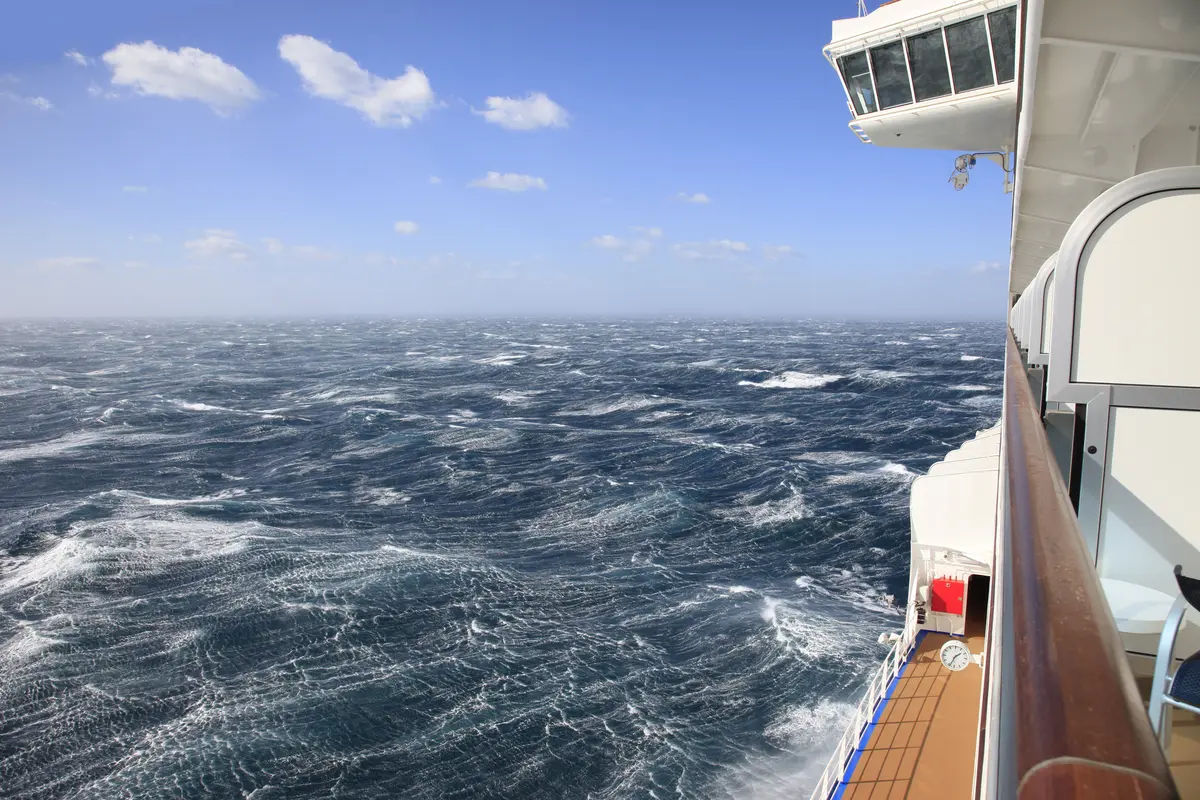
Cold fronts and high winds can impact sailing conditions, making it unsafe to call in port. Although last-minute changes are disappointing, they are always made with guests' comfort and safety in mind. 

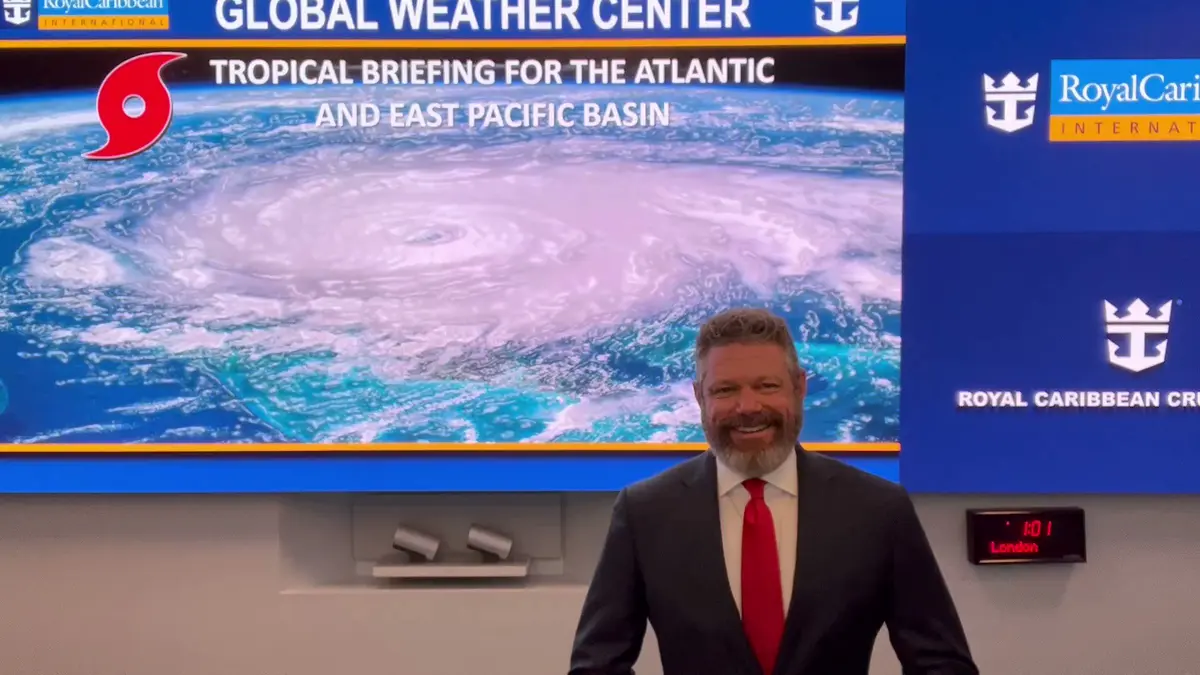
Royal Caribbean has a full-time meteorologist who monitors weather patterns and conditions, working directly with cruise ship captains to determine the safest and most comfortable adjustments when unexpected weather arises. 

Setzer-Weather-Pattern-X

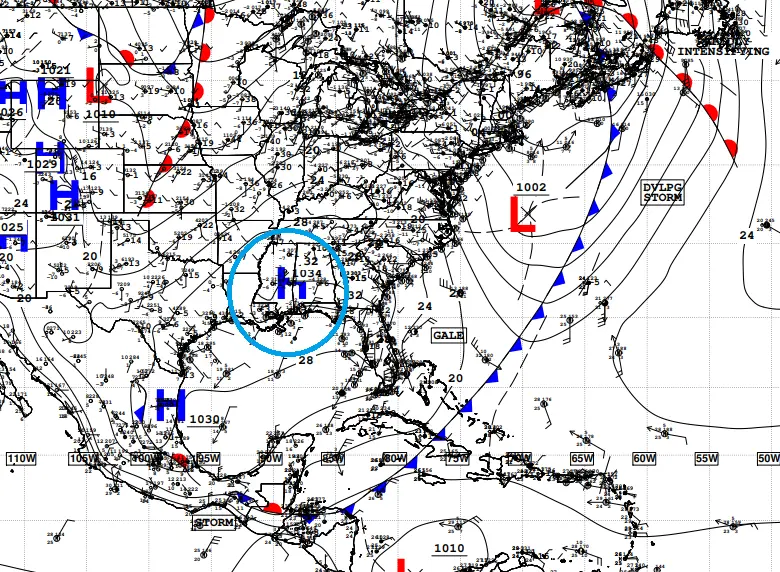
"Florida cloud shadow! Ideal cold weather setup for Florida with high pressure dropping into northern Gulf coast with cool & dry air spilling undisturbed down the peninsula," Setzer wrote on X

"The warmth of the nearby Gulf/Atlantic often moderate the chilly air but not in this flow pattern."

Meet the meteorologist who decides if your cruise gets rerouted

In:

You're ready for a great day at the beach in warm tropical waters with the sun shining, but the Captain announces a change in the itinerary for your cruise ship. Who makes that call?

Craig Setzer

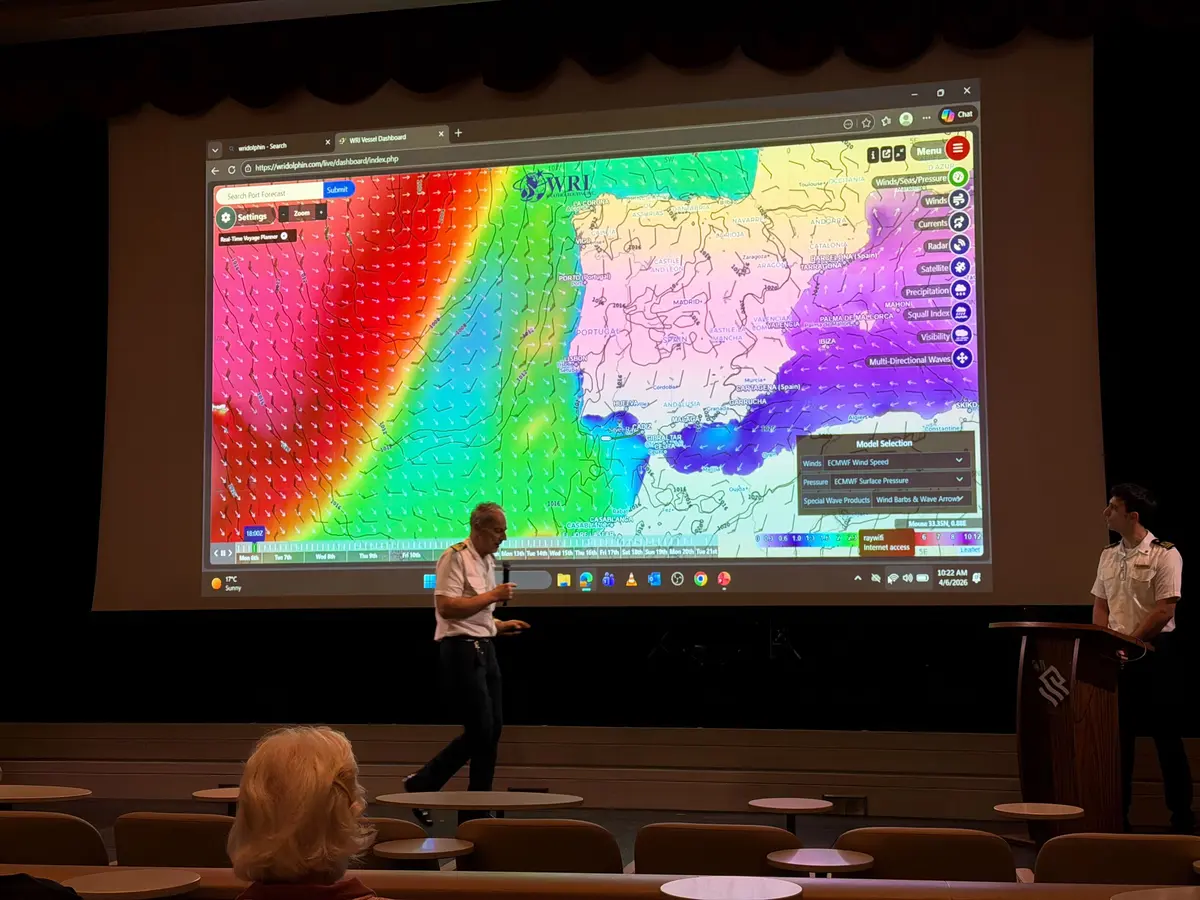
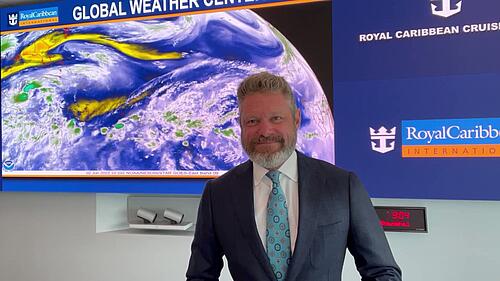
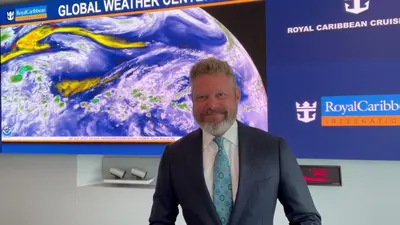
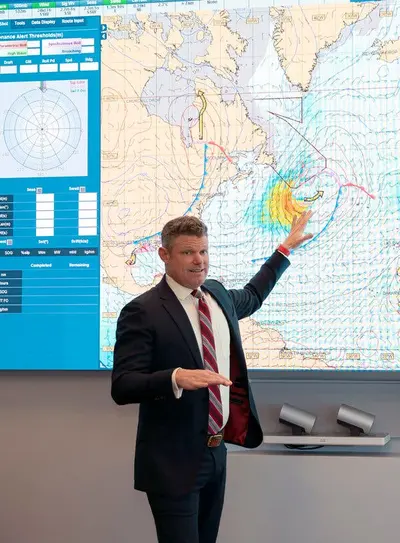
Craig Setzer is Royal Caribbean’s Chief Meteorologist, and it's his job to monitor weather developments around the world to make sure cruise ships are never in danger.

When he was hired, Royal Caribbean Group CEO Jason Liberty gave Mr. Setzer his marching orders when he told him, "I'm concerned about port weather events. Something that happens to us when we're in or near port that's sudden, a surprise, unexpected and not well forecast."

Craig Setzer

Since then, Mr. Setzer has been working every day to ensure bad weather doesn't compromise the safety of Royal Caribbean's planned sailings.

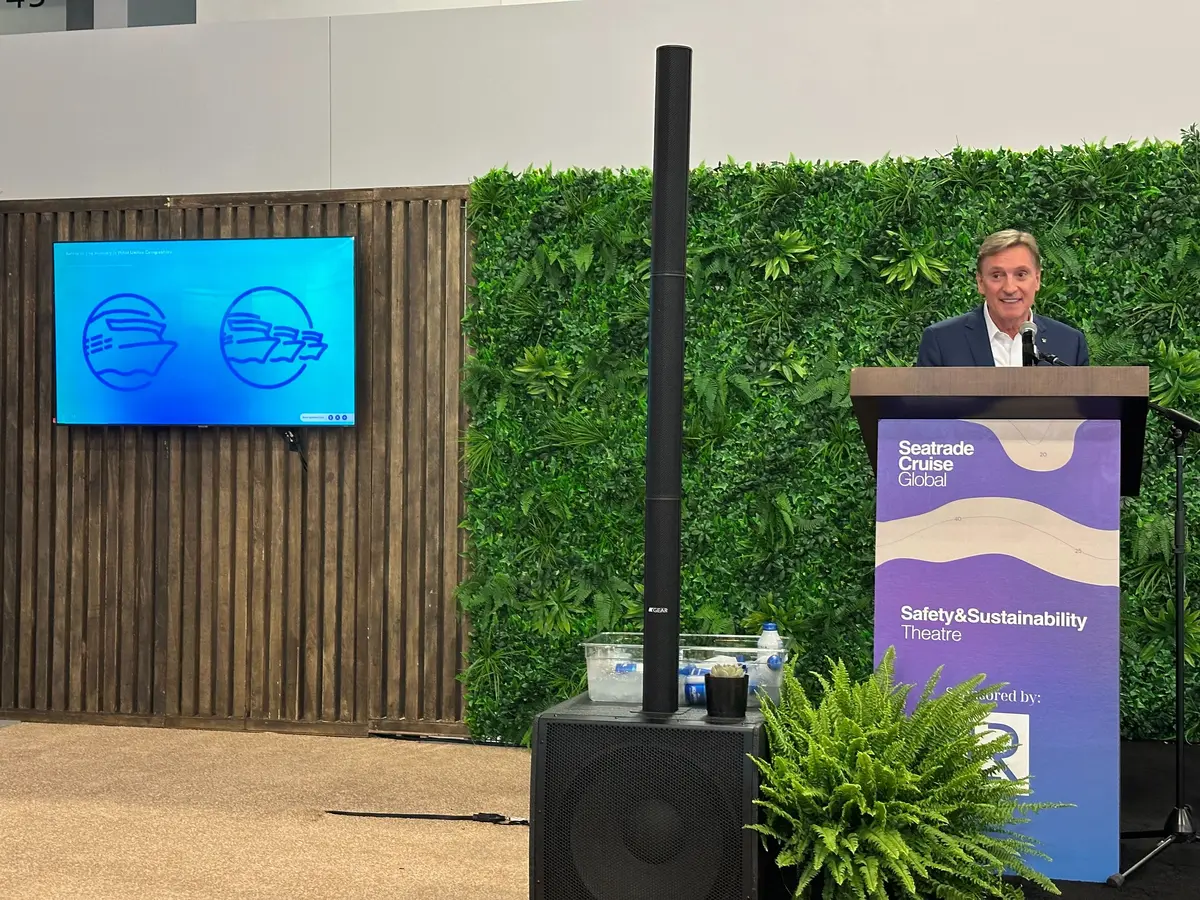
"From a weather perspective, safety is a given and it always comes first," he said during a seminar held at Seatrade Global conference earlier this month.

Of course, ensuring passengers enjoy their vacation is also important, "Guest comfort and guest experience are second on the list, right after safety."

What happens when bad weather threatens a port

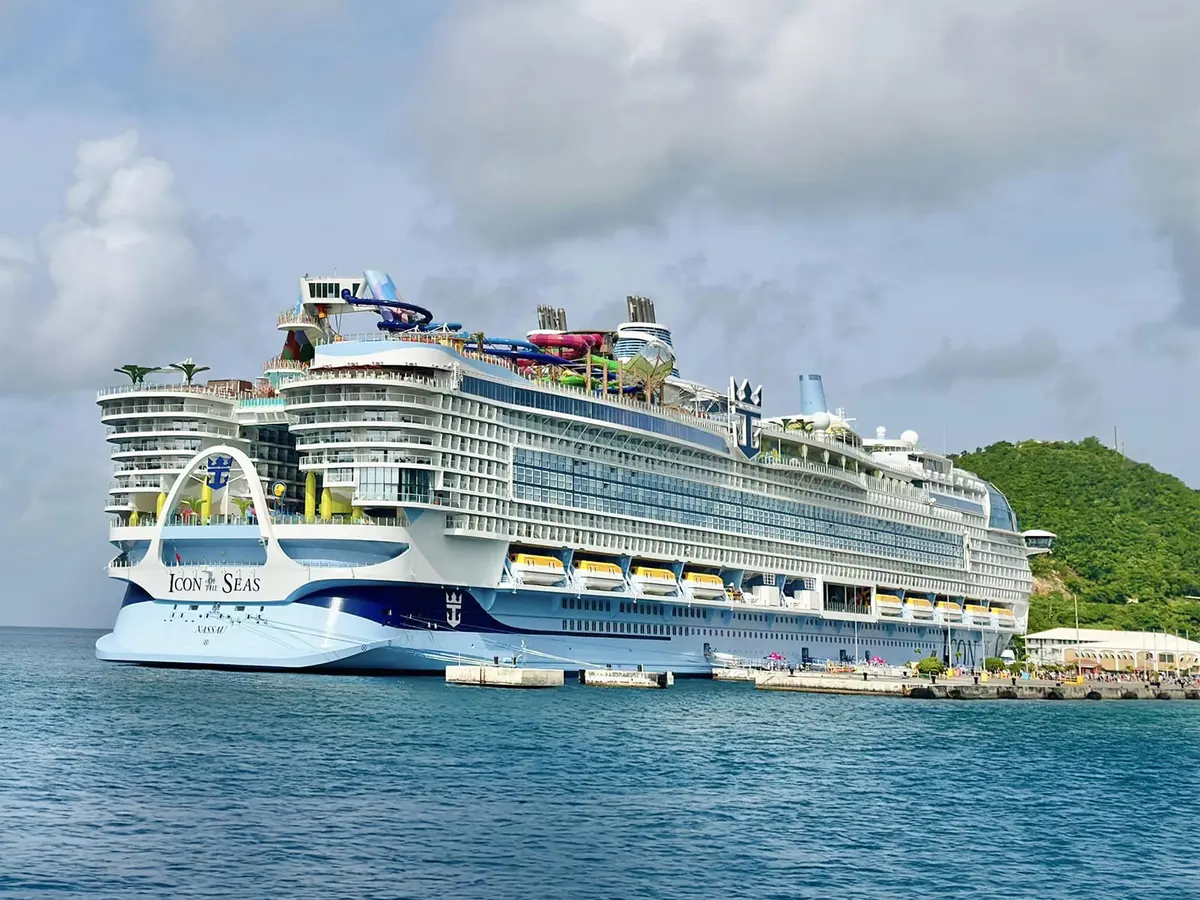
Icon of the Seas in St Thomas

When there's bad weather at sea, cruise ships can deviate.  But in port it's a different story.

"When you're in the open ocean, it's more about the wave heights or sudden wind events, " Mr. Setzer explained.

"In port, you don’t have room to deviate… there’s higher sensitivity to weather events like sudden wind gust."

There are risks to ships and the people on them while in port if bad weather strikes suddenly. Lines can break, ships can accidently veer off course and end up grounding or allision.

To determine if a change to your port stop is needed, Mr. Setzer relies on a three step approach: detect, notify, act.

"We have to know that something is coming that wasn't expected," he explained. Looking at weather models and tracking storms is part of that.

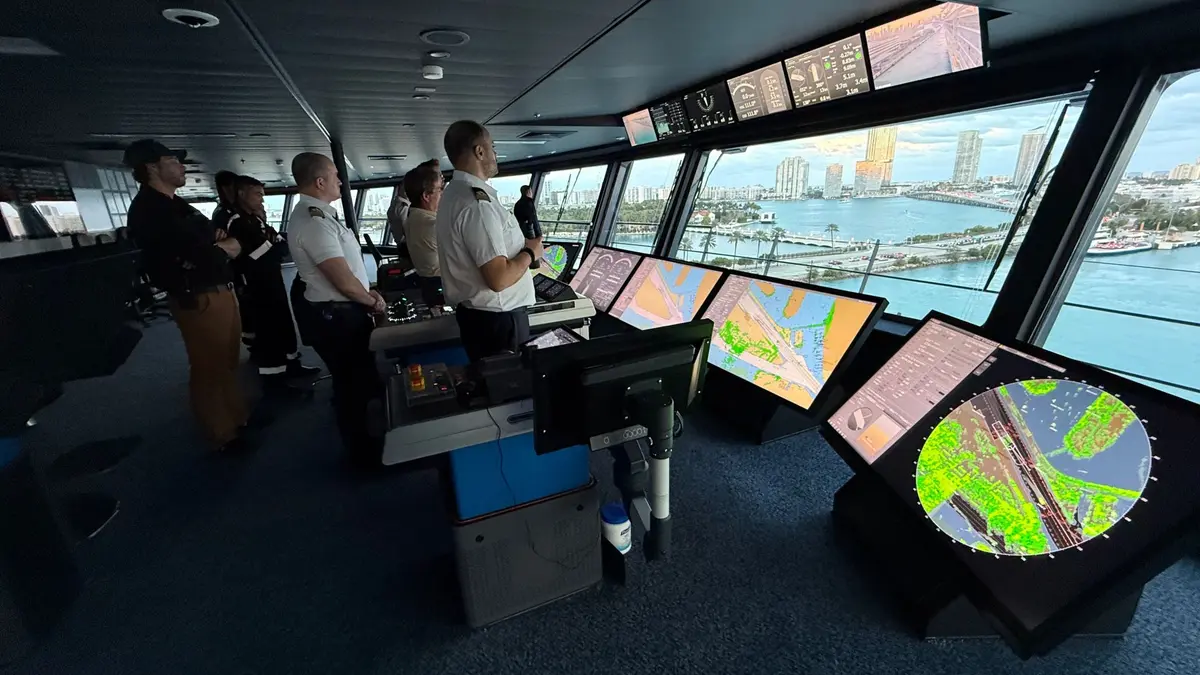
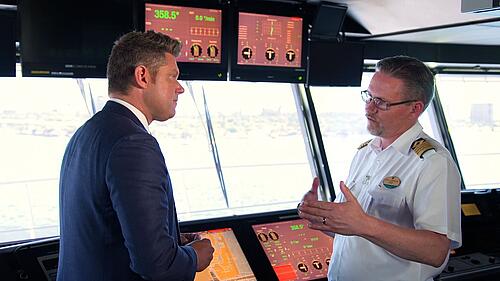
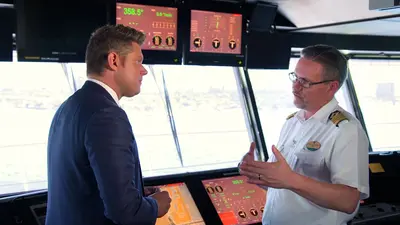
Bridge of Icon of the Seas

The second step is if he sees something concerning, to alert the ship and crew immediately.

The final step is to act and let the people at Royal Caribbean's marine division make a decision on a change.

He said his job is primarily detection, and he's thankful he's not the one making the call on a reroute, "I’m more on the detection part. We’re working together to create a notification part."

Hurricane season and big decisions

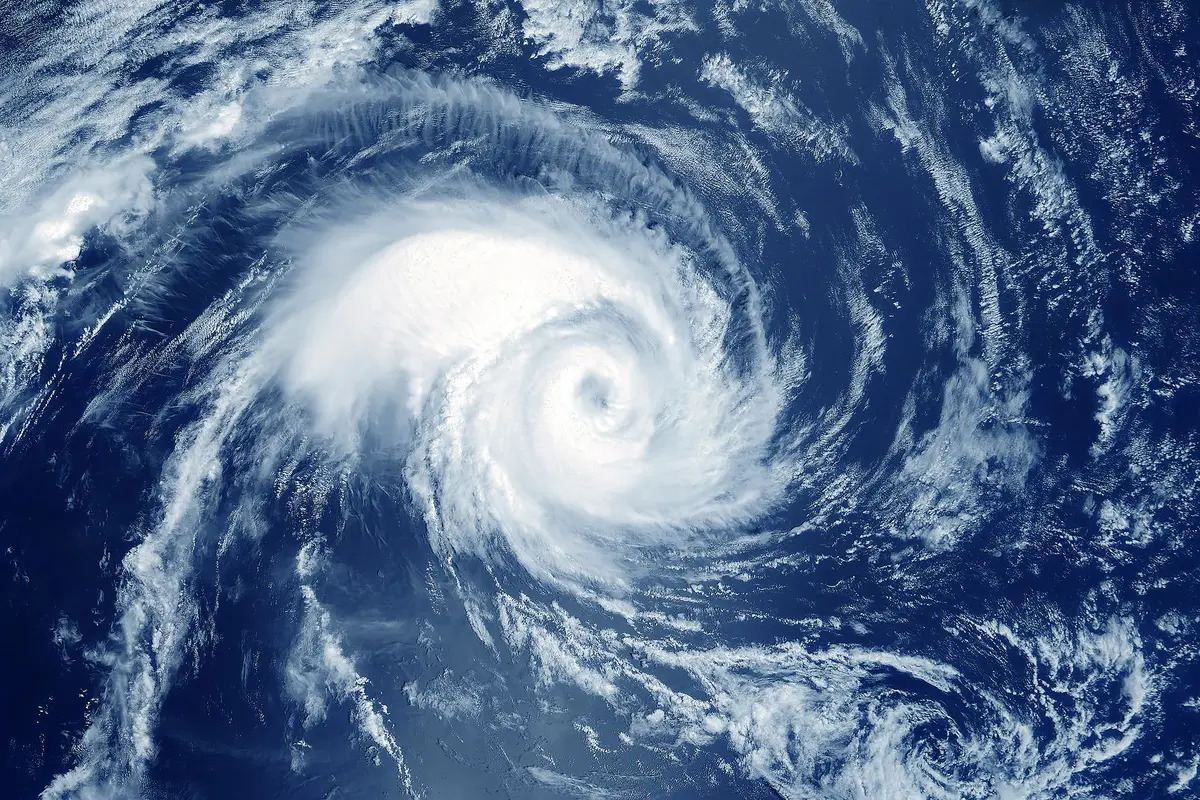
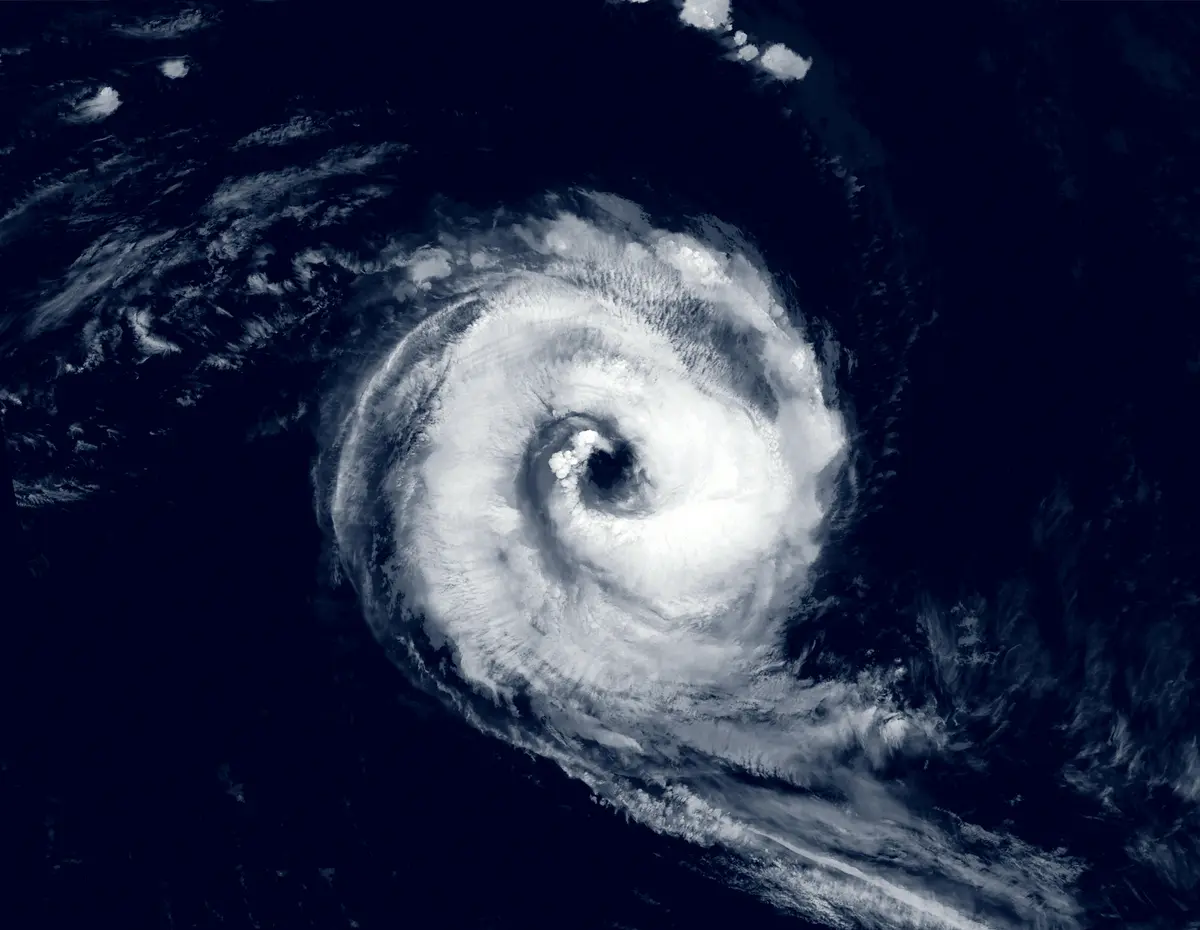
Hurricane as seen from space

Forecasters recently called for an "above normal" hurricane season this year, but that doesn't change how he views his prep for what to expect.

"Even in low years like 1992, South Florida got Andrew. In high years like 2022, we didn’t get anything. So you never know."

Royal Caribbean never takes the threat of a hurricane lightly, "from a marine perspective, we prepare every year with the possibility we could have an impact. We don't say this year it's a low number, so we're going to relax now."

Craig Setzer at CBS

Craig spent 25 years in South Florida, and 22 of those years was spent as a TV weatherman in Miami. That experience from decades in Miami makes him a step ahead.

"I  tend to anticipate the weather more than the models… even before a hurricane advisory comes out, I’m thinking: Where are my ships going to go to stay safe?"

Hurricane simulation

Last year, he participated in a preparedness test with key members across Royal Caribbean. The cruise line runs multiple hurricane exercises per year to get everyone ready for the season. 

In one example, a simulation had a storm that rapidly intensifies as it approaches South Florida. It began developing within 3 days of reaching Miami, putting everyone behind the planning curve from the beginning.

"This scenario is entirely possible and has happened before in history. Most folks think we will have days and days to watch and prepare."

How Royal Caribbean uses AI and radar to outsmart the weather

Royal Caribbean is blending artificial intelligence with weather radar to improve storm detection and cruise safety.

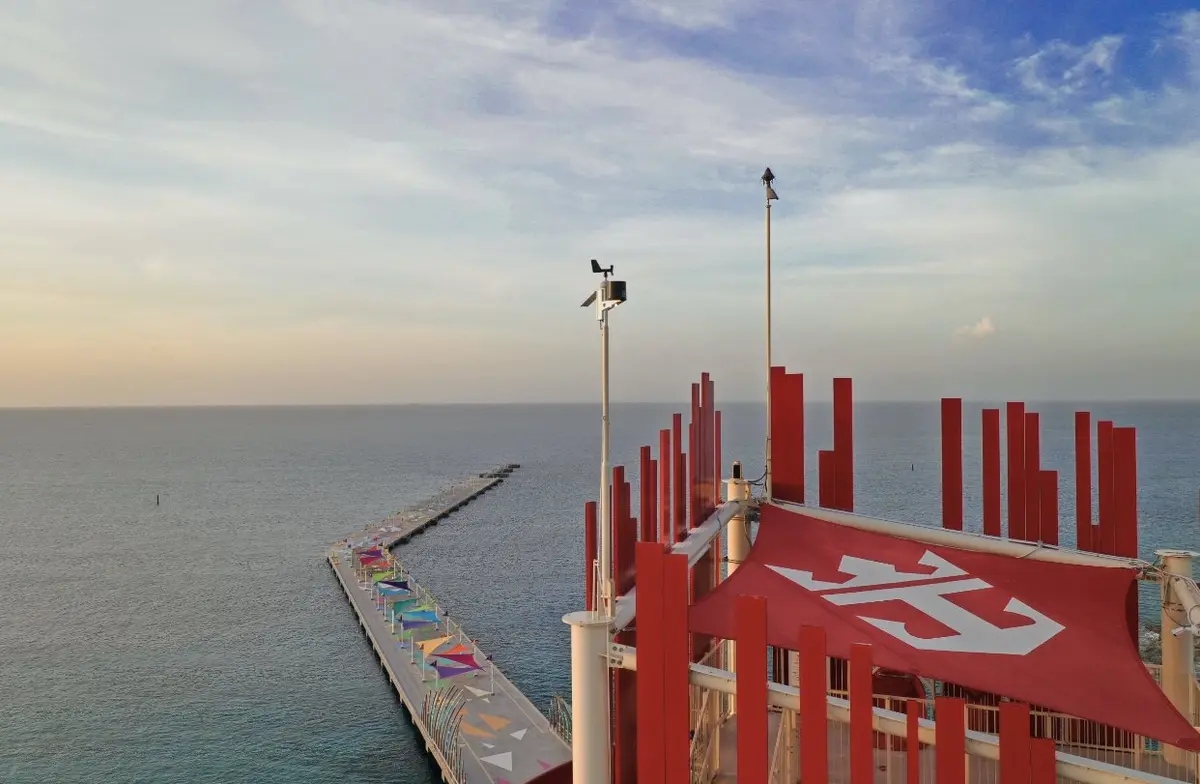
Royal Caribbean partnered with Meteopress to purchase a new radar system for the cruise line's Perfect Day at CocoCay private island in The Bahamas.

This isn't a run-of-the-mill radar station. It incorporates AI tools will forecast the weather to better detect port weather issues well before they hit.

It uses AI and machine learning to determine where traditional weather models have biases, and then corrects for those biases.

The weather radar is so powerful that it can reach up to 300 miles away, which will include Miami.

According to Mr. Setzer, all of this allows meteorologists to better anticipate weather events in terms of time instead of distance. It's a tool for Royal Caribbean to leverage.

Mr. Setzer's role blends science, instinct, and guest care in every voyage. By virtue of the fact Royal Caribbean employs a meteorologist, it provides a hidden value that guests may not be aware of, but is constantly watching for any potential issues.

Royal Caribbean's new Chief Meteorologist worries about the weather for your cruise so you don't have to

In:

Royal Caribbean has a new weather expert on staff who's job it is track bad weather and ensure cruise ships aren't near potential problems.

Craig Setzer at work

Craig Setzer is the company's new Chief Meteorologist, and as as we know, the only chief meteorologist working in the cruise industry.

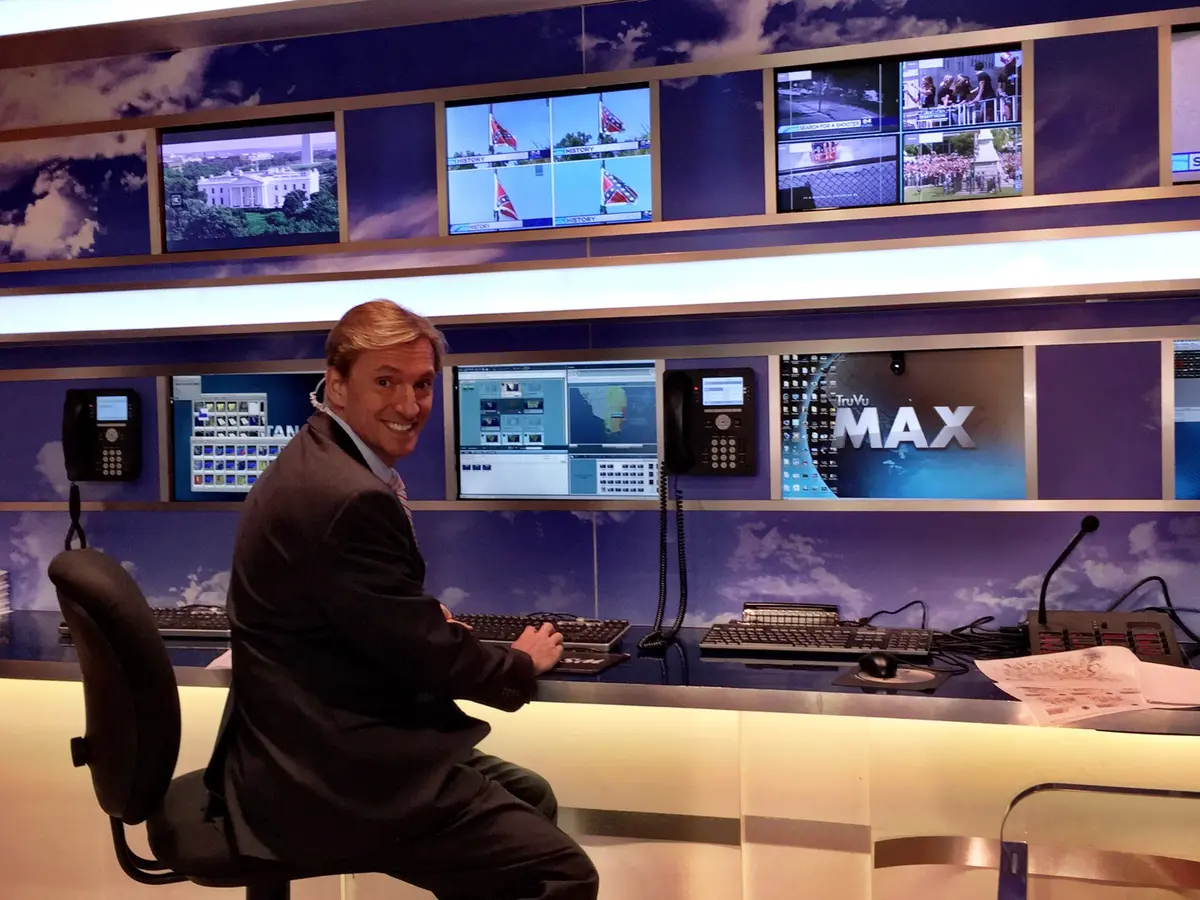
Mr. Setzer took on his new role in August, and has over 25 years of experience in the field. He's an Emmy-winning former TV Meteorologist, having worked at CBS News and a few local television stations. In fact, he was CBS' Chief Meteorologist.

He also remains involved with the National Hurricane Center, teaching at World Meteorological Organization workshops, and presenting at American Meteorological Society conferences around the country.

Craig Setzer at CBS

Following his television career, he spent considerable time in providing his expertise in court cases related to marine weather, atmospheric lighting and visibility, storm-related damage and losses, wind drift, and human exposure in extreme conditions. 

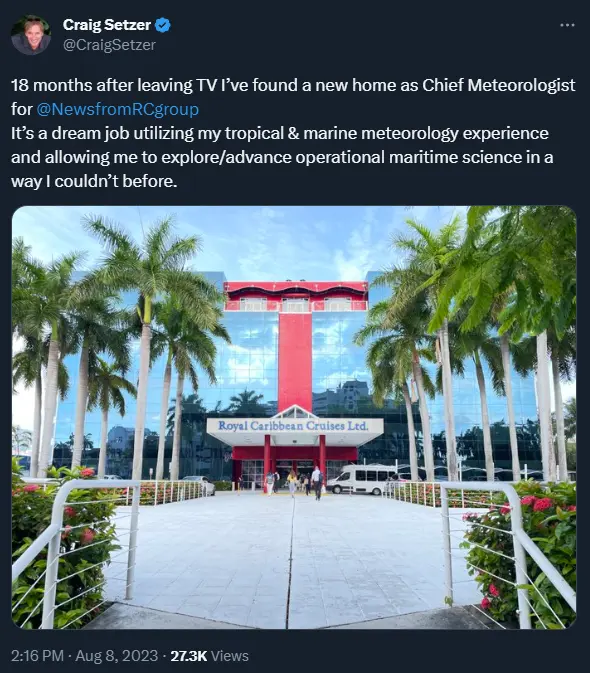
Mr. Setzer posted on his Twitter account that working with Royal Caribbean is a dream role, "It’s a dream job utilizing my tropical & marine meteorology experience and allowing me to explore/advance operational maritime science in a way I couldn’t before."

Craig Setzer tweet

According to Royal Caribbean Group's job posting for the Chief Meteorologist position earlier this year, Mr. Setzer will be responsible for providing expert analysis of weather systems, such as hurricanes, typhoons and any other kind of severe weather that could impact cruise ship sailings.

His guidance to the fleet with weather-related support and guidance is what ensures ships can alter itineraries, or simply take a different route to ensure a safe and comfortable experience for passengers.

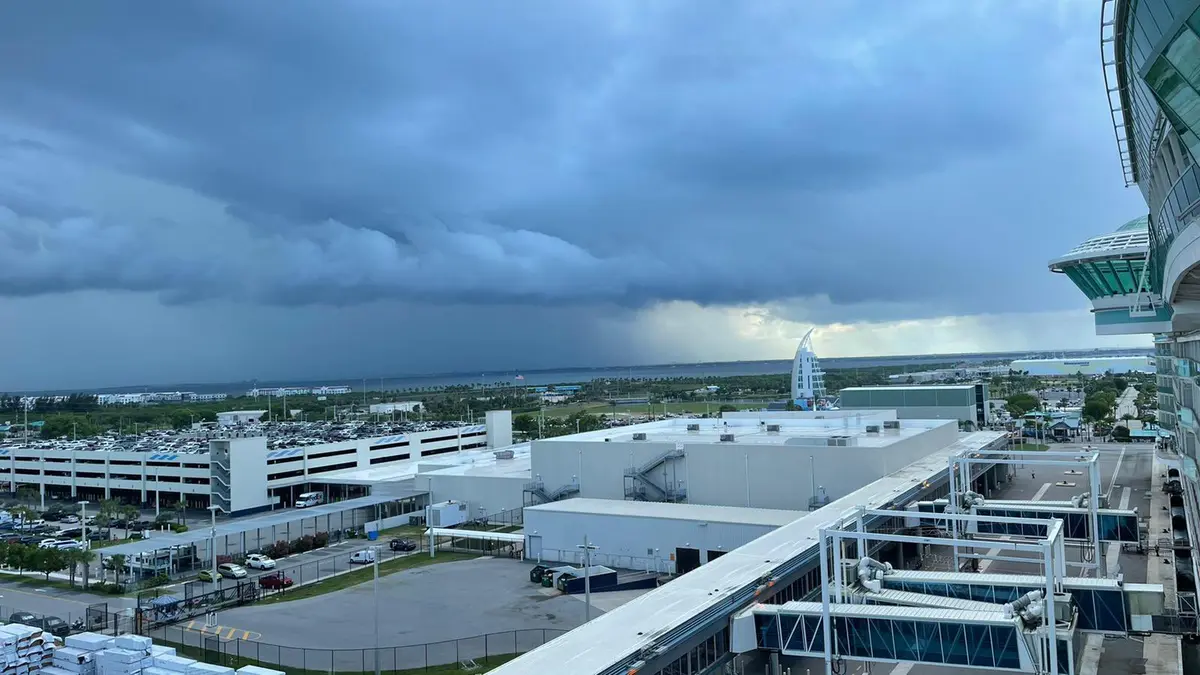
Storm in Port Canaveral

Royal Caribbean was the first line to create the role of a meteorologist following a weather-related incident involving a Royal Caribbean ship in 2016.  

Historically, cruise lines used outside vendors to provide them with forecasts. 

After an internal investigation of the unsettling event, the cruise line decided they needed an in-house, dedicated resource.

Since then, the cruise line decided it was time to mitigate the chances of that sort of event from happening again by hiring someone in-house to provide better direction.

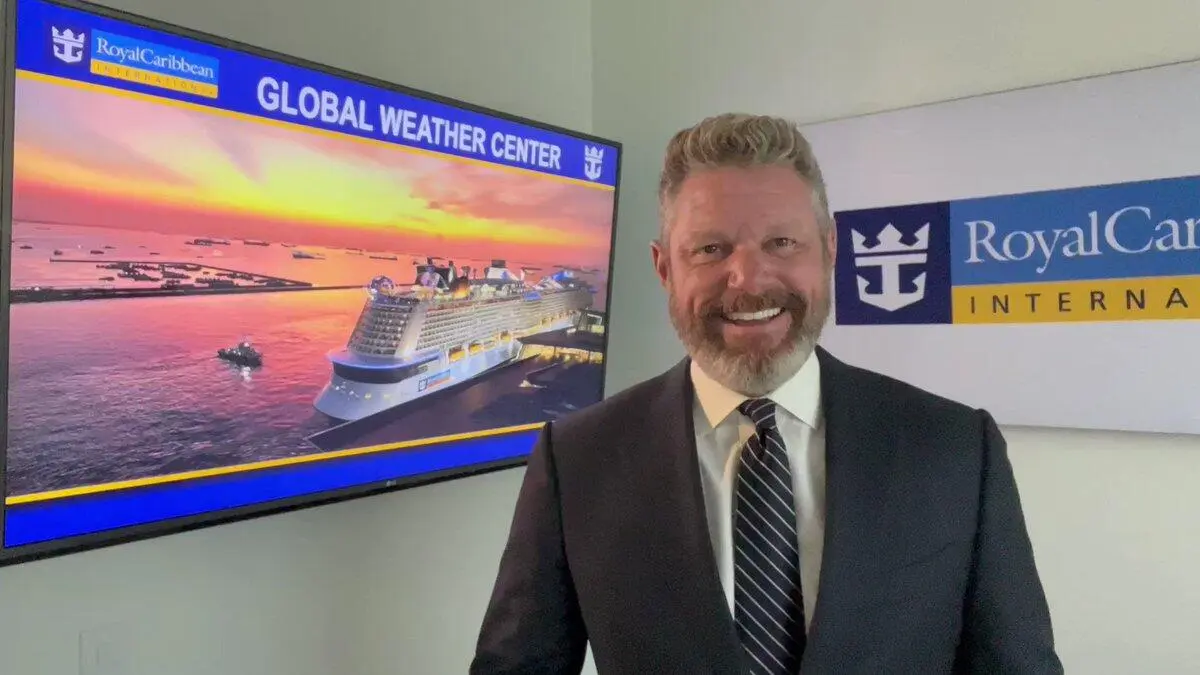
Royal Caribbean's first Chief Meteorologist, James Van Fleet, also came from a television background, and worked in the role from its inception until earlier this year when it was announced he was leaving the position.

Already busy tracking storms

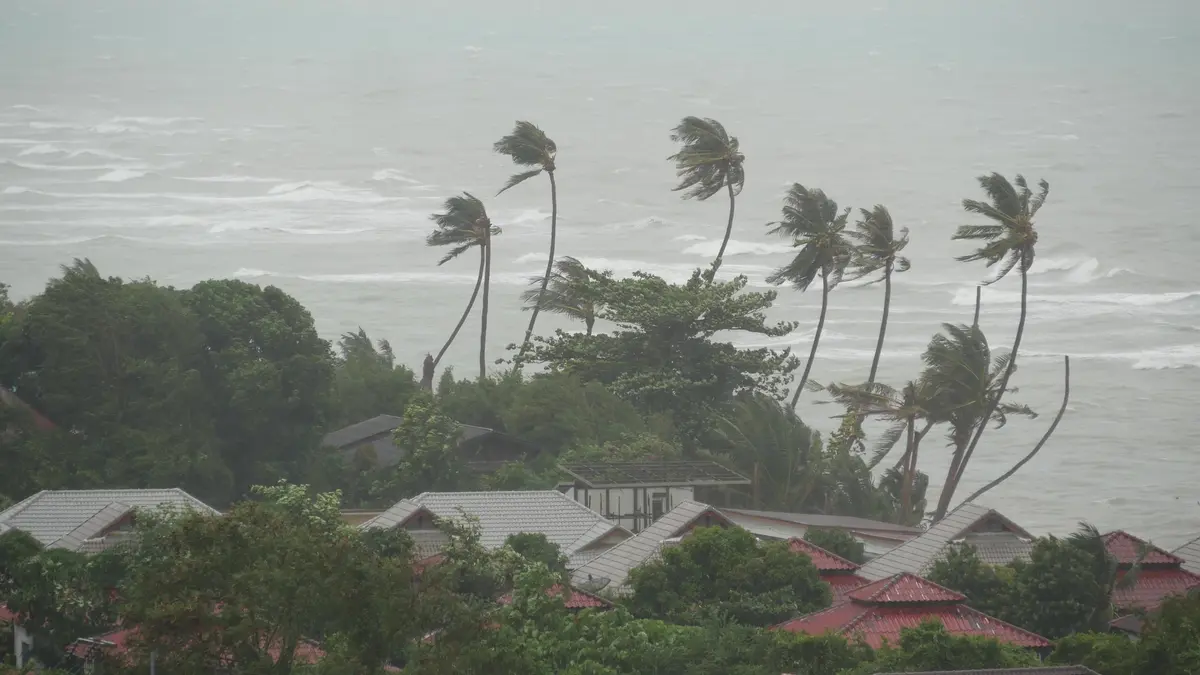
hurricane-winds-hurricane-season

If Mr. Setzer's social media postings are any indication, he's been busy tracking weather events in just the first few weeks on the job.

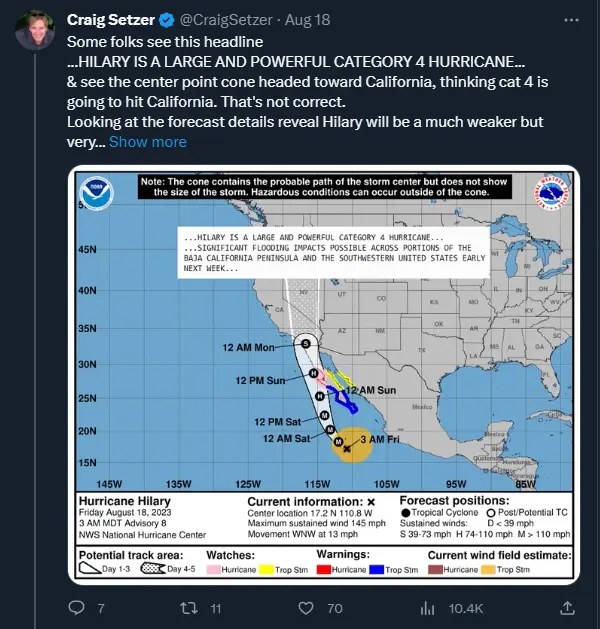
Hurricane Hilary is headed towards California, and he's been sharing key details about the intensity of the storm and what people can really expect.

He debunked some headlines related to the storm, sharing that he expects the storm to be much weaker by the time it reaches the United States.

Tweet by Craig Setzer

"Some folks see this headline, 
...HILARY IS A LARGE AND POWERFUL CATEGORY 4 HURRICANE...
& see the center point cone headed toward California, thinking cat 4 is going to hit California. That's not correct."

"Looking at the forecast details reveal Hilary will be a much weaker but very wet storm by the time it reaches the US. Flooding will be main threat for Calif, AZ, much of the western US."

Royal Caribbean's Navigator of the Seas had her itinerary changed, and Mr. Setzer was involved in that decision.

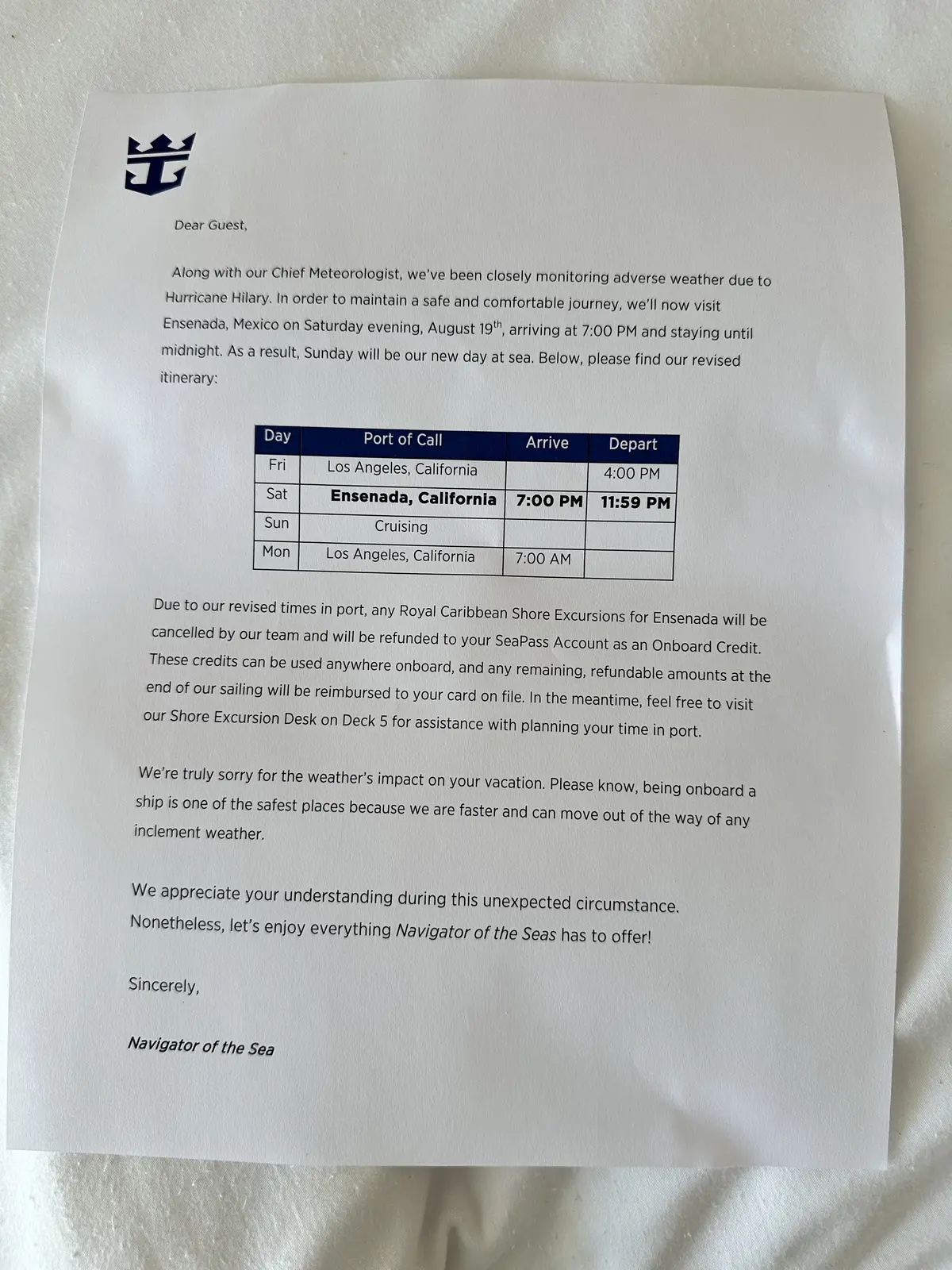
Letter sent to passengers on Navigator of the Seas

RoyalCaribbeanBlog reader YoungFamilyExplorers shared a photo of a letter sent to passengers onboard the cruise ship with the new times in port, and the decision was made with the assistance of the Chief Meteorologist. 

Of course, he's also focused on the Atlantic for tropical storm development.  Hurricanes in the Atlantic are usually where the greatest impact to itineraries occur.

The U.S. government's National Oceanic and Atmospheric Administration (NOAA) originally predicted a "near-normal" year with 12 to 17 named storms for the 2023 hurricane season, with five to nine would become hurricanes.

NOAA increased its forecast on August 10 to a prediction of an "above normal" year for hurricanes, because of record-warm sea surface temperatures.

The new prediction is for 14 to 21 named storms for the season as a whole, of which six to 11 could become hurricanes. Two to five could become major hurricanes, according to NOAA.

The Atlantic hurricane season runs between June 1 and November 30.

Royal Caribbean posts job opening for a new Chief Meteorologist

In:

Just days after Royal Caribbean's last meteorologist announced he left the company, there's a new posting for a replacement.

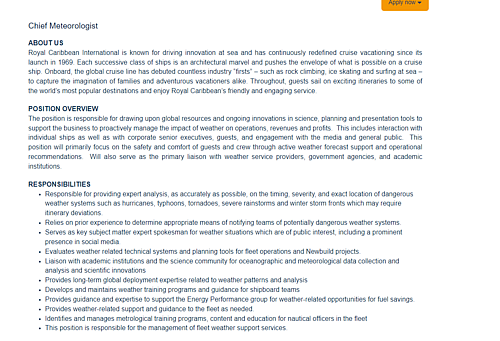
Royal Caribbean Group posted on their website a new job listing for the position of Chief Meteorologist.

Last week, James Van Fleet announced on social media he is no longer with Royal Caribbean. Mr. Van Fleet was the first Chief Meteorologist for Royal Caribbean and the cruise industry as a whole.

By employing a meteorologist on staff in a full-time capacity, it assists in tracking hurricanes, typhoons, tornadoes, severe rainstorms and winter storm fronts which may require itinerary deviations.

The job listing for his replacement seeks someone who has at least 15 years of experience forecasting the weather along with substantial media and public speaking experience.

"The position is responsible for drawing upon global resources and ongoing innovations in science, planning and presentation tools to support the business to proactively manage the impact of weather on operations, revenues and profits.  This includes interaction with individual ships as well as with corporate senior executives, guests, and engagement with the media and general public.  This position will primarily focus on the safety and comfort of guests and crew through active weather forecast support and operational recommendations.  Will also serve as the primary liaison with weather service providers, government agencies, and academic institutions."

Here's what is listed for the responsibilities of this potential new hire:

  • Responsible for providing expert analysis, as accurately as possible, on the timing, severity, and exact location of dangerous weather systems such as hurricanes, typhoons, tornadoes, severe rainstorms and winter storm fronts which may require itinerary deviations.
  • Relies on prior experience to determine appropriate means of notifying teams of potentially dangerous weather systems.
  • Serves as key subject matter expert spokesman for weather situations which are of public interest, including a prominent presence in social media.
  • Evaluates weather related technical systems and planning tools for fleet operations and Newbuild projects.
  • Liaison with academic institutions and the science community for oceanographic and meteorological data collection and analysis and scientific innovations
  • Provides long-term global deployment expertise related to weather patterns and analysis
  • Develops and maintains weather training programs and guidance for shipboard teams
  • Provides guidance and expertise to support the Energy Performance group for weather-related opportunities for fuel savings.
  • Provides weather-related support and guidance to the fleet as needed.
  • Identifies and manages metrological training programs, content and education for nautical officers in the fleet
  • This position is responsible for the management of fleet weather support services.
hurricane-season-ahead-sign-dreamstime

The timing of the change in personnel comes on the precipice of the Atlantic hurricane season, which begins next week.

Officially the hurricane season runs between June 1 and November 30, although dangerous storms can occasionally form outside those dates.

While the U.S. government's National Oceanic and Atmospheric Administration hasn't released its forecast yet for the 2023 season (it's coming on May 25), a few other institutions have posted predictions.

Hurricane aerial view

Colorado State University currently forecasts a slightly below-average amount of hurricane activity in 2023. The university's predicted 13 named storms for the season, with six storms becoming hurricanes. Two of those could become major hurricanes.

North Carolina State University predicted 11 to 15 named storms in 2023, with six to eight becoming hurricanes and two to three growing into major hurricanes.

Replacing James Van Fleet

James Van Fleet predicting weather

The new job posting follows the departure of the first Chief Meteorologist, James Van Fleet.

Van Fleet's last day was May 1, according to his post.

Mr. Van Fleet confirmed on social media that he is moving on from his position with the cruise line following six and a half years of working at Royal Caribbean.

James Van Fleet

Van Fleet started with Royal Caribbean in January 2017 and was a very visible face of the cruise line who explained how weather would potentially impact cruise ships.  He would often record forecasts that were transmitted to guests in their staterooms, along with being posted online.

Most guests found Mr. Van Fleet's forecasts helpful during hurricane season when tropical disturbances would wreak havoc in the Caribbean.

"As far as the guests go, I also want to thank you for all your trust over the years as we've moved you around storms and systems so you would have the best vacation experience," he shared in the video he shared on social media.

James Van Fleet

Prior to working with Royal Caribbean, he worked as a meteorologist for local television channels in both Tampa and Orlando, as well as stations in Texas.

Your thoughts

Is it important to you for Royal Caribbean to have a Chief Meteorologist? Would you like to see Mr. Van Fleet return to the role? 

Share your thoughts on hiring a meteorologist in the comments on this post!

Royal Caribbean's meteorologist announces he is leaving the cruise line

In:

James Van Fleet is out as Royal Caribbean's chief meteorologist.

In a post on social media this morning, Mr. Van Fleet announced as of May 1, he is no longer with Royal Caribbean.

In his short 40 second video, he thanked Royal Caribbean for employing him for 6.5 years and to the guests for trusting him along the way.

"Thank you to Royal Caribbean for the last six and a half years," he said in his announcement. "That was amazing. That was so much fun, I enjoyed every minute of it."

He later tweeted, "I wish them all the best, it was the highlight of my career so far, and am excited for whatever comes next. Let’s stay connected!

The video did not specify why he is leaving Royal Caribbean, nor what his next sort of employment will be.  He only said he'd prefer to remain in Miami.

No replacement for JVF?

There's also no indication of who, if anyone, will replace Mr. Van Fleet.

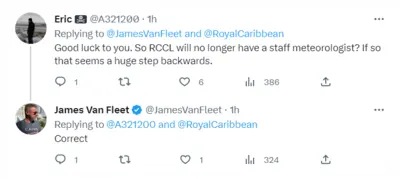
A user on Twitter asked Mr. Van Fleet if Royal Caribbean will no longer have a staff meteorologist, and Mr. Van Fleet responded back "Correct".

A trailblazing legacy

Royal Caribbean Chief Meteorologist James Van Fleet is a former TV weatherman who was the first full-time meteorologist for a cruise line. Despite early ambitions to be a DJ, Mr. Van Fleet tried his hand at the weather after an open position arose at a local TV station.

He worked in weather hot spots like Texas and Oklahoma, where he gained experience forecasting and broadcasting about severe weather. After moving to Florida, Mr. Van Fleet continued his work on hurricanes and storms, providing the experience he would need to work in the cruising industry.

Prior to Mr. Van Fleet's tenure, cruise lines used outside vendors to provide them with forecasts. 

The impetus for bringing on a meteorologist followed a bad storm that caught Anthem of the Seas in 2016 that drew a great deal of negative press coverage.

In 2016, the Anthem of the Seas was caught in some unexpected bad weather at sea while cruising between New Jersey and the Bahamas. With waves over 30 feet and hurricane force winds, the ship sustained minor damage to public areas. Although no one was harmed, it was not an ideal scenario.

Subsequently after the incident, Royal Caribbean decided they needed an in-house, dedicated resource to better monitor the weather.

Working as Royal Caribbean’s Chief Meteorologist

Once a part of the cruise line, James Van Fleet was responsible for 18,950 forecasts per year, a stark contrast to the 2000 forecasts he provided in previous positions.

He described the position at Royal Caribbean as his dream job, and it was one that had never existed before in the cruise industry. 

There was no “typical day” in the life of James Van Fleet during his time as Chief Meteorologist. Based in Miami, he spent about half the year working through hurricane and typhoon season, providing forecasts to help predict upcoming storms and reroute ships if necessary.

Related: How Royal Caribbean navigates bad weather with its own meteorologist

Other than time in the office, Mr. Van Fleet would visit weather specialists in Oklahoma or fly on a NOAA hurricane hunter plane to seek out the eye of a storm. Even if the weather was nice in Miami, a storm could be brewing elsewhere.

Unlike forecasting weather on land, forecasting weather at sea came with added challenges. There are many data gaps at sea, as there are not nearly as many weather sensors in the ocean compared to on land.

Plus, not only is the weather moving at sea, but Royal Caribbean’s fleet of ships are moving as well, adding more variables to the forecast.

With 26 ships in the fleet, Mr. Van Fleet was responsible for forecasting weather on the itinerary of all ships, from those in the Caribbean to Alaska, Europe, and beyond. Additionally, he was responsible for monitoring weather at Royal Caribbean’s private destinations in the Bahamas and Haiti, as well as ports where ships refuel, restock food, and have dry docks.

How will Royal Caribbean forecast weather without James Van Fleet?

Cruise ships are equipped with technology to anticipate storms, and officers on the bridge carefully monitor weather systems. This allows them to change course and quickly move vessels away from inclement weather.

Communication was a large part of Van Fleet’s position, and he made a point of visiting officers on all ships to get to know them better. He also hosted a fleetwide call every week to make sure all officers were on the same page.

Related: Cruise FAQ: Weather

Captains and officers will now be working without the assistance of Van Fleet, so they will not have access to his information on upcoming storms and the best course to avoid them. Nonetheless, trained officers can prepare for and foresee any weather approaching.

Many cruisers have enjoyed following Van Fleet on social media for updates about their itinerary’s weather forecast. In fact, he accumulated nearly 28,000 followers on Twitter and over 10,000 on Instagram.

While you can be assured that, even without James Van Fleet, weather will still be forecasted for your sailing, his work at Royal Caribbean will certainly be missed.

Royal Caribbean Blog Podcast Episode - Royal Caribbean's Chief Meteorologist

In:
11 Jan 2023

Listen to the Show

Royal Caribbean's Chief Meteorologist James Van Fleet is one of a kind, and this week, we have an exclusive interview talking about how is services benefit the company and passengers alike.

Share with me your thoughts, questions and comments via...

On this episode:
Running time:

How Royal Caribbean navigates bad weather with its own meteorologist

In:

Trying to predict the weather is no easy task, and on a cruise ship, there's many more variables to consider than on land.

Cruise ship in a storm

Did you know Royal Caribbean employs its own dedicated meteorologist to guide the fleet with the best advice based on weather conditions?

Royal Caribbean Chief Meteorologist James Van Fleet is a former TV weatherman, but now works just with Royal Caribbean to give the captain of each ship the best outlook on what the weather is doing now and what it is likely to do in the near future.

On a recent President’s Cruise to Alaska in June of 2022,  Mr. Van Fleet gave a presentation on the “Art of Weather Forecasting”.

James Van Fleet with beard

During the hour long discussion on the Ovation of the Seas, Mr. Van Fleet talks about his journey to his dream job as well as the challenges of forecasting weather for an international fleet of cruise ships.

Although meteorology is heavily based in science, he takes us through the ambiguities and uncertainties associated with weather forecasting.  

With his talent for storytelling, Mr. Van Fleet recounts his journey, how he joined Royal Caribbean, and what the future holds.

How it all started

James Van Fleet

Originally Van Fleet had ambitions to be a DJ and was lucky enough to get a job at a local radio station at 18 years of age. After a while, seeking out some variety, he tried his hand at the weather.  

Some time afterward, an opportunity came up to do weather at a local tv station; Van Fleet was keen to move but was warned that his chances were slim. The preferred candidate never showed up for an interview, and he landed the job. So began his television career.

Working in weather hot spots like Oklahoma and Texas, Van Fleet gained experience broadcasting about severe weather, including tornadoes that are common in the region. Moving to Florida, he expanded his knowledge by working on hurricanes and storms. This time laid the groundwork for his future career in international cruising. Although with the last name fleet, it clearly was his destiny.

How he came to work at Royal Caribbean

Storm damage to Anthem of the Seas

In 2016, the Anthem of the Seas was caught in some unexpected bad weather at sea while cruising between New Jersey and the Bahamas. After an internal investigation of the unsettling event, the cruise line decided they needed an in-house, dedicated resource, and Van Fleet was brought onboard as Chief Meteorologist. His “dream job” as he describes it.

Hard to believe, but his appointment was an industry first. Prior to this, cruise lines used outside vendors to provide them with forecasts. However, it was felt that this was no longer sufficient.

Talking about the transition from weather forecasting on land to a company with international ships, Van Fleet says that he used to provide just over 2000 forecasts a year, and is now responsible 18,950, a momentous task. Not to mention that it is even more difficult than forecasting on land.

What’s a typical day?

Six years later, listening to Van Fleet talk, you quickly get the picture that there is no such thing as a typical day in his job. He can be in Miami, where he spends at least half the year working through hurricane and typhoon season, or he may be visiting weather specialists in Oklahoma. You may even find him flying on a NOAA hurricane hunter plane, seeking out the eye of a storm.

According to Van Fleet, he gets some ribbing from fellow colleagues about what it's like to make mistakes and still get paid. Joking aside, he is very cognizant of the ramifications of an error.

 As he describes it, there are not two days that are the same and “even when it is beautiful in Miami… there is something going on somewhere.”

Weather forecasting

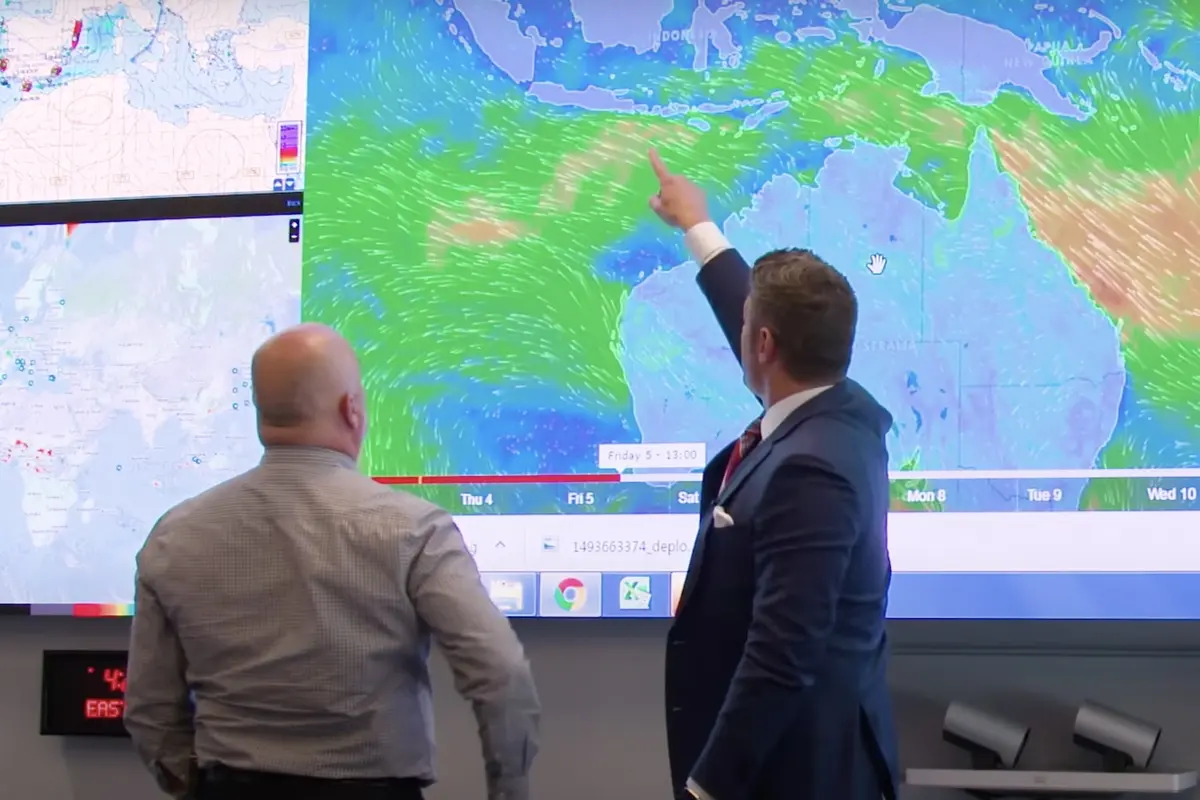
Van Fleet with map

One of the biggest challenges to marine forecasting is that, unlike on land, both the weather and the ships are moving, creating far more variables to deal with.

In addition to this, they monitor the company's private islands in the Bahamas and Haiti, as well as ports where they get food and fuel or have shipyards and dry docks.

Van Fleet says it all starts with the current weather, and they go from there. He looks at plenty of maps, but predicting weather internationally has its challenges. Talking about the upcoming world cruise, Van Fleet discusses the specific challenges of this type of journey. He notes that the hardest part will be the crossing of the Drake Passage, the body of water between Cape Hope Horn, Chili and the islands of  Antarctica. He will be onboard the Serenade of the Seas for this part of the adventure.

Tools of the trade

An invaluable tool in weather forecasting is computer models. There are more than a dozen weather models, and they don’t always agree, which is why viewers see differing forecasts, especially as it relates to hurricane modeling.

Meteorologists also use radar, but Van Fleet cautions that infrared radar can have issues as it relies on temperature differences. On a foggy day, you won’t necessarily see it on a radar, which can be a problem for a ship.

The other issue in understanding weather, especially at sea, is that there are plenty of data gaps. On land, there are weather sensors everywhere, but there are many places on the sea that do not. This means, in a way, you can be flying blind.

Why you can’t go to Perfect Day at CocoCay

Sometimes ships need to change course and skip a scheduled port stop. This can be a big disappointment for Royal Caribbean guests who love the cruise line’s private destination in the Bahamas, Perfect Day at CocoCay.

Van Fleet explains that weather can be difficult to predict in the Bahamas. He has even tapped into a local weather resource, the Bahamas Spotter Network, who use old school walkie talkies to communicate about impending bad weather.

Wonder of the Seas docked at CocoCay

Another variable is the ship class. Royal Caribbean has 5, soon to be 6 classes of ships, and their characteristics mean that they respond to weather differently. The larger ships of the Oasis class are better able to navigate turbulent water than smaller ships.

It also depends on what is going on that the dock and pier assignments. It's fair to say that if you miss a port, it is because it's not safe to dock. 

Communication

Storm in Port Canaveral

Communication with guests is a big part of Van Fleet’s job at Royal Caribbean. Whether it is supplying information for a cruise compass or on social media channels.

This is something he is also working on with the ships. He has embarked on a campaign to visit the officers of all the ships, so he can get to know them better. He also does a fleetwide call every week to make sure they are on the same page. During the pandemic, he designed a course, Marine Meteorology Training, for bridge offices.

Van Fleet acknowledges that the weather business receives a lot of blowback about hurricane forecasts gone wrong.   As he says, errors expand with time, but he feels like there is an opportunity to better explain to viewers why there is a range of impact zones, especially the farther out you go in time.

Looking to the future

Water slides on Adventure of the Seas

Meteorology has improved by leaps and bounds, especially as it relates to forecasting storm landfalls. According to Van Fleet, the next big challenge is understanding and predicting the rapid growth in intensity. What causes a tropical storm becomes a category 3 storm overnight is one of the most pressing challenges in forecasting.  

There are also unexpected events, such as the 2021 eruption of the La Soufrière Volcano in Saint Vincent and the Grenadines. Van Fleet worked on coordinating ship efforts as Royal Caribbean assisted inhabitants in getting off the islands. He also had to monitor the potential impacts of ash and smoke on the company's ship cruising in the Caribbean.

As he closed out his presentation, you can’t help but come away with the impression that Van Fleet loves his job and his passion for it is boundless. He made a special thanks to Royal Caribbean cruisers who “ do a phenomenal job in sharing pictures on social media”, a great help to him. 

Watch the entire talk

{"preview_thumbnail":"/sites/default/files/styles/video_embed_wysiwyg_preview/public/video_thumbnails/auRNCrmldSM.jpg?itok=K4J0uXmy","video_url":"https://www.youtube.com/watch?v=auRNCrmldSM","settings":{"responsive":1,"width":"854","height":"480","autoplay":0},"settings_summary":["Embedded Video (Responsive)."]}

Cruise FAQ: Weather

In:

Few things can put a damper on a cruise like bad weather. At their best, poor conditions can mean that your fun day in port is rained out; at their worst, your itinerary could be heavily altered or canceled completely.

When it comes to weather, you've got questions, and we've got the answers. Read on to find out what to expect. 

Will a cruise line cancel a cruise due to weather?

The safety of passengers and crew is always the top priority, so if weather conditions are severe enough to warrant it, yes, cruise lines will cancel sailings. If that happens before you set sail, you will be given a full refund.

However, because cancellations result in unhappy passengers and a logistical nightmare -- not to mention a financial hit -- for cruise lines, ships will most often attempt to reroute if bad weather is on the way.

That could mean something as simple as swapping the order of ports on the itinerary, canceling certain calls altogether or switching the sailing region completely from, say, a Caribbean voyage to one that instead visits Canada and New England.

It's crucial for passengers to understand that they should prepare to roll with the changes.

Alterations made to the planned cruise schedule because of weather are beyond cruise line control and, therefore, affected travelers are not entitled to compensation. (This is one of many solid reasons to purchase travel insurance.)

Can cruise ships withstand storms?

Modern cruise ships are equipped with the latest technology to help them anticipate storms. Officers on the bridge carefully track and monitor any systems that creep up, allowing them to quickly maneuver their vessels out of the way.

Additionally, some lines have their very own shoreside meteorologists (such as Royal Caribbean's James Van Fleet) and command centers to assist with weather predictions and relay important information to all ships that are sailing in the area. 

Should a ship be caught in a storm, there are several safety mechanisms in place to help it stay afloat.

Cruise ships are built to include stabilizers, which minimize the rolling (side-to-side leaning) passengers feel in choppy seas. Vessels are also constructed with water-tight bulkheads that seal off areas where unwanted water might enter, as well as water expulsion systems that allow H2O to be pumped out of the vessel to make it more buoyant or from one side of the ship to the other to further minimize rolling.

Ultimately, most ships would have to list more than 60 degrees to either side in order to be in danger of sinking -- something that, to date, hasn't ever happened to a modern cruise ship as a result of weather conditions.

Read moreThings not to worry about on a Royal Caribbean cruise

What happens if it rains on a cruise?

Unfortunately, cruise lines can't control the weather, and rain happens. You're entitled to pout, but what you're not entitled to is compensation for bad weather, so don't expect a refund for your sailing -- even a partial one.

When it does precipitate, crew do their best to swab the decks and put down non-slip mats to reduce the risk of passengers' falling.

If conditions are bad enough, some outdoor attractions like surf simulators and rock climbing walls may be shut down until the rain stops and the crew deems them safe to use again. But don't worry -- you'll find plenty of onboard activities taking place inside, so you won't be bored on sea days.

On port days, excursions might be canceled. If that's the case and you booked your tour through your cruise line, your money will be refunded. If you booked independently through a third party or directly through your tour operator, you'll have to check with them to ask about cancellations and refund policies.

If you haven't booked an excursion and don't feel like traipsing around with an umbrella all day, you can either seek out something fun to do inside, such as a museum tour or shopping, or you can simply elect to stay onboard and take advantage of a less crowded ship (and, often, spa discounts).

Read more: Help! It's supposed to rain my entire cruise!

Do you feel waves on a cruise ship?

Some cruisers are more sensitive to ship movement than others, but you're sure to feel at least some minor movement while cruising. Ocean conditions are almost always the determining factor when it comes to the amount of movement you'll experience.

Although some movement is inevitable, mainstream cruise vessels are built and operated with travelers' comfort in mind. Passenger vessels are equipped with stabilizers that extend off the ships' sides to reduce the amount of rolling.

If you suffer from seasickness, book a cabin with a view on a lower deck and near the middle of the ship. Invest in an ear patch or a motion sickness bracelet, or pack some Bonine or Dramamine pills

Read moreHow To Avoid Getting Sick on a Cruise

Do cruise ships get cold at night?

This depends entirely on where you're sailing and where you spend your time indoors in the evenings.

If you're out on deck at night in Alaska, it's likely to be cold. In the Caribbean, it can be chilly after the sun goes down, thanks to the ocean breezes, but chances are good that you won't ever need a down parka to stay warm.

When it comes to the ship's climate control, each cabin has its own settings, which are determined by the passengers staying in them. That means you dictate the temperature in your own room.

However, ships usually keep public areas, such as restaurants and theaters, at cooler temperatures to offset the humid sea air and warmth from the crowds of people who tend to gather there.

Regardless, we recommend packing a blazer, cardigan or pashmina to wear at night, just in case you find yourself suffering from a case of goosebumps.

Read moreYes, it does sometimes snow on cruise ships

What is hurricane season on a cruise?

Hurricane season is the span of time between June and November when hurricanes are most likely to form in the Atlantic Ocean.

Caribbean, Bahamas, Bermuda and Mexican Riviera cruise fares are generally the least expensive during this time because passengers have to be more flexible, knowing that a storm could force an itinerary change at a moment's notice.

Keep in mind that the safest place for a ship during a hurricane is at sea, where it can steer well clear of the storm. Ships that are docked are at greater risk when severe weather hits because they have less room to move and are in proximity of other vessels, piers and the shore, which all create the potential for collisions.

So, if your ship has to change course due to a weather event, relax, enjoy the fact that you're still on vacation, and trust that your ship's officers will do all they can to keep you out of harm's way.

Read moreWhat to know about cruising during hurricane season in the Caribbean

Subscribe to Weather