
I've traveled to Europe every summer for the past four years, and I swear by my strategy for avoiding jet lag.
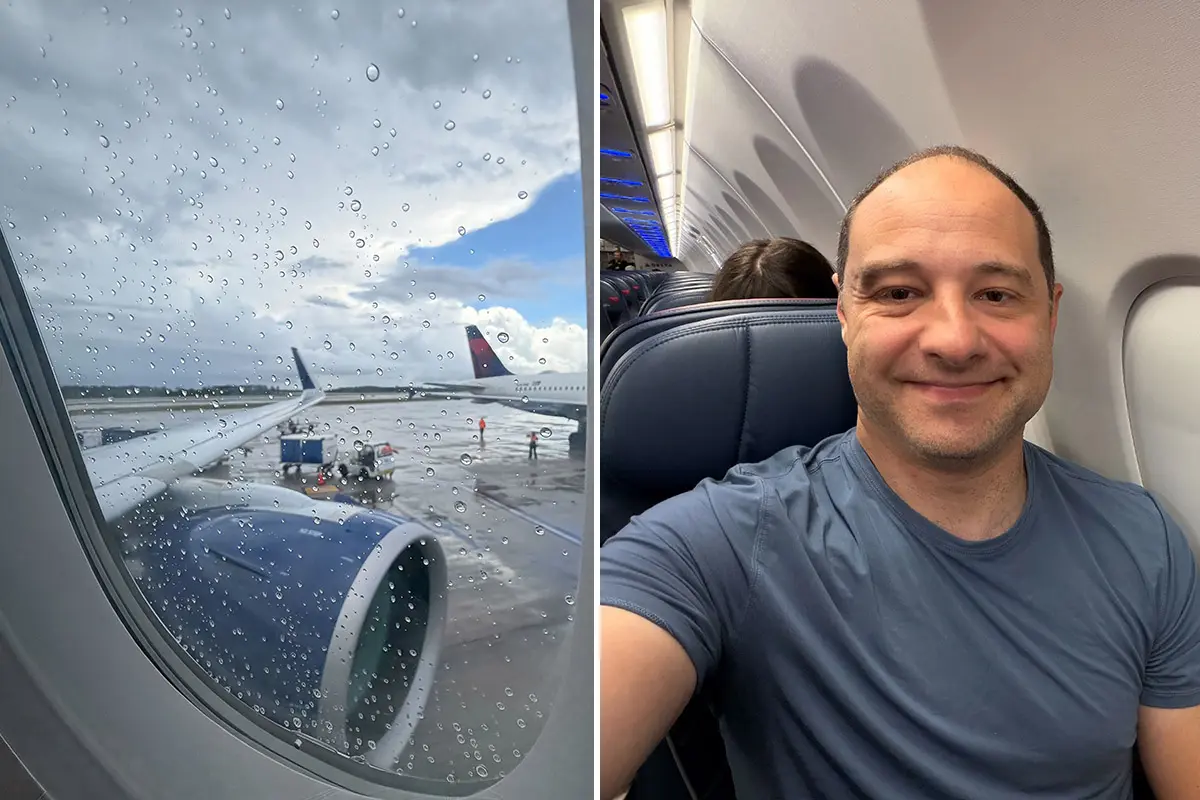
Jet lag is so frustrating when it hits you, and it can ruin the first few days of any trip. Since I have so much planned for a European trip, the last thing I want to do is be napping all day and awake all night.
I just flew from my home in Florida to Lisbon, Portugal and completed a 13 hour journey across two flights a layover. My problem is even if I purchase lay flat seats, I can never sleep at all on airplanes.
I've adopted a solid strategy to avoid getting jet lagged, but I can't say the first day is a breeze either.
Nonetheless, I follow two simple rules to avoid jet lag because it sets me up for a great start to my trip in Europe without messing up my sleep schedule.
The mistake most travelers make
After flying all night, you're going to be tired and a nap seems like the obvious first thing to do once you get to Europe, but it's a terrible mistake.
Napping, even for "just a little bit", is a recipe for totally messing up your sleep cycle.
My flights always land in Europe in the morning hours, so taking a nap then would almost certainly set me up for jet lag later.
The problem with napping on day one is it resets your body clock the wrong way. The result will be waking up at 2 or 3am and be wide awake.
I won't lie, it's not easy to avoid a first day nap, but you'll be happy for the rest of the trip you didn't.
The first step is don't go to sleep until local bedtime
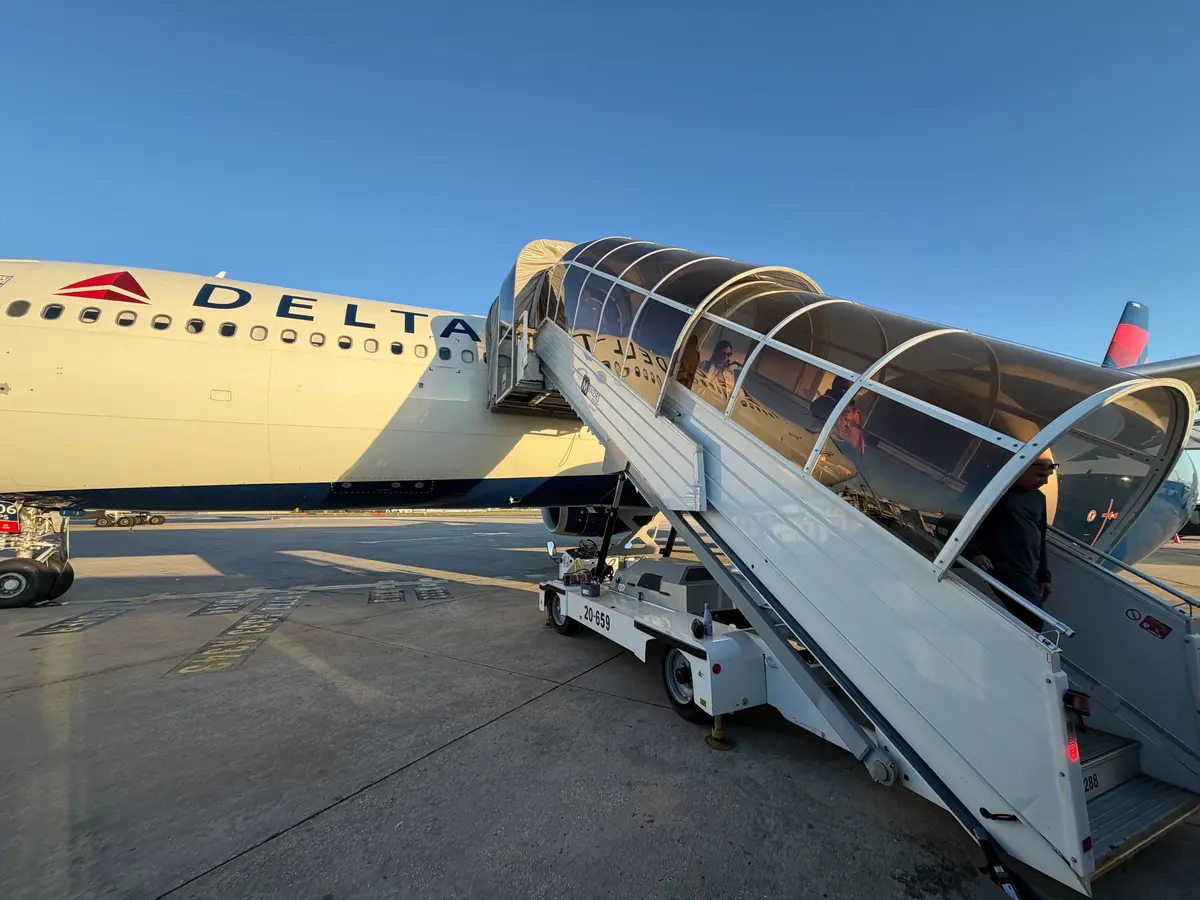
As soon as you land, set your phone and watch to local time and don't even think of sleeping until that evening.
This works because it forces your body to sync to local time, instead of perpetuating your body clock's assumption that you're still back home.
This is easily said, but it's not easy. After an overnight flight with little or no sleep, you'll start to drag in the early afternoon.
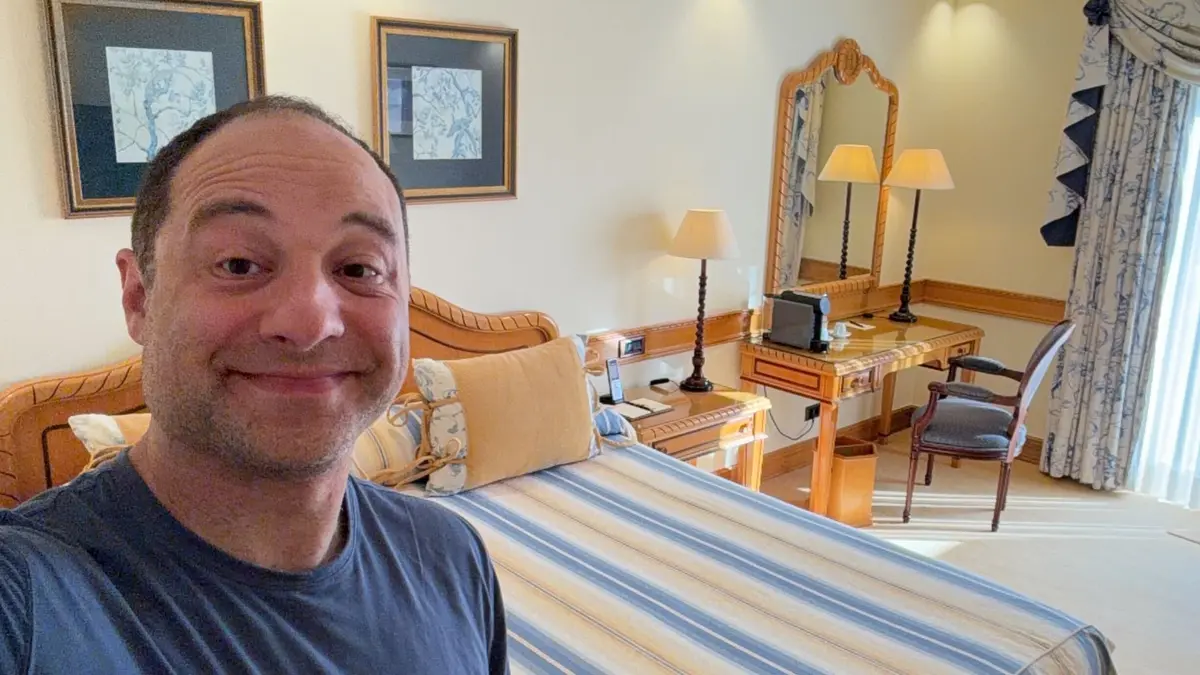
When I landed in Lisbon, I got a pep of energy from the excitement of arrival and getting all my things over to the hotel. Heck, i was still feeling good right into lunch.
But then 1 or 2pm hits, and your body catches up. All you can think about is closing your eyes for a nap, even a short one.
I won't sugarcoat it: you're going to feel terrible for a few hours, but it's pain you can handle in order to knock out jet lag before it starts.
The payoff will be you're going to get the best damn sleep of your life that evening, and better yet, feel like a million bucks the next day.
The next step is to keep moving all day to stay awake
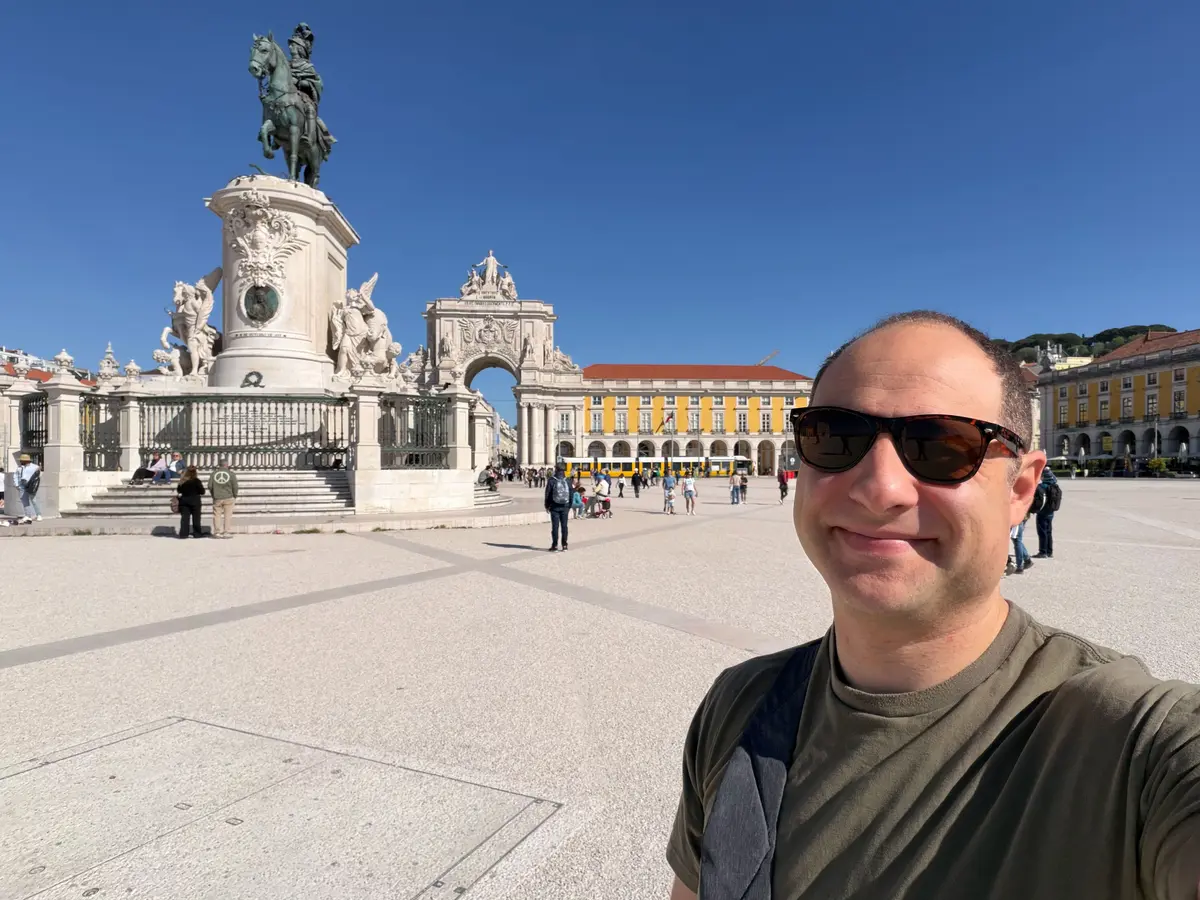
The key to surviving my first rule is to keep yourself going, because staying active prevents the crash.
The last thing you want to do is be in your hotel room because that bed is going to start speaking to you.
Instead, drop your things off, take a shower, and then head out to explore.
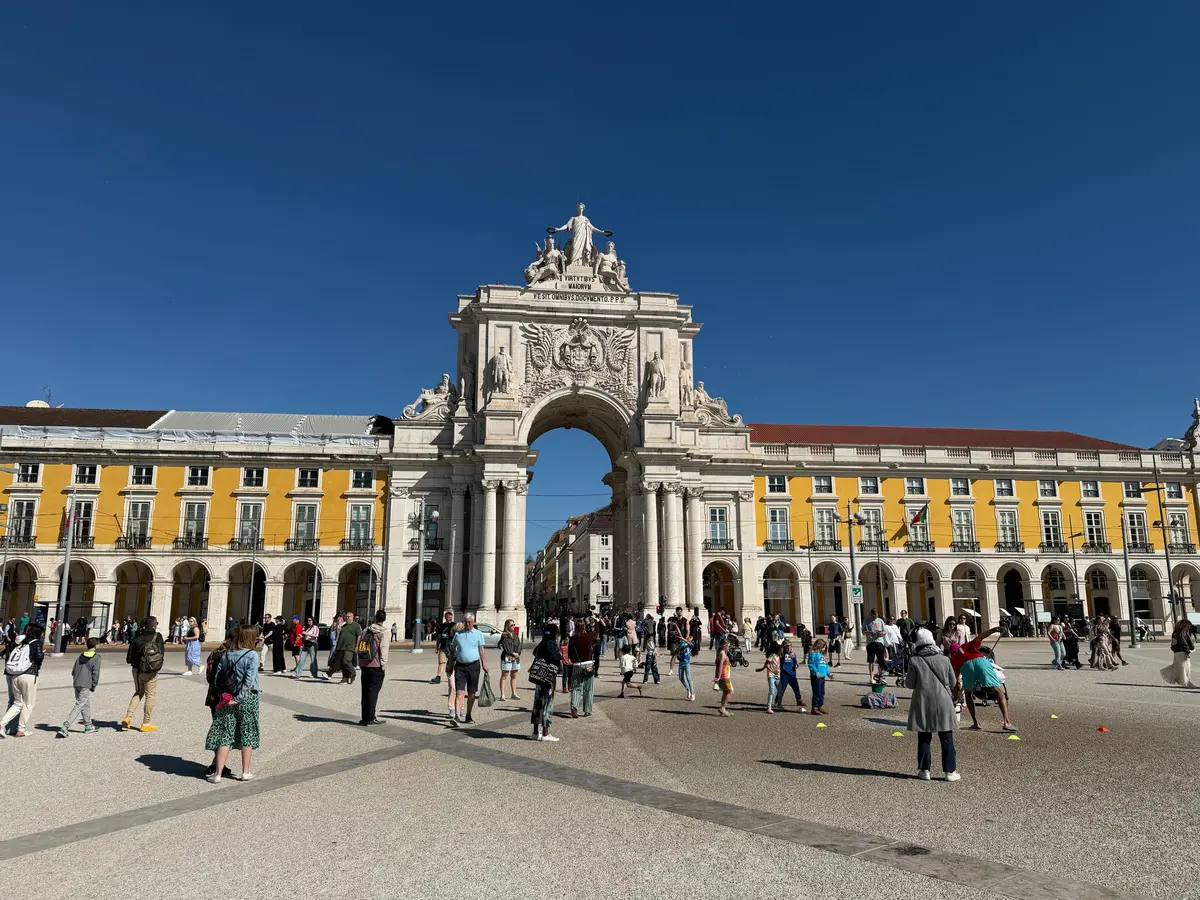
You want to walk as much as possible, exploring the city and staying outdoors. You'll still feel tired, but it'll be much more manageable.
You also want to avoid sitting too long. No car, bus or train rides for more than a few minutes.
I recommend starting off with general sightseeing, and definitely make a stop or two at coffee shops. European cafes are magical, so take advantage of them with caffeine boosts.
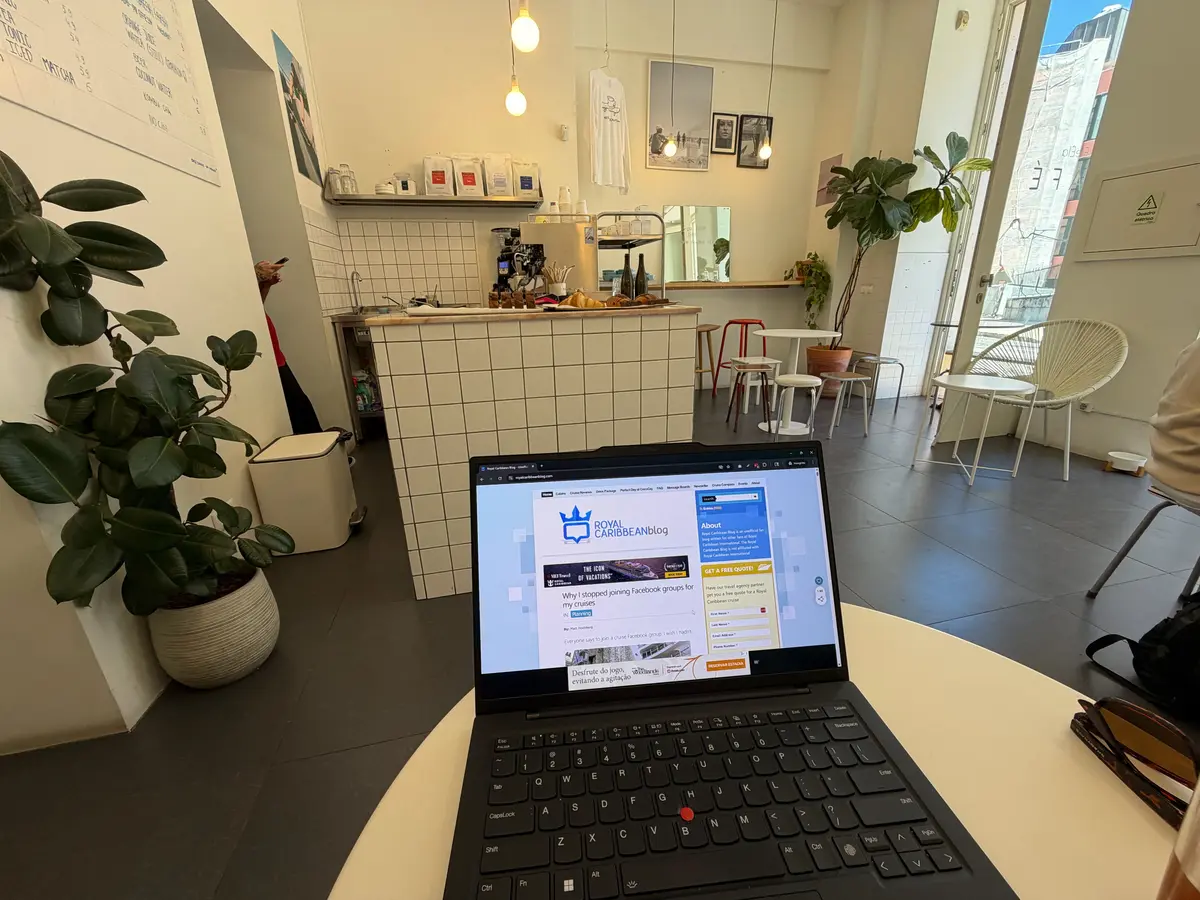
At first I resisted an afternoon coffee because it might mess with my sleep, but that's a rule for at home. When you're staving off jet lag, all rules are off.
If you have the opportunity, sunlight is also your friend. Sunlight helps reset your internal clock a bit.
What my first day in Europe was actually like
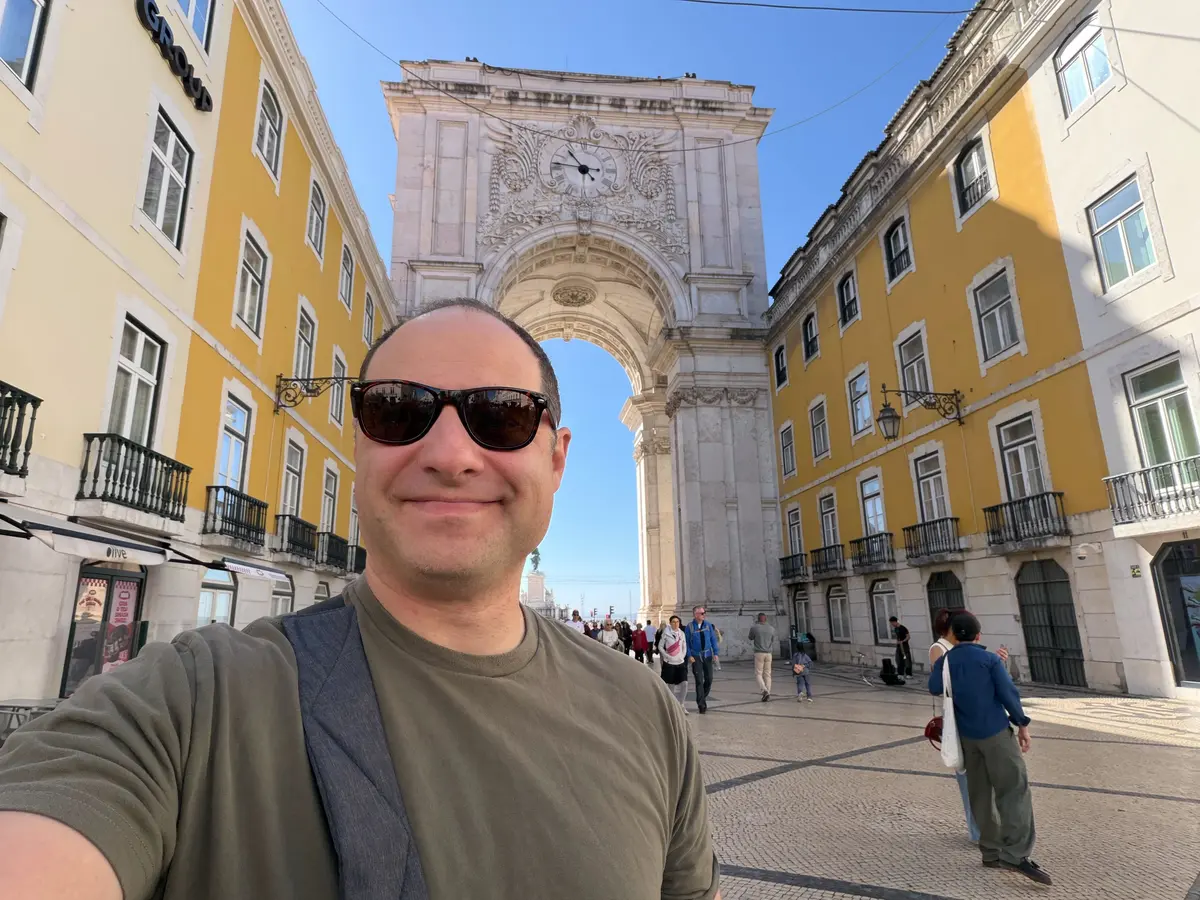
My flight landed at 7:50am, so I was against the clock from the start. My theory was to make it to at least 7pm before going to sleep.
Between deplaning, immigration, and getting your luggage, there's at least an hour or so spent. Then I got an Uber to take me to my hotel.
I was worried my room wasn't going to be ready because I was arriving to the hotel around 9am, but luckily it was. While I could have dropped off my luggage, a shower seemed like a great idea.
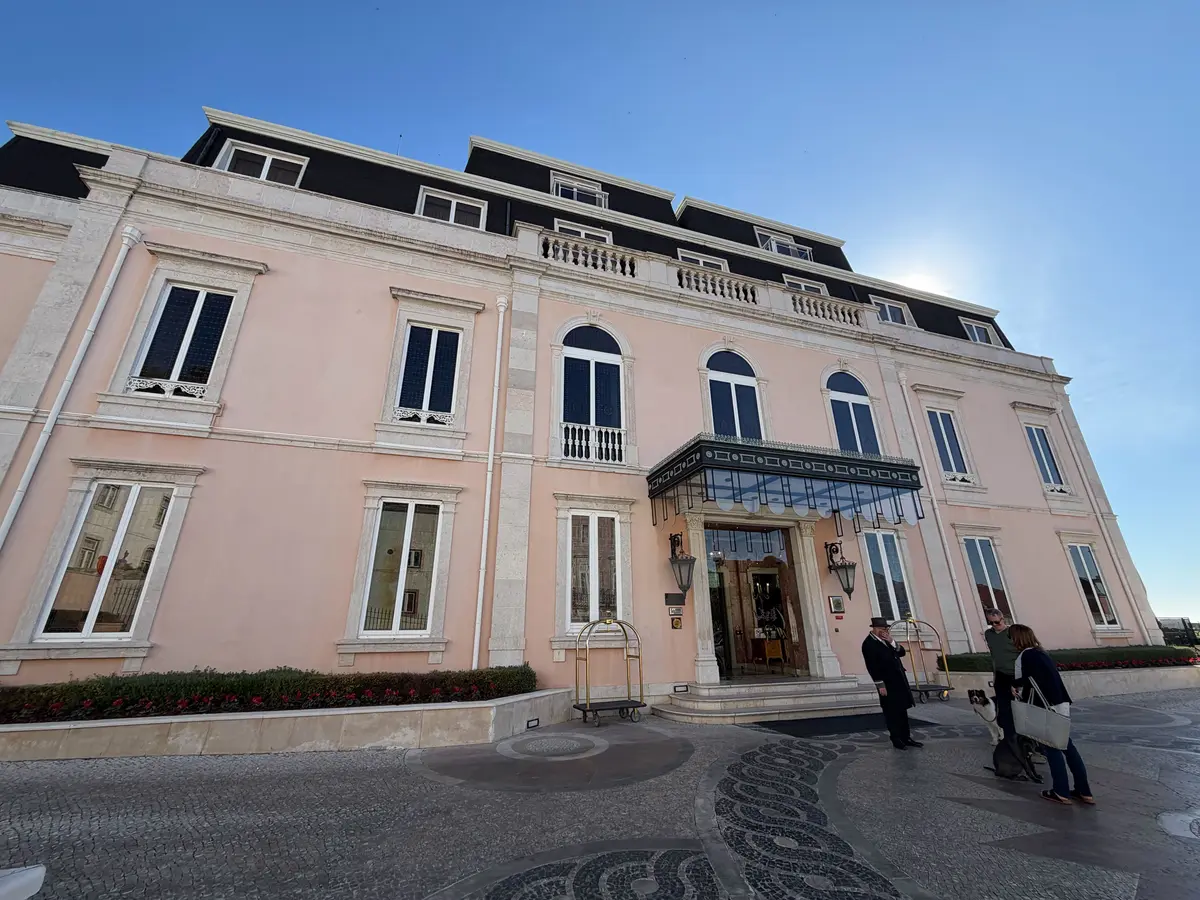
I left my things in my room, took a quick shower, and changed clothes before heading out.
My plan to keep me moving was a visit to Castelo de São Jorge, plus a meandering about of the city.
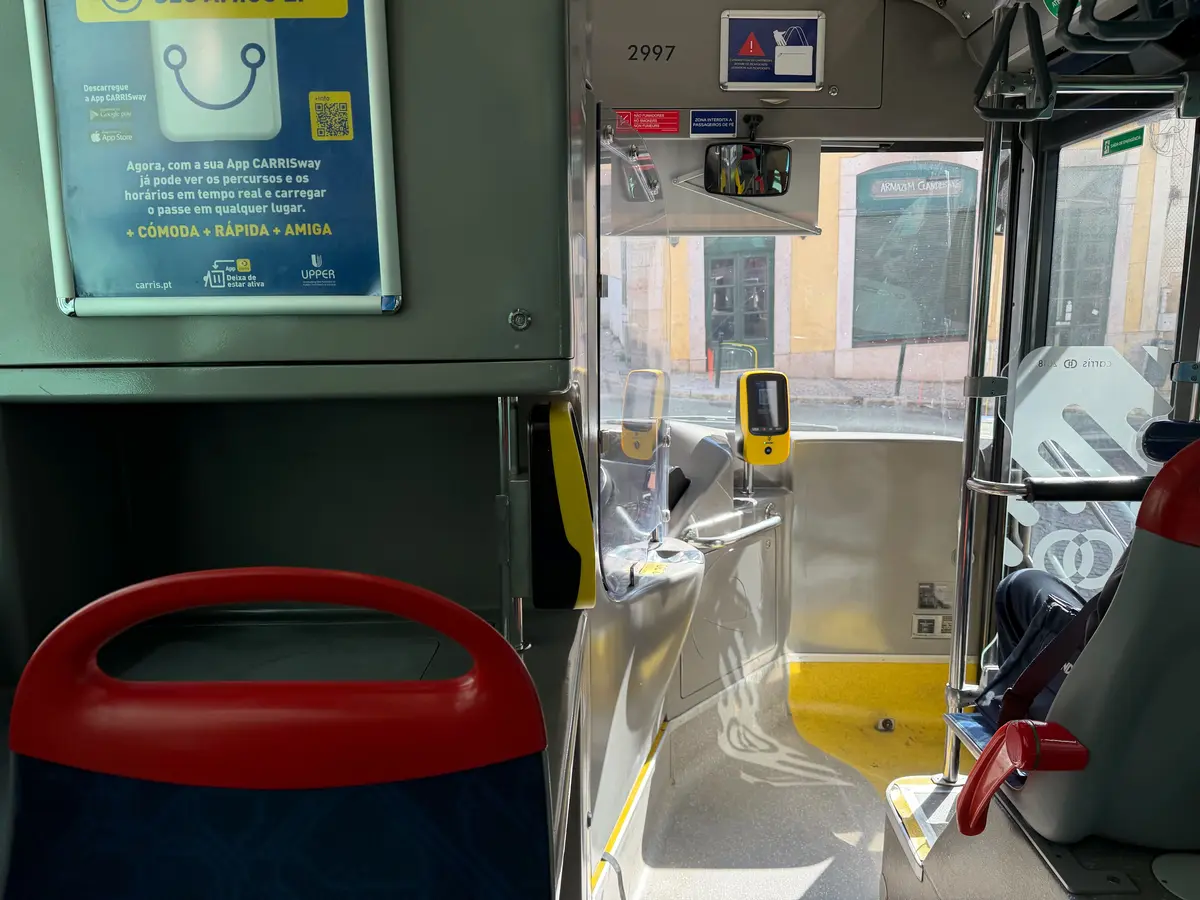
I took the local bus and was dropped off at the water front, where I took in my first city sights. The sun was shining, there were lots of tourists, and I was immersed in the energy of exploring Lisbon.
The walk up to the castle was nearly all uphill. That's painful for my legs, but I doubt anyone has ever fallen asleep walking uphill.
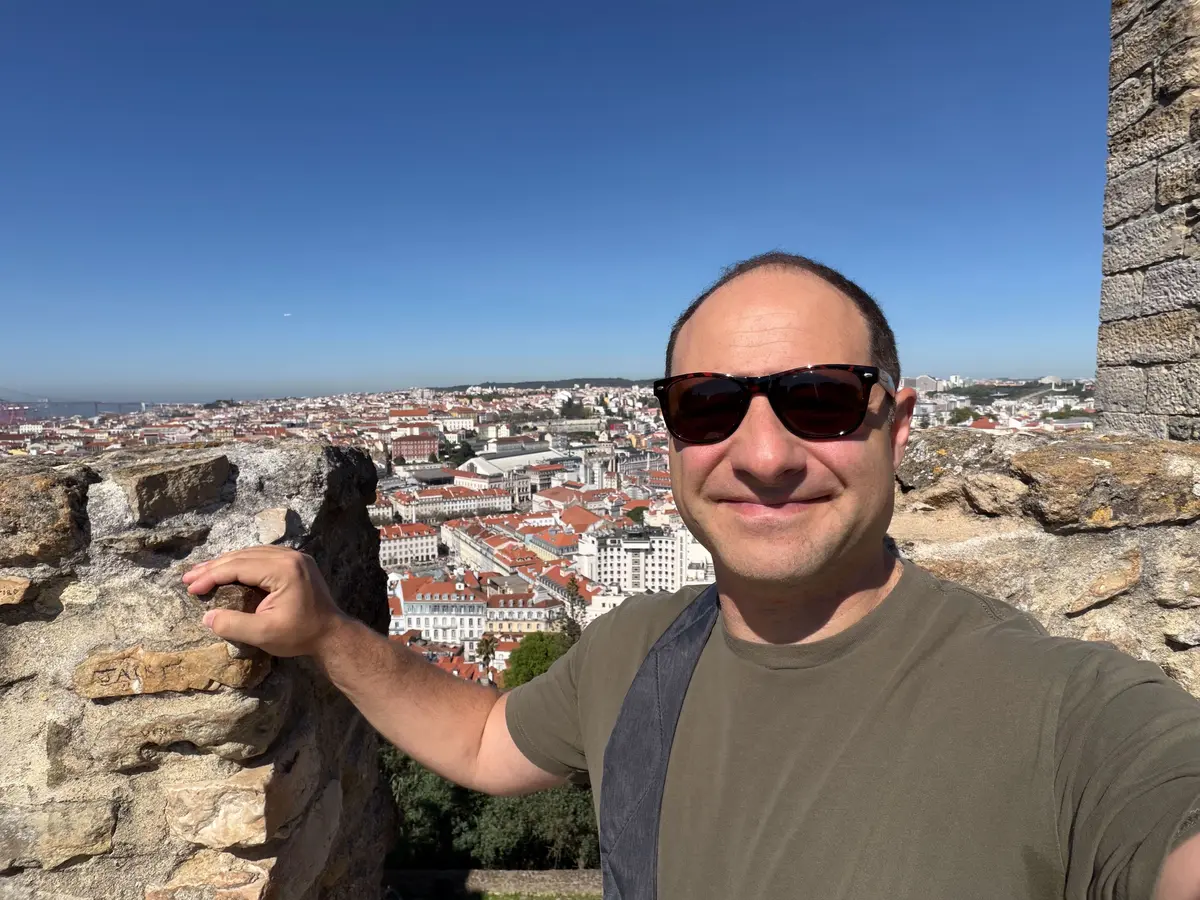
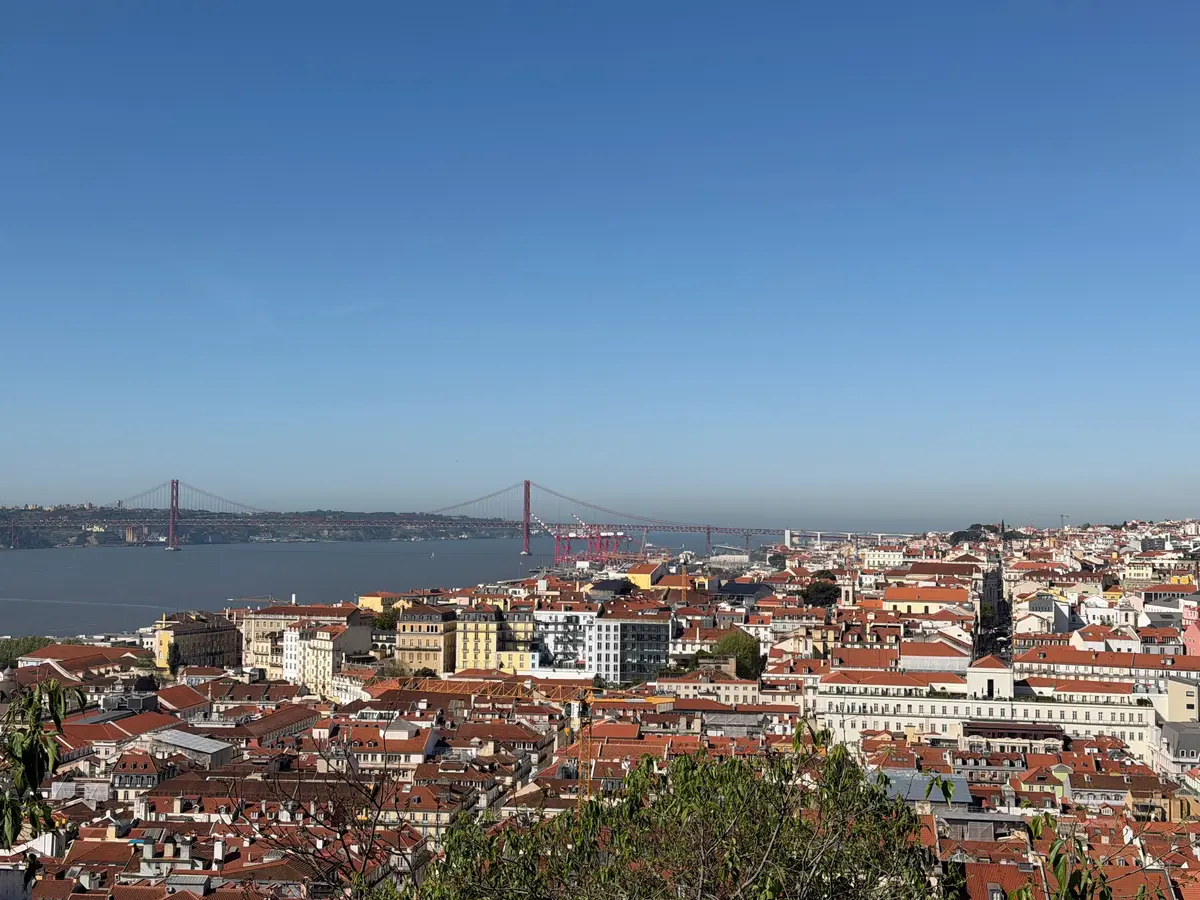
The views from the castle were tremendous, and it was my first "I'm really here" moment.
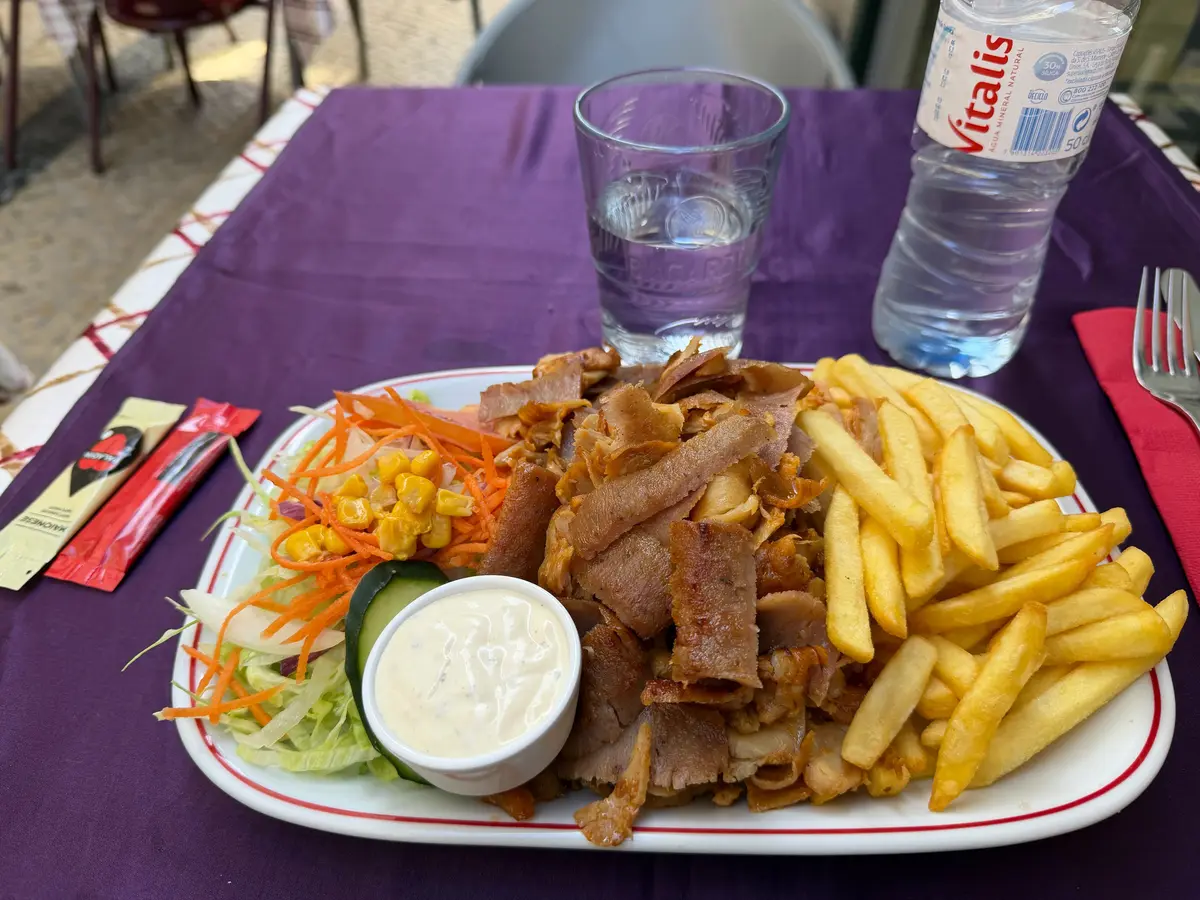
After touring the castle grounds, I wandered the nearby streets until I found some street food that looked good. I wanted something quick and easy, without spending an hour sitting. That's why I went with kabob. Hardly a Portuguese specialty, but it's something you find all over Europe.
By mid-afternoon, I was starting to drag and the novelty of being in Europe began to be overtaken by fatigue.
I searched for a coffee shop and found a great spot, where I had two iced coffees. The first one didn't do much, but by the time I was halfway through my second coffee, I started to really get my second wind.
For the evening, I wanted to keep it practical with an early dinner and in bed no earlier than 7pm. I actually made it a little bit longer, thanks to some news I had to cover here.
The hardest part (and why most people fail)
Without a doubt, the temptation of a nap in the afternoon is most people's downfall.
That early afternoon exhaustion leads to people caving because they justify it. "Just a quick nap" turns into hours, and even if you wake up, you're groggy and feel even more tired.
You really have to treat day one as a reset day, not a productive day. Above all else, focus on the discipline of staying awake.
The payoff came on day two
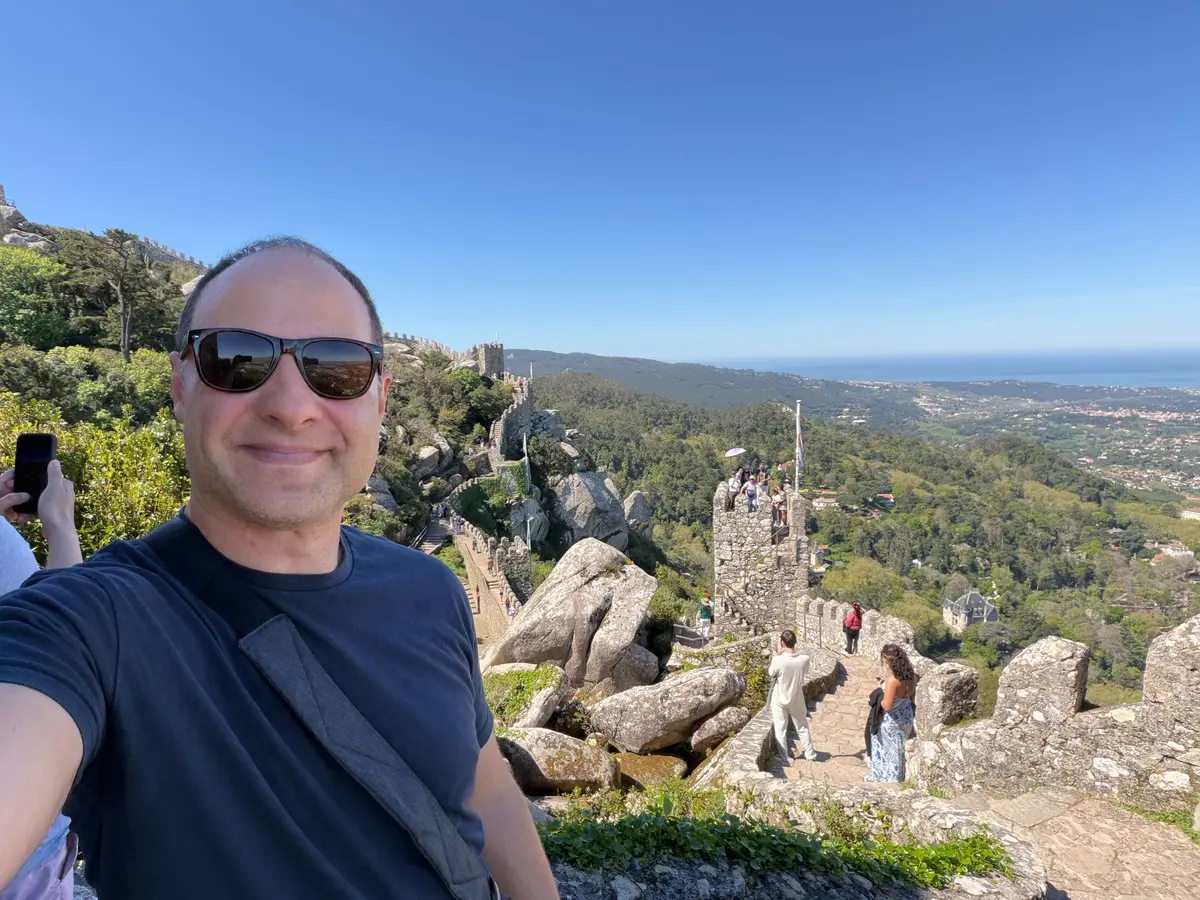
I woke up on the second day right around 9am and it was like I slept at home. I felt refreshed and ready for my adventure to begin.
This meant the next day when I boarded my Silversea cruise ship, I was functional and ready to do everything.
I also didn't waste pre-cruise hotel nights. I had two days in Lisbon, and I got the most out of it rather than sleeping in my hotel.
My primary goal was ensuring I could maximize every minute of my cruise, and I was on the perfect sleep schedule by the time I boarded.
The first day was a drag, but I'm glad I did it
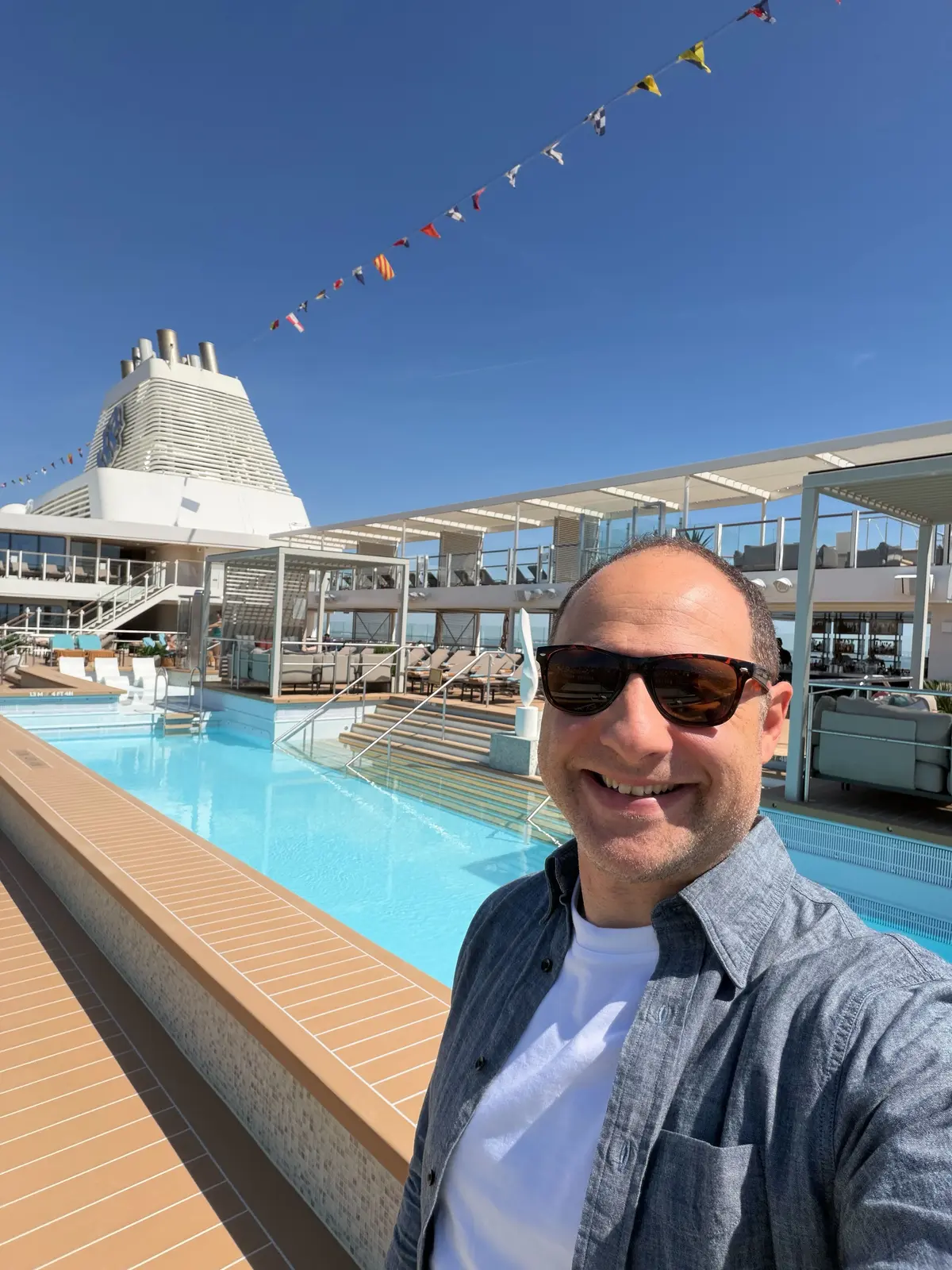
I knew my jet lag strategy before I got on any airplane, and while I wanted to sleep so bad most of my first day in Europe, I was so glad after to not be jet lagged.
The sooner you get on local time, the better.
I also think avoiding alcohol, having coffee in the early afternoon, and being able to check-into my hotel room early helped a lot.
In fact, I really think my hotel room was a big deal because that shower made me feel so much better than all that air travel.
This strategy isn't complicated, but it is uncomfortable for a few hours. It's all worth it on the second day and you're ready to tackle Europe and your cruise.