

The summer cruise season is well underway, and the Federal Bureau of Investigation in Houston has just issued a reminder for passengers to stay safe onboard.

With millions of cruisers set to sail across the Caribbean, Europe, Alaska, and beyond this summer, it’s important to remember the safety procedures and precautions to take at sea.
The FBI posted on X and Facebook this week to remind passengers what to do in the case of a crime onboard.
Crimes should be reported to security staff immediately, says the FBI
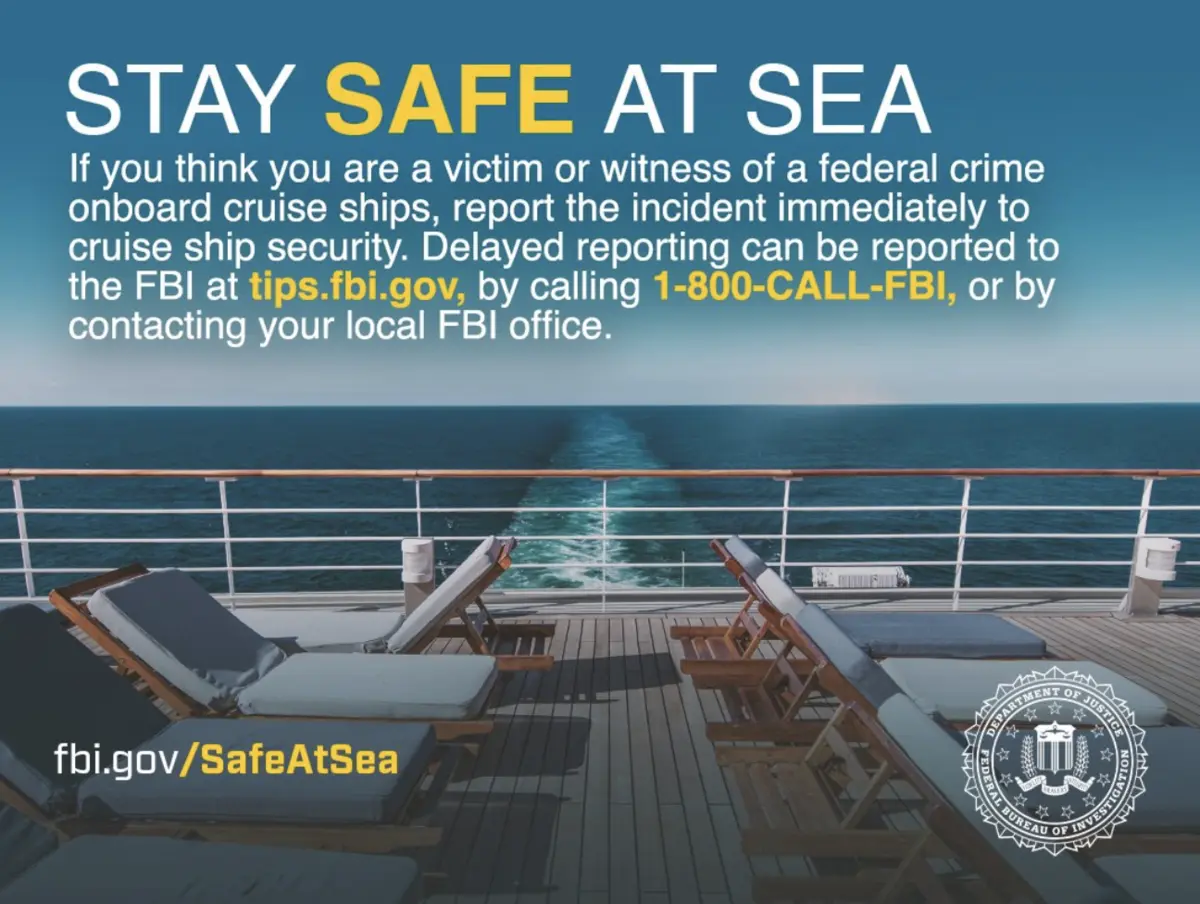
When a crime occurs on a cruise ship, the investigation looks different than when a crime occurs on land. In their social posts, the FBI urges passengers to report incidents immediately to cruise ship security.
“As summer vacations begin, the FBI reminds you that if you have been a victim of assault with serious bodily injury, kidnapping, [or] sexual assault aboard a cruise ship, report it to security staff immediately. If you are no longer on the cruise, contact your local police and the FBI at 1-800-CALL-FBI (225-5324) or tips.fbi.gov.”
The Bureau encourages passengers to report the incident if they are a victim or a witness of a crime. If a passenger wants to report a crime after they disembark, they can report it at tips.fbi.gov, by calling 1-800-CALL-FBI, or by contacting their local FBI office.
Crimes at sea are quite rare

Although the FBI’s reminder might seem like a cause for concern, crimes on cruise ships are still relatively rare. Cruise ship crimes often make headlines due to their “shock” factor, but crime rates at sea remain infrequent compared to rates on land.
A study from Northeastern University, for example, compared the rates of homicide, assault, and sexual assault within the cruise industry to those rates in the mainland United States.
Statistics from eight cruise lines were studied in the research along with crime rates in U.S. cities with a population between 250,000 and 499,999 people.
When comparing violent crime rates per 100,000 population, the rates of homicide, sexual assault, and aggravated assault were significantly lower on cruise ships.
The average aggravated assault rate for passengers and crew, for instance, was just 2.6 per 100,000 people in the four years studied. The rate on land, on the other hand, was 432.2 cases of aggravated assault per 100,000 people.
Additionally, the Department of Transportation publishes a Cruise Vessel Security & Safety Act (CVSSA) Statistical Compilation each quarter. In Q3 of 2025, a total of 47 alleged incidents were reported to the FBI among seven mass market cruise lines.
The report can be found here.
If a crime does occur at sea, the FBI has jurisdiction in many cases
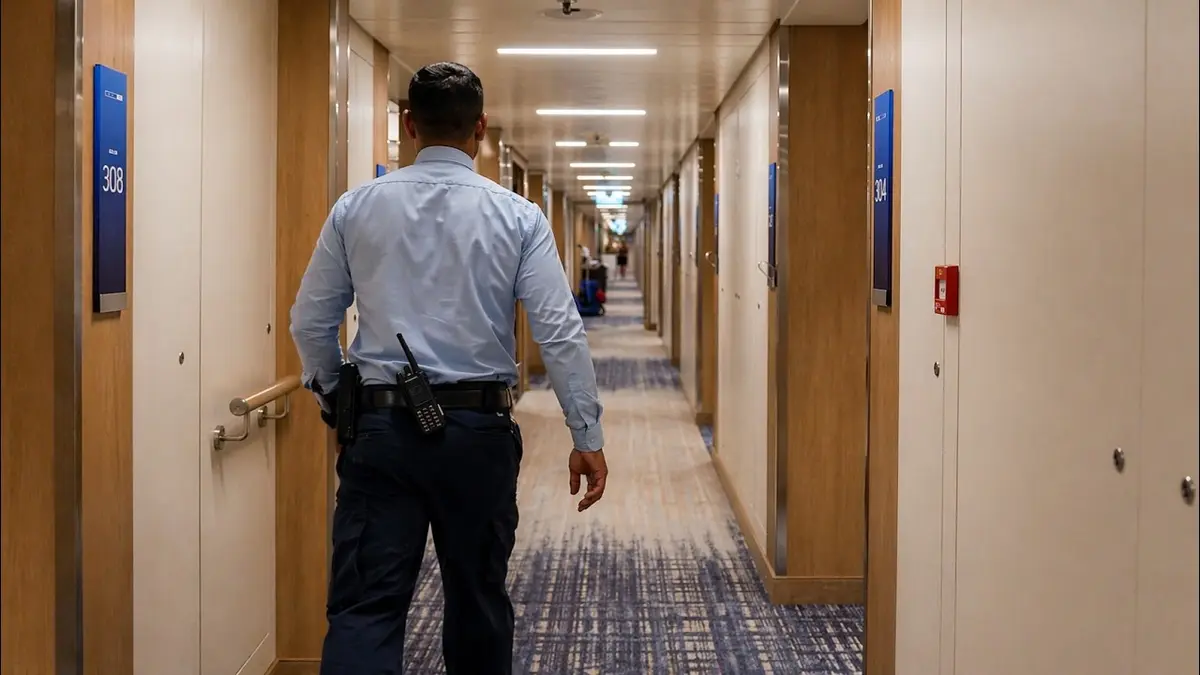
It’s no secret that cruise ships have their own security personnel and holding cells onboard, but in many cases, the Federal Bureau of Investigation has jurisdiction over the investigation.
When applicable, the FBI investigates offenses and enforces United States law on cruise ships. In most cases, the Bureau has jurisdiction in the following circumstances:
- The crime occurs within maritime jurisdiction of the United States
- The crime is committed by or against a U.S. national
- The crime occurs on a sailing departing from or returning to the United States
- The vessel is wholly or partially owned by a U.S. national or company
U.S. citizens sailing on cruise ship itineraries that do not visit the United States can still contact the FBI to report a crime. Depending on the location of the crime and the nationalities of perpetrators and victims involved, though, the FBI may not have jurisdiction over the case.
The Cruise Vessel Security and Safety Act aims to improve safety

In 2010, the Cruise Vessel Security and Safety Act (CVSSA) was signed into law, which aims to improve the safety and security of passengers on cruise ships.
The law applies to cruise ships that carry at least 250 passengers and call upon a U.S. port. According to the law, ships must comply with the following requirements, among others:
- Staterooms and crew cabins must be equipped with security latches and time-sensitive key technology
- The vessel should have technology to capture images of and/or detect passengers who have fallen overboard
- Vessels must maintain a video surveillance system for the purpose of documenting crimes and providing evidence to law enforcement
- Vessels must carry equipment for and conduct training on how to preserve forensic evidence
- Passengers should be provided with a security guide in commonly understood English
The CVSSA does not apply to cruise ships operating outside of the United States, although cruise lines must still follow the regulations and safety standards of the region they are operating in.
Safety is of utmost importance for cruise lines, and the FBI is there to help

By and large, passengers are safer on a cruise ship than they are on land. Cruise ships take meticulous care in keeping up with security and safety standards onboard.
In the early days of cruising, there was a lack of standardized safety regulations on cruise ships. As the years passed, though, it became clear that it was just as important to enforce safety and legal regulations at sea as it was on land.
Today, for example, the Cruise Lines International Association (CLIA) is the leading cruise trade association in the industry, and CLIA members must adhere to legal requirements for reporting crimes on cruise ships. 59 cruise lines, including Royal Caribbean, are members of CLIA.
In the case of a crime onboard, passengers should feel secure and confident that they can report the crime and that it will be investigated in a detailed manner.
Even though cruise ship crimes are still somewhat rare, it’s helpful to know who to contact when you need to report a crime or give a statement. The FBI is available to assist in these situations.