
Royal Caribbean has been hit with a lawsuit by a former passenger who blames the cruise line for her accidentally tripping over another guest's mobility scooter.
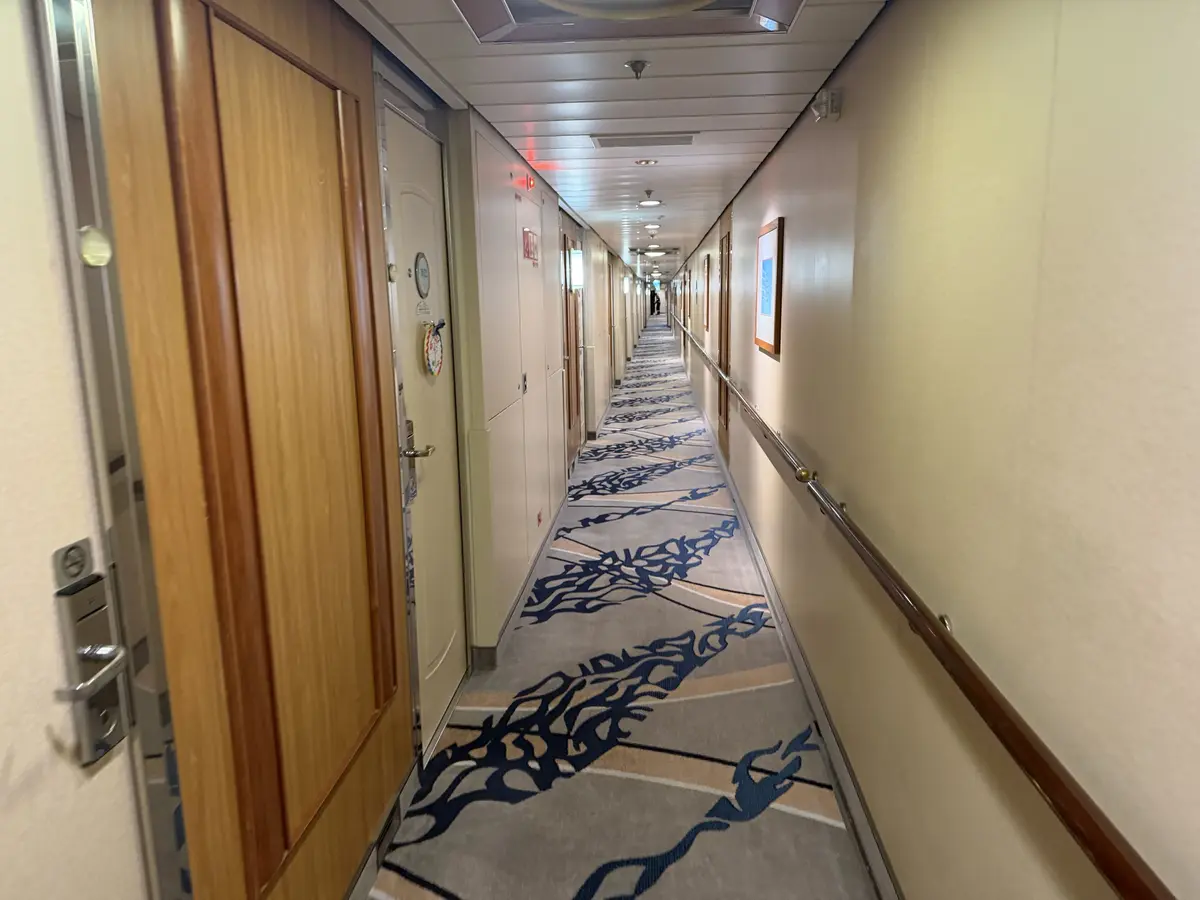
Colleen Parsons of Florida filed a lawsuit against Royal Caribbean Group in the United States District Court for the Southern District of Florida on May 18, 2026, accusing the cruise line of negligence.
Here's allegedly what happened: On June 22, 2025, Parsons was sailing aboard Jewel of the Seas, a Radiance Class ship that launched in 2004, when she tripped over a large mobility scooter in Casino Royale.
According to the lawsuit, Parsons claims that she was in the overcrowded casino when another guest bumped into her, forcing her into the path of the parked mobility scooter.

As a result of the fall, Parsons fractured her left wrist and required surgery, resulting in permanent scarring. According to the lawsuit, she's seeking compensation for medical expenses, pain and suffering, lost income, and the diminished enjoyment and value of her cruise vacation.
However, Parsons isn't seeking legal action against the other passengers involved in the accident. Rather, she's accusing Royal Caribbean of negligence for failing to maintain a safe environment and to warn passengers of a hazard in the walkway.
The lawsuit also claims that crew members aboard the 90,090 gross-ton ship failed to establish or enforce proper safety protocols for operating and parking mobility scooters.
Royal Caribbean mobility scooter policy
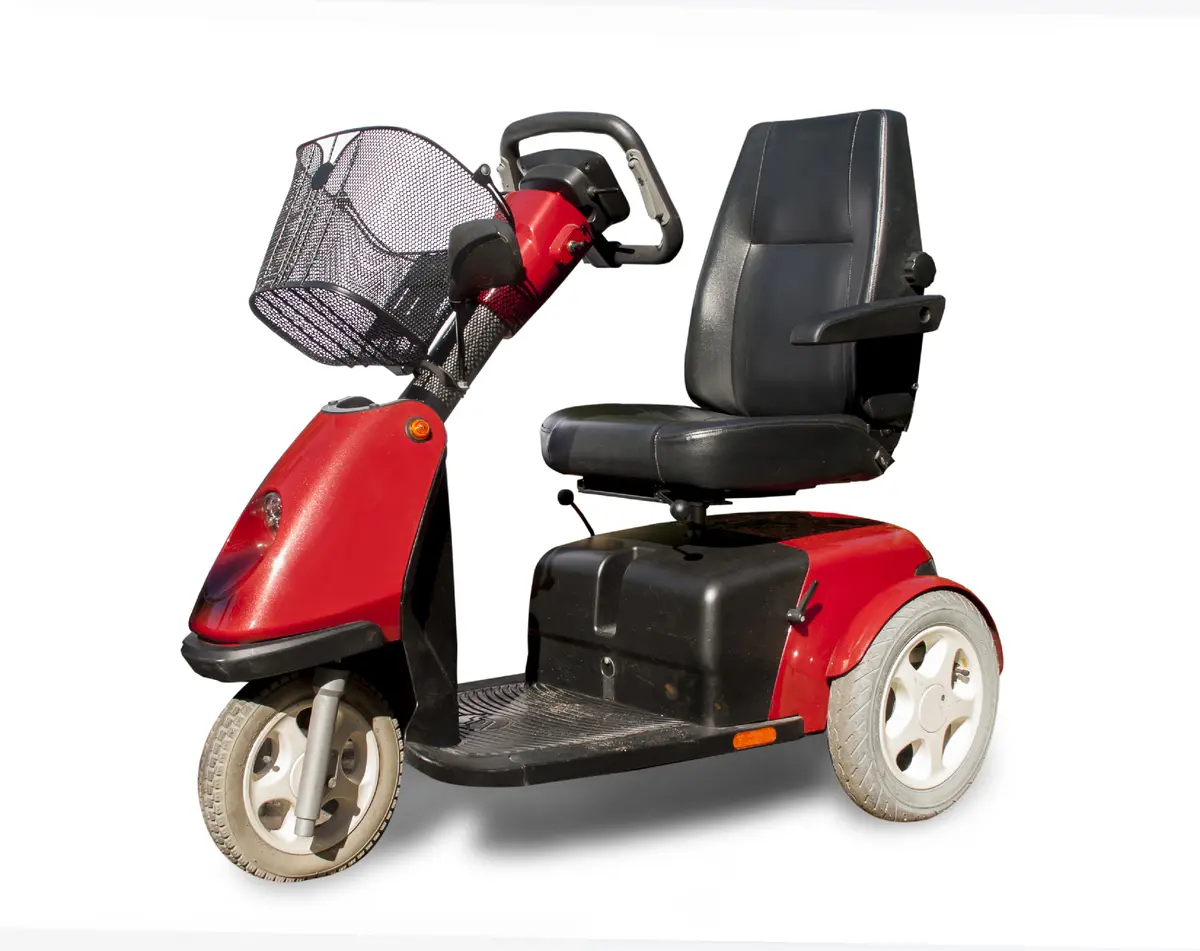
To keep things running in tip-top shape, Royal Caribbean has a ton of rules and policies. Technically, when guests book a cruise, they automatically agree to the terms and conditions outlined in the cruise contract. These range from onboard conduct to accessibility equipment, safety requirements, and prohibited items.
"Assistive devices including mobility scooters must be stored and recharged in your stateroom so fire doors, corridors and elevator lobbies are kept clear for emergency evacuation. When parked throughout the ship, they must be parked out of the way to allow safe and easy access by other guests and crewmembers," states Royal Caribbean's website.
"Assistive devices should fit through a standard stateroom entry doorway which is at least 23 inches wide. We offer accessible staterooms which have wider doors which are at least 32 inches wide and may accommodate larger devices. If you have an assistive device larger than 32 inches wide, please contact our Access Department for assistance."
This case is one of many personal injury lawsuits filed against Royal Caribbean this year
Cruise lines can face frustrating legal challenges when passengers are injured on board. The circumstances of each case vary, but plaintiffs often argue that the cruise line failed to maintain a reasonably safe environment or address potential hazards.
For example, earlier this year, Jaimie Lewis, of California, filed a maritime personal injury lawsuit seeking damages of more than $75,000 after slipping and falling aboard Harmony of the Seas.
Lewis claims that she slipped on a walkway in the ship's Central Park neighborhood and fell backward onto the hard deck in November 2024 after a rainstorm.
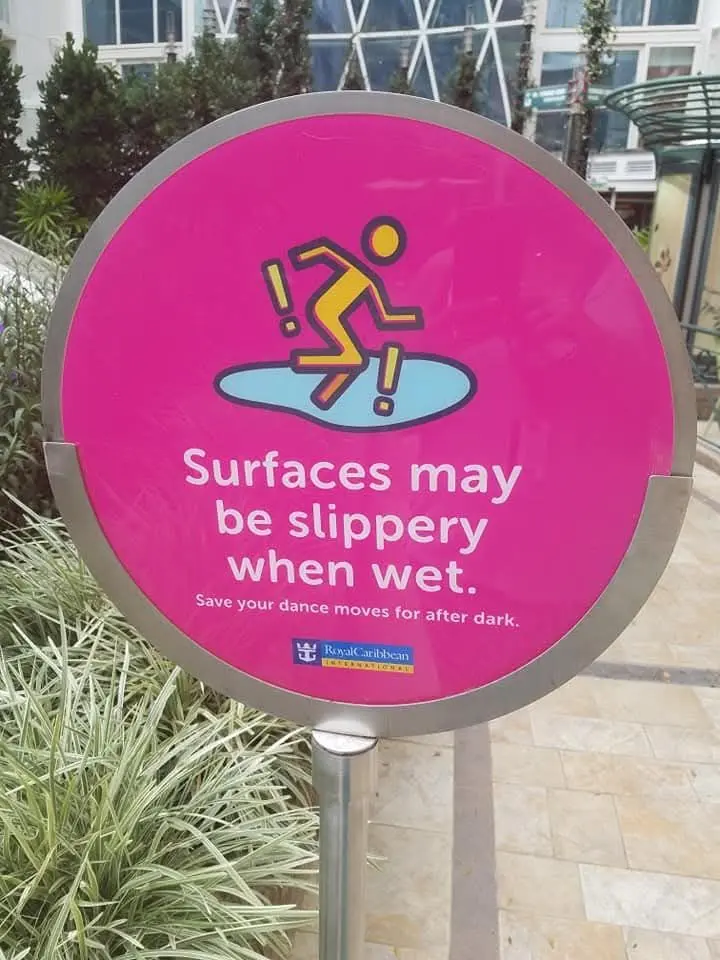
(Credit: Jeanne Grubbs / Facebook)
According to the lawsuit, there weren't any visible wet-floor warning signs to alert passengers of the danger, despite the ship's crew being aware of the hazard. Consequently, Lewis' legal team argues that the lack of signage, warning cones, or verbal warnings left her unaware of the danger, directly leading to her accident.
More recently, Tanya Jones, of Australia, filed a maritime personal injury lawsuit against Royal Caribbean after slipping and falling on a wet and slippery outdoor flooring surface aboard Voyager of the Seas, resulting in serious and permanent injuries.
The complaint states that Jones encountered dangerous, slippery floors on one of the outdoor decks, caused by an accumulation of a wet foreign substance.
Furthermore, Jones' lawsuit blames Royal Caribbean for allegedly failing to properly inspect and maintain the area, despite being aware of the danger through prior incidents across its fleet involving similar accidents on the same type of outdoor deck.