
Royal Caribbean is one of many companies hit hard this week by the fallout of the Iran conflict, as its stock price took a tumble.
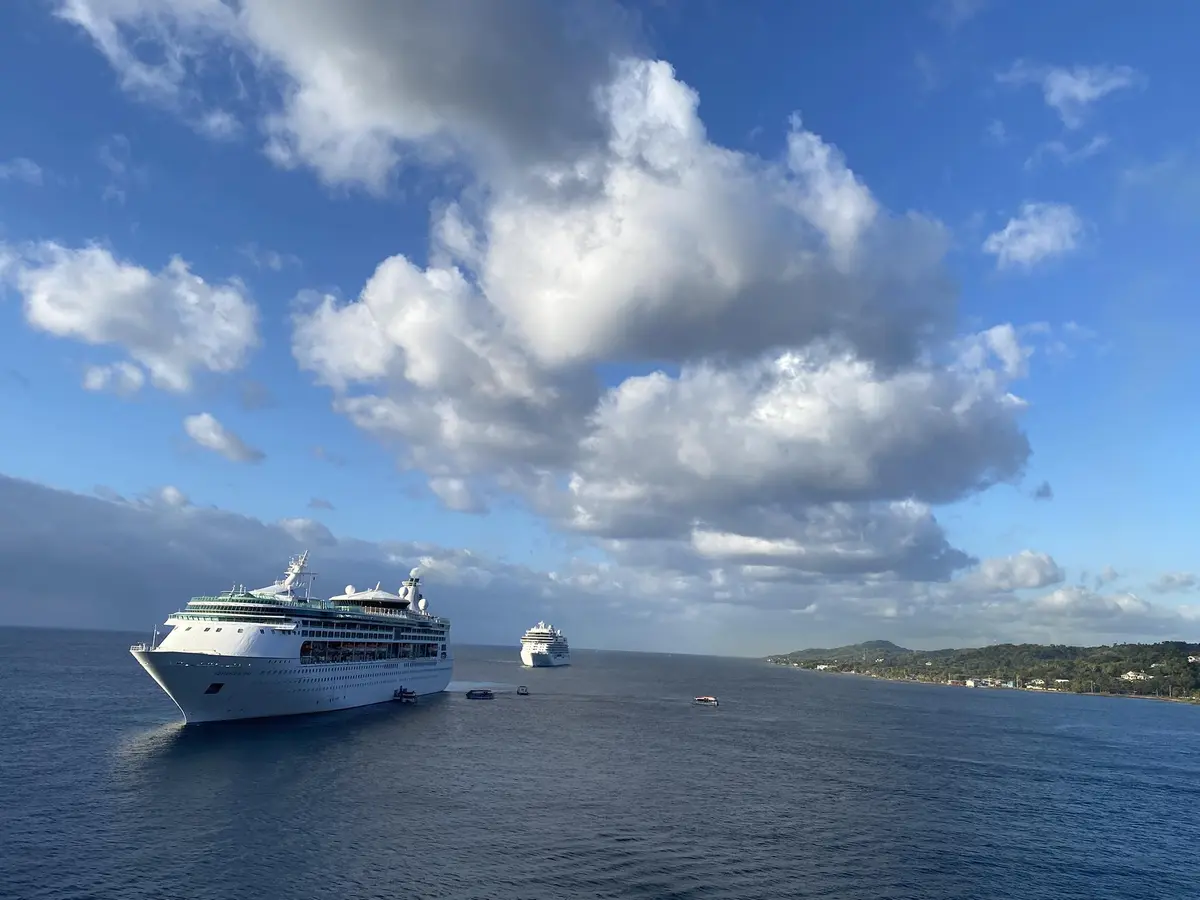
Oil prices surged on Friday amid growing fears of a broader storage crisis in the Middle East, which could force the world's largest oil producers to halt extraction. But what does this mean for cruise lines that rely on massive amounts of fuel for their ships to travel between ports?
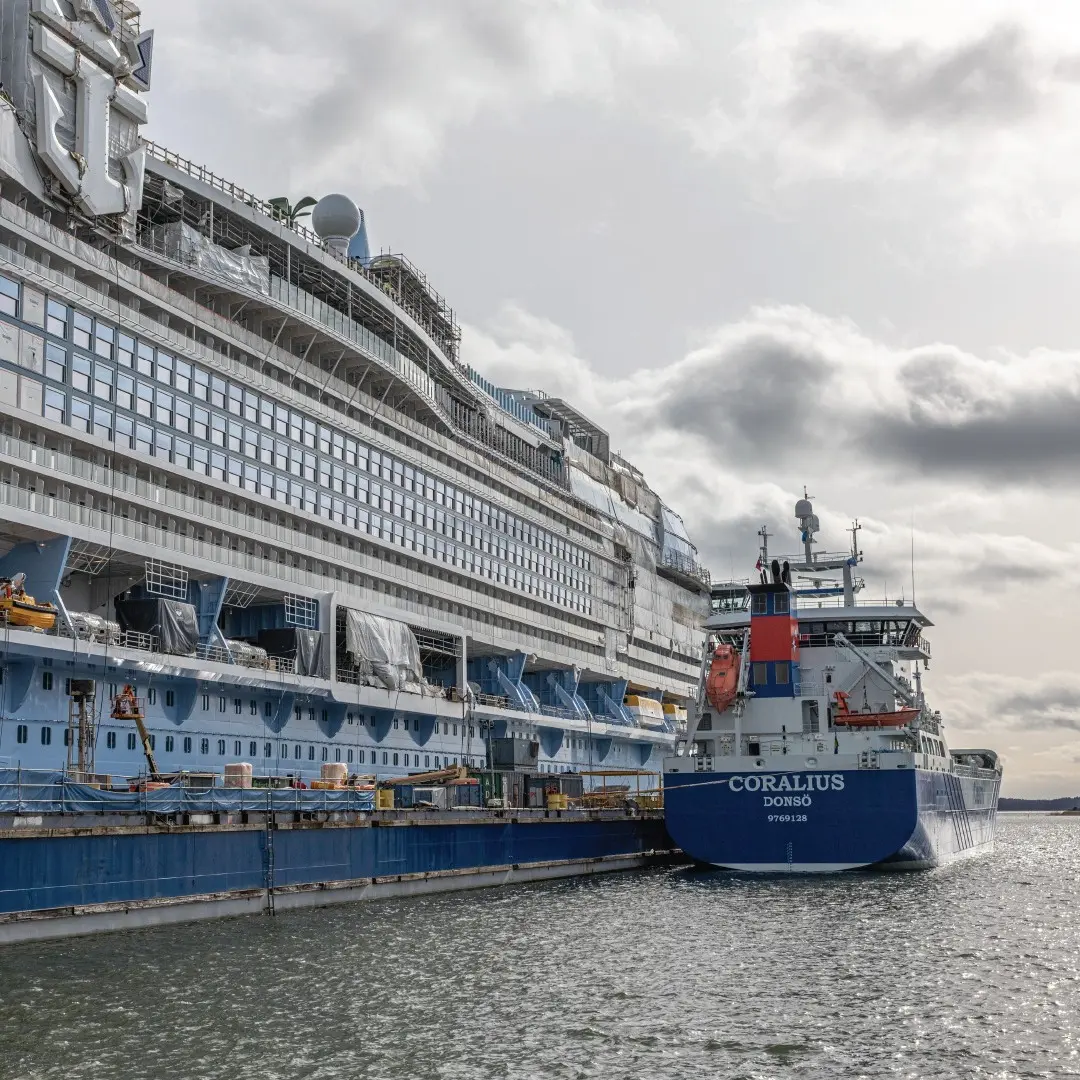
Unsurprisingly, fuel is one of the cruise industry's largest and most volatile expenses. In Q4 2025, Royal Caribbean consumed 439,000 metric tons of fuel at $667 per metric ton, according to GuruFocus, and the company projects using 1.76 million metric tons throughout 2026, at a total cost of roughly $1.17 billion.
Although 60% of Royal Caribbean's 2026 fuel was hedged (or pre-bought) at $474 per metric ton, the remaining 40% is subject to market fluctuations — for better or worse. Approximately 10% of the 2026 fuel consumption is expected to be from LNG and biofuel blends.
As such, based on the 2026 fuel forecasts, there are over 520,000 metric tons of fuel that could be subject to a 30% price increase.
The cost of West Texas Intermediate oil, the U.S. oil benchmark, jumped to $86.57 per barrel on Friday morning, while Brent crude, the international benchmark, rose 4.7% to $89.44, as shared by CBS News. Both were trading near their highest levels since April 2024.
Thankfully, oil prices aren't close to what they were in late 2007 and 2008, when the West Texas Intermediate benchmark hit roughly $146 per barrel — around $220 in today's money when adjusted for inflation. At around $86 per barrel as of Friday, current oil prices remain well below those historic highs.
Royal Caribbean's hedges mean that the company isn't as susceptible to wild market swings, which helps soften the blow of rising fuel prices.
Unlike Royal Caribbean, Carnival Corporation & plc doesn't hedge any of its fuel. Brokerage William Blair & Co. claims that the rising fuel costs could penalize the company's full-year earnings by about 20 cents per share, Seatrade Cruise News reported.
Consequently, the rising oil prices have created significant uncertainty for cruise operators, contributing to a sudden decline in cruise stocks. If prices remain high, cruise companies like Royal Caribbean and Carnival may face tighter profit margins and see major impacts on current share prices.
Will Royal Caribbean pass on a fuel surcharge to guests?
According to Royal Caribbean's cruise contract, the cruise line has the right to impose a fuel surcharge on its guests without warning, either when booking the cruise or anytime before the sailing begins.
"Subject to the terms of this Section, Carrier reserves the right, without prior notice to Guest, to impose a fuel supplement charge (the 'Fuel Supplement'). Carrier may impose such Fuel Supplement either at the time of booking or thereafter at any time prior to sailing," the contract states.
The contract further specifies when a fuel surcharge could be imposed. If, after booking, the price of West Texas Intermediate crude exceeds $65 per barrel or the Henry Hub Natural Gas Spot price exceeds $3 per million British Thermal Units, Royal Caribbean can charge guests up to $12 per day, per person.
"Carrier may, in its sole discretion, require Guest to prepay the Fuel Supplement prior to boarding the Vessel or apply such charge to Guest’s onboard folio at the time of sailing. Guest’s refusal or failure to prepay any Fuel Supplement may be deemed as a cancellation by Guest," the contract continues.
Despite the specific terms and conditions (and West Texas Intermediate fuel clearly exceeding $65 per barrel as of March 6), it is unlikely that Royal Caribbean will add fuel surcharges, even as oil prices continue to spike.
When oil prices rose in 2022, Royal Caribbean Group opted not to pass the costs directly onto passengers, The Points Guy reported. Then-spokesperson Jonathon Fishman explicitly said, "We won't be imposing fuel surcharges" in an emailed statement to the online publication.
The company’s hedging strategy plays a key role in the decision since 60% of the 2026 fuel has already been locked in and accounted for in the budget, meaning the cruise line has a buffer for sudden market changes.
In other words, they don't have to immediately resort to drastic measures like imposing fuel surcharges and can avoid burdening passengers with unexpected fees, even though it's something everyone agrees to in the contract.
Why are crude oil prices rising?

Last weekend, the U.S. and Israel launched multiple sustained air and missile strikes against Iran, targeting the country's missile infrastructure, military sites, and leadership, the BBC reported. During the attacks, Iran's Supreme Leader, Ali Khamenei, and several high-ranking officials were killed.
Iran retaliated by launching ballistic missiles towards Israel and several Gulf states, which hit or were intercepted in countries like Lebanon, Oman, Saudi Arabia, Qatar, and the United Arab Emirates.
They also halted shipments of oil and liquefied natural gas through the Strait of Hormuz, which normally carries about 20% of global oil shipments.
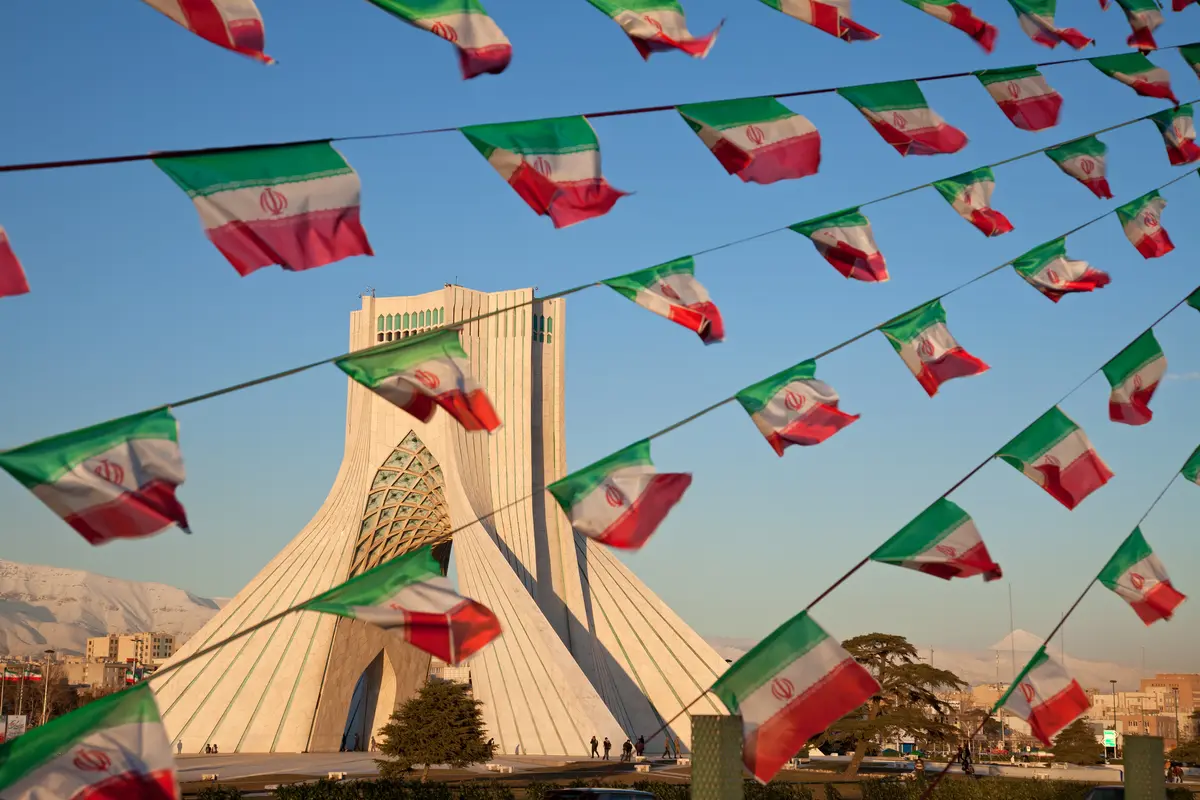
On a normal day, about 138 vessels travel through the Strait of Hormuz. However, that number dropped to "single-digit levels," according to a statement issued on March 6 by the Joint Maritime Information Center.
"Recent AIS review indicates transits continue at single-digit levels, with only 04 confirmed commercial transits observed in the past 24 hours. JMIC has no indication that these vessels were escorted," reads the statement.
"This represents a near-total temporary pause in routine commercial traffic, resulting from ongoing regional conflict dynamics involving Iran, including warnings against transits by U.S., Israeli, European, and allied vessels."
Read more: How the US-Israeli attacks in Iran are impacting cruises so far