
Plans to construct a new Chesapeake Bay Bridge could allow larger cruise ships to sail into Baltimore.
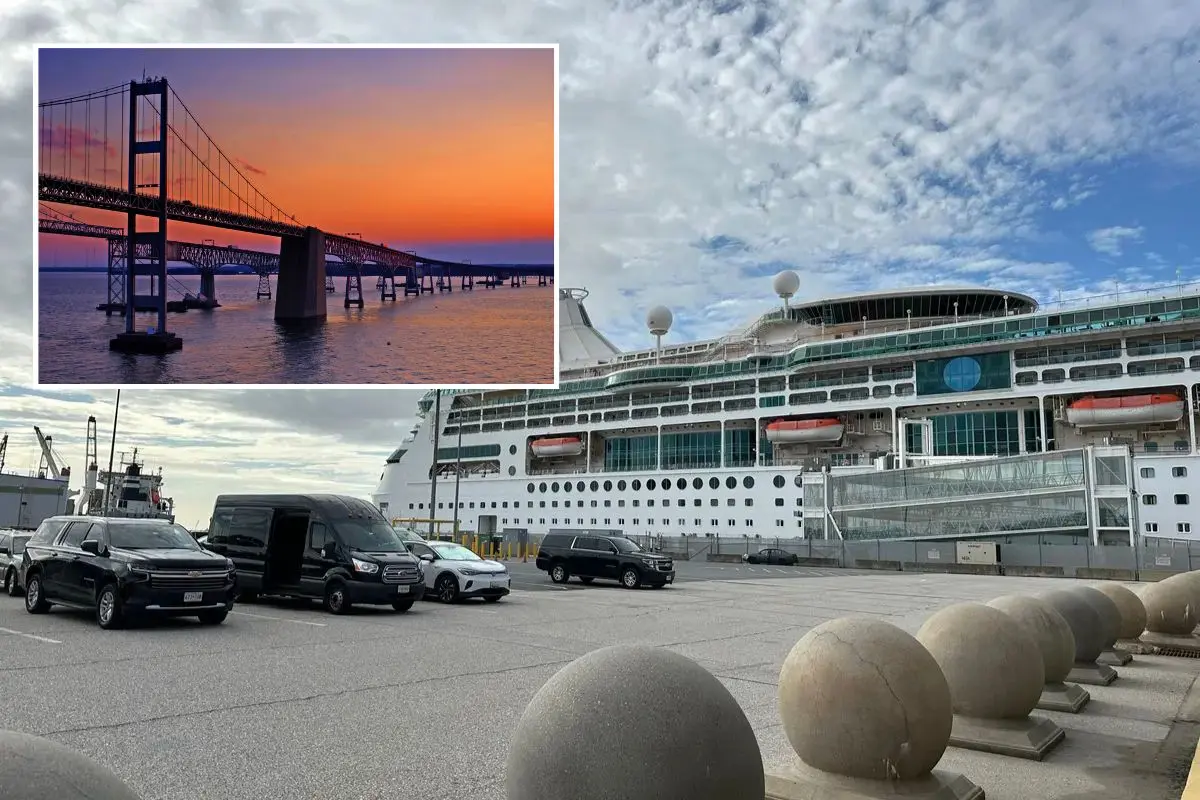
On Thursday, the Maryland Transportation Authority Board unanimously voted to advance a plan to replace the Chesapeake Bay Bridge, as reported by WTOP News.
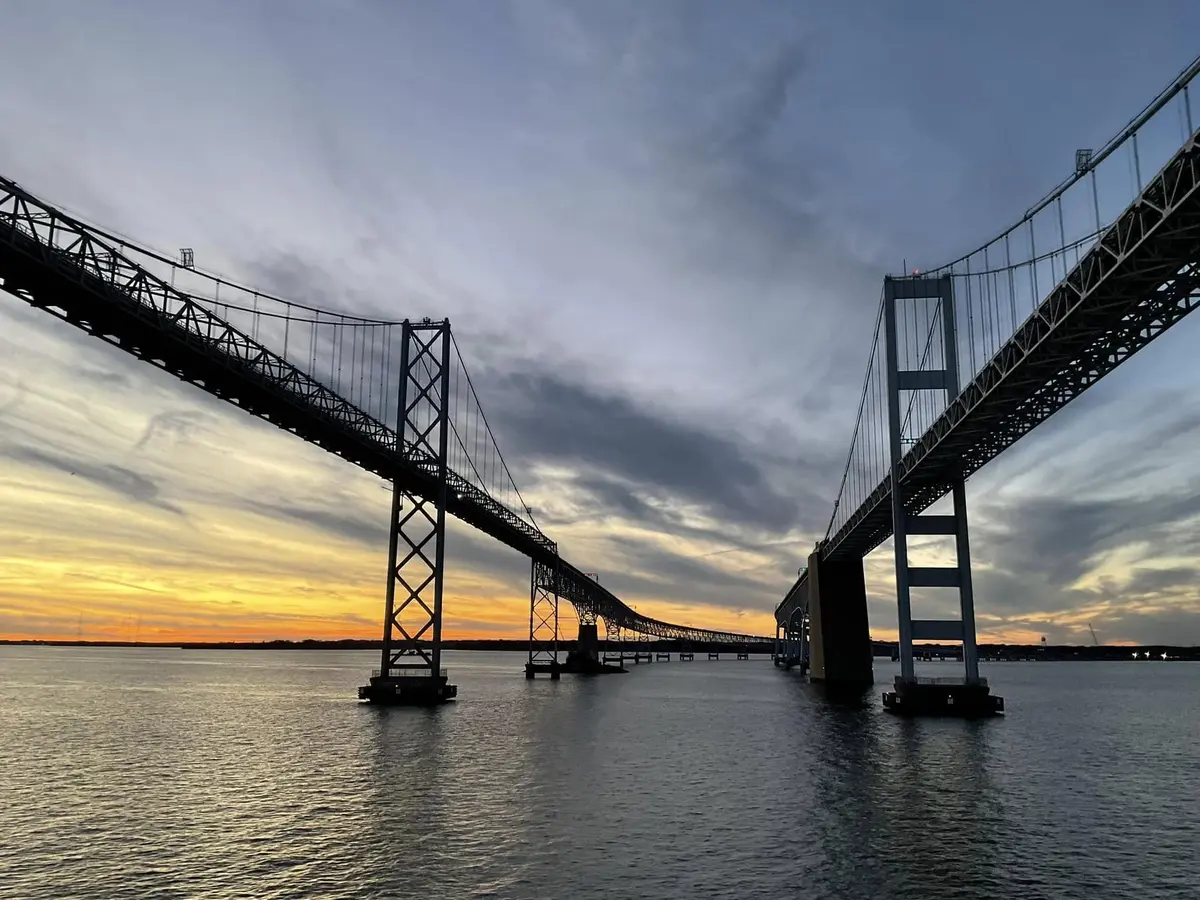
The "Alternative-C" plan would see the construction of two four-lane bridges over the bay, doubling the current capacity. Additionally, it would increase the vertical clearance of the bridge to match that of the Key Bridge when it’s completed.
This would give vessels an extra 50 feet of clearance, potentially allowing larger ships that were previously unable to pass beneath the existing bridge access to the Port of Baltimore for the first time.
The total cost of the project is estimated to be between $15 billion and $17 billion. Design work could begin as early as 2028, with construction scheduled for summer 2032, pending approvals and other formal requirements.
Despite the high price tag, the bridge would greatly benefit the local economy, with an economic analysis estimating that the bridge project would generate anywhere from $17 billion to $23 billion and create 61,300 to 75,600 jobs.
"This recommendation is an exciting step that moves us closer to a Bay crossing that provides a smoother travel experience for those who drive over the bridge and the Marylanders who live by it," said Maryland Department of Transportation Acting Secretary Samantha J. Biddle in a statement.
"Alternative C is the option that best supports Marylanders' current and future daily travel needs with the least environmental impact on our treasured Chesapeake Bay."
What a taller bridge could mean for Baltimore cruises
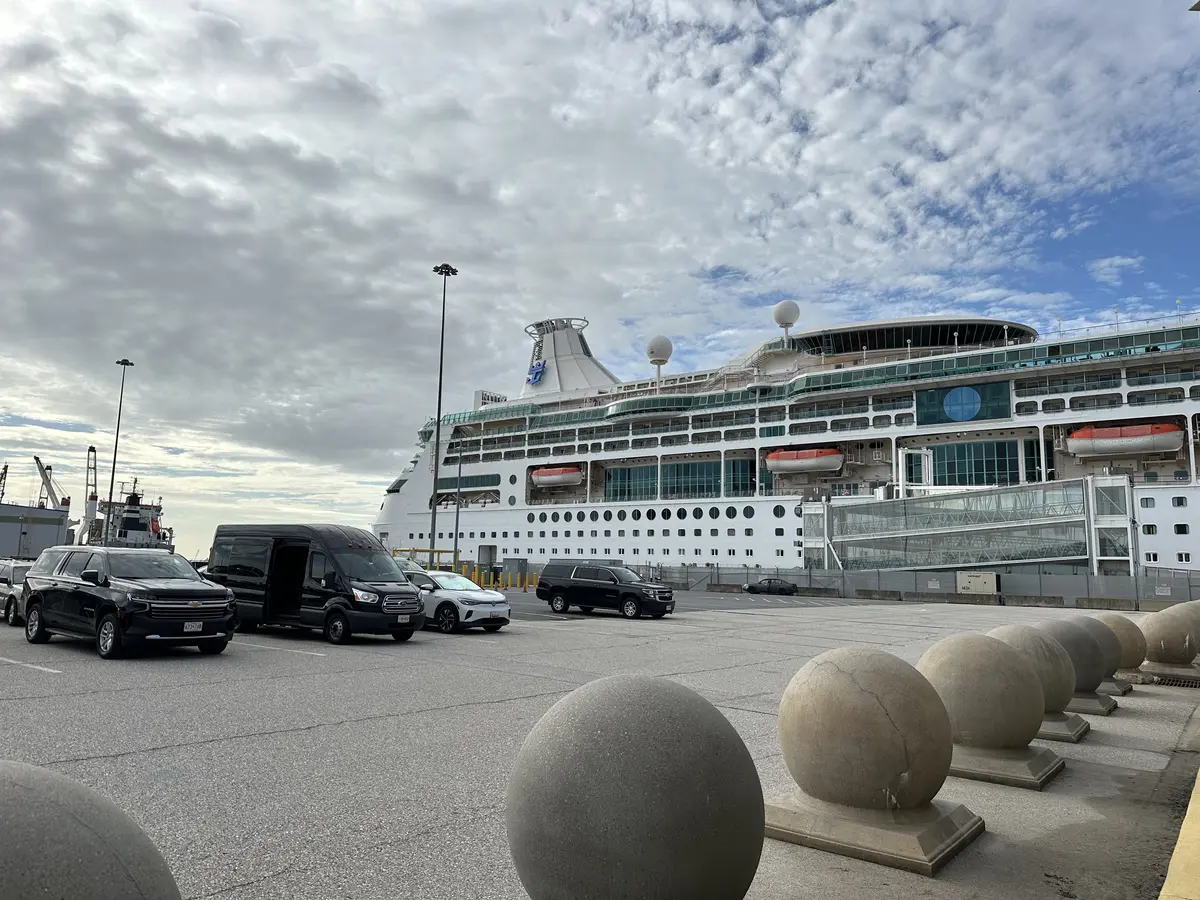
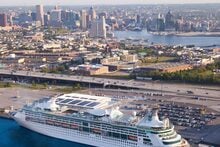
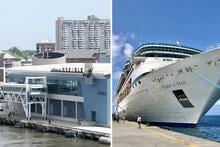
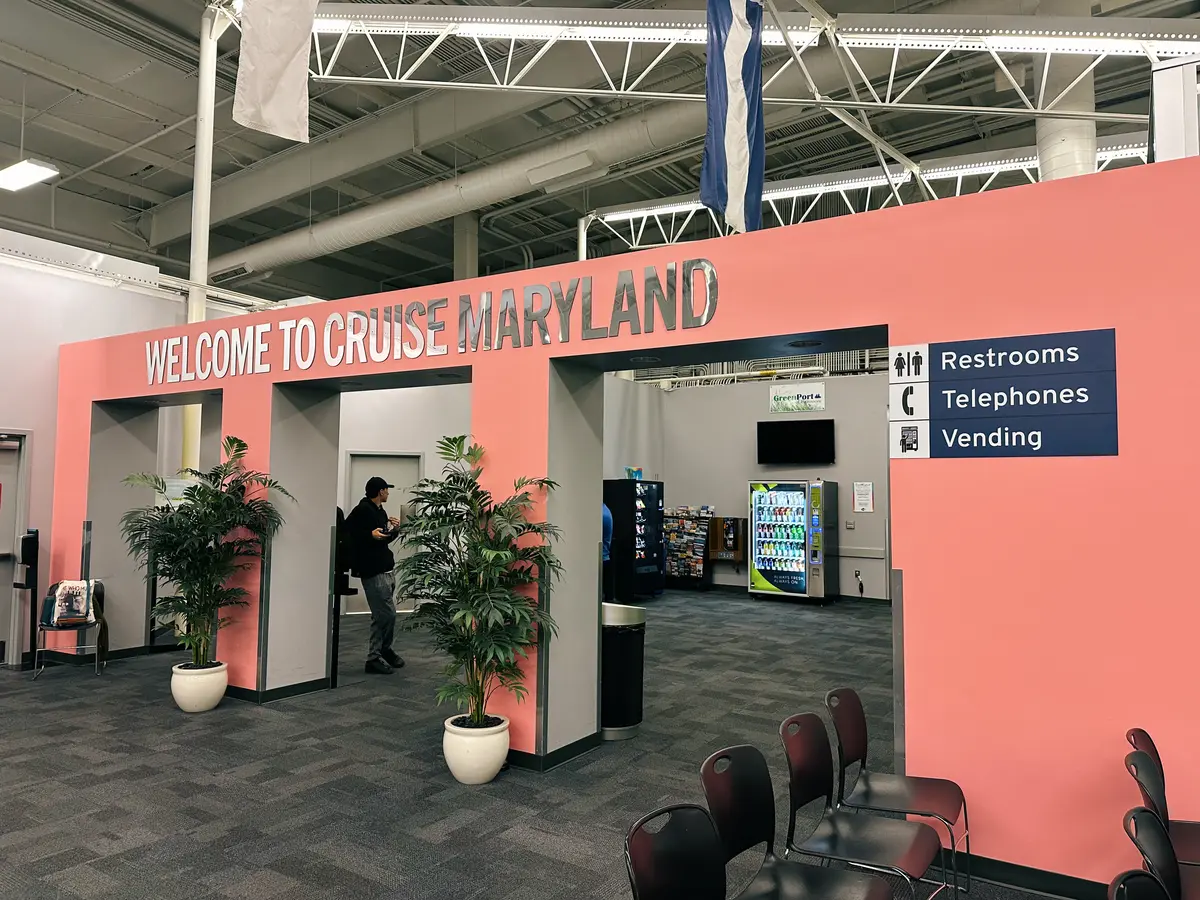
Vision of the Seas, a Vision Class ship measuring less than 79,000 gross tons (GT), is the only Royal Caribbean cruise ship that sails from Baltimore due to the current restrictions.
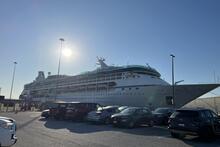
Other cruise lines, including Carnival, also deploy smaller ships to Baltimore because the existing Chesapeake Bay Bridge limits the size of vessels that can safely pass beneath it. Carnival Pride, for example, comes in at 88,500 GRT.
Neither Vision of the Seas nor Carnival Pride represents the cruise lines' modern mega-ships and state-of-the-art features of today's fleet.
Read more: My first Royal Caribbean cruise from Baltimore: Essential tips for Maryland sailings
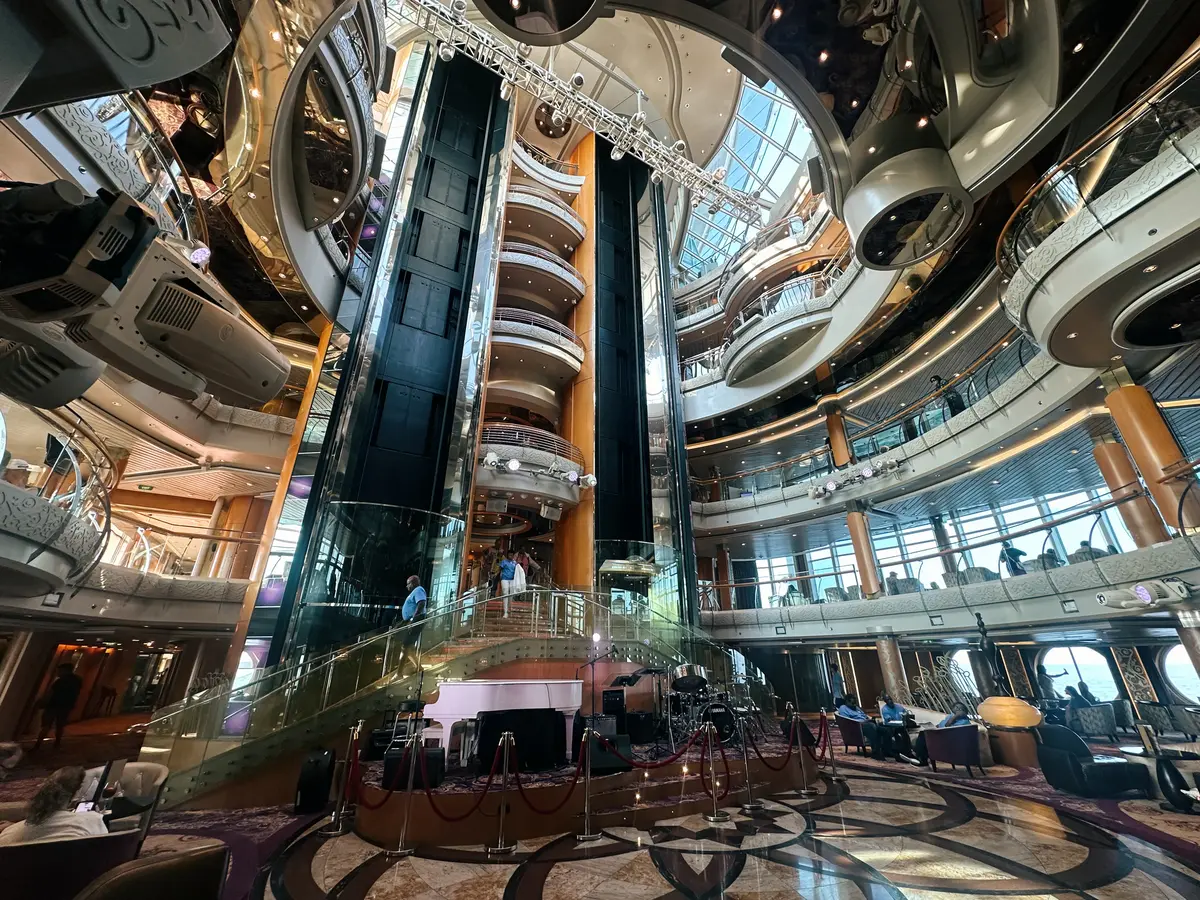
The decades-old ships lack many of the amenities found on newer ships, such as expansive waterparks, multiple specialty dining venues, and high-quality entertainment options.
As a result, Baltimore cruises are more limited in onboard offerings and are typically reminiscent of a more traditional era of cruising.
A taller Chesapeake Bay Bridge could remove the current limitations and allow larger cruise ships to sail from Baltimore, opening the door for newer, larger vessels to homeport in Baltimore.
Moreover, it could convince Royal Caribbean to deploy a ship to Baltimore year-round. In March 2025, the cruise line's deployment schedule revealed that it was pulling Baltimore cruises during the winter of 2026 and 2027.
However, a few months later, the deployment schedule confirmed that Vision of the Seas would return to Maryland, albeit seasonally.
She'll be based out of Baltimore from May to October 2027, with plans to offer 5- and 9-night cruises to Bermuda and Canada/New England.
Demolition of the remaining sections of the Francis Scott Key Bridge is ongoing
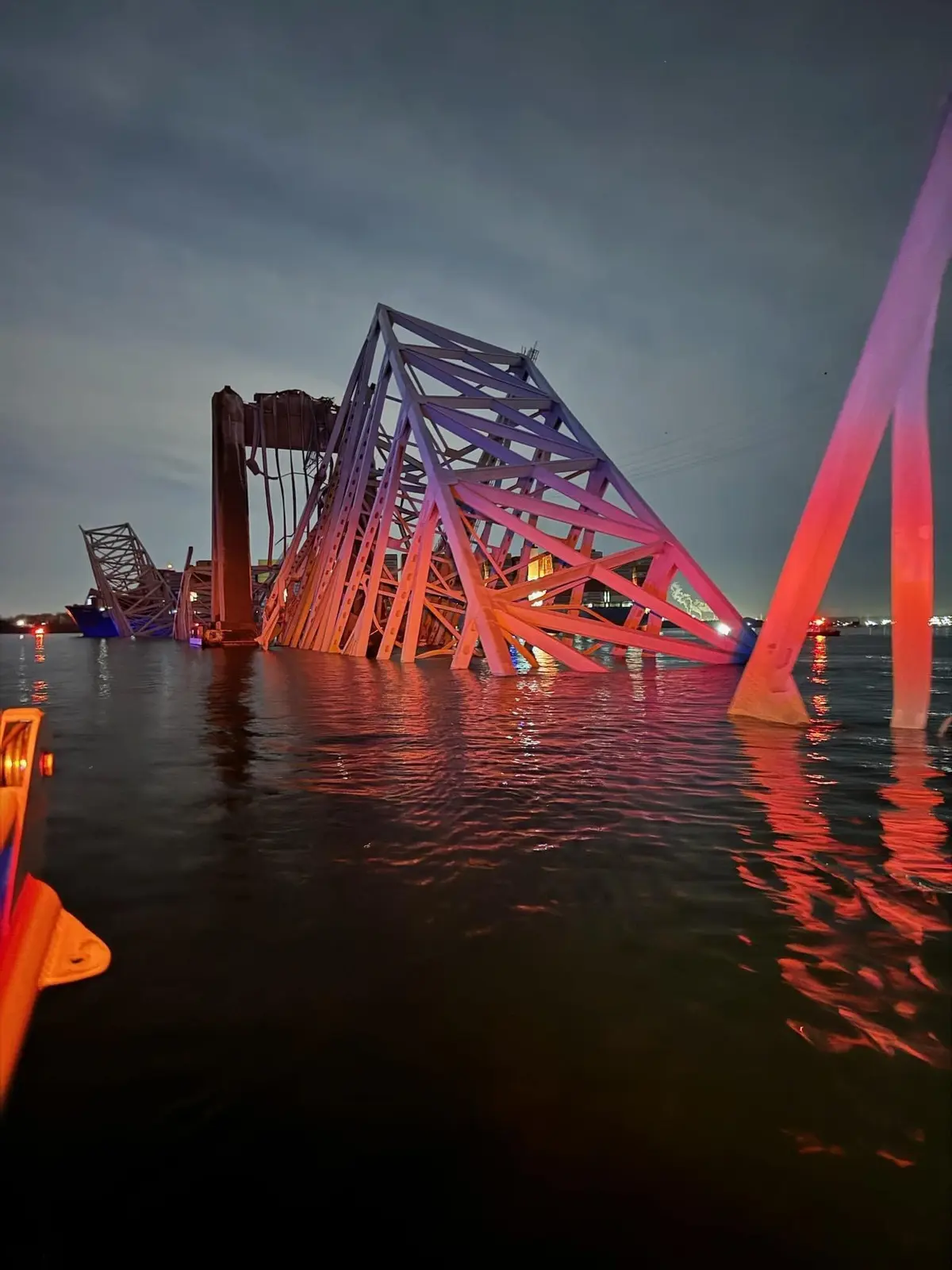
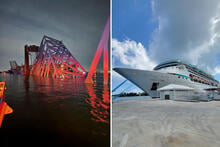
On March 26, 2024, Baltimore's Francis Scott Key Bridge partially collapsed after being struck by a container ship. It was the second-longest bridge in the United States and the third-longest in the world.
Following the accident, cruise operations in Maryland came to a screeching halt as officials assessed the damage and implemented safety measures.
Demolition of the bridge's remaining piers, ramps, and aboveground structures was initially planned for 2024. However, the Maryland Transportation Authority postponed it to 2025.
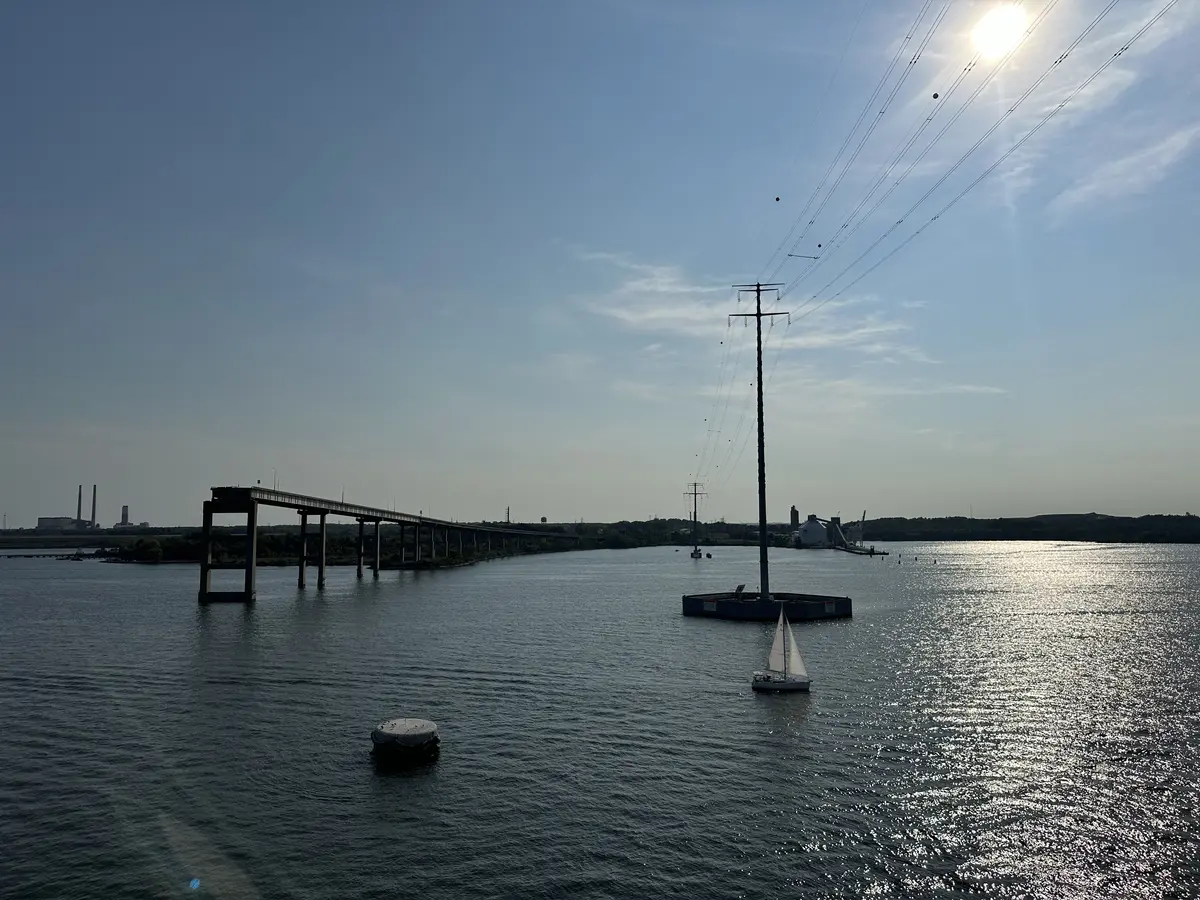
The process officially began in July 2025 and is expected to take around nine months, with an estimated completion date of around April 2026. As a result, the opening of the replacement bridge has been pushed back to late 2030.